

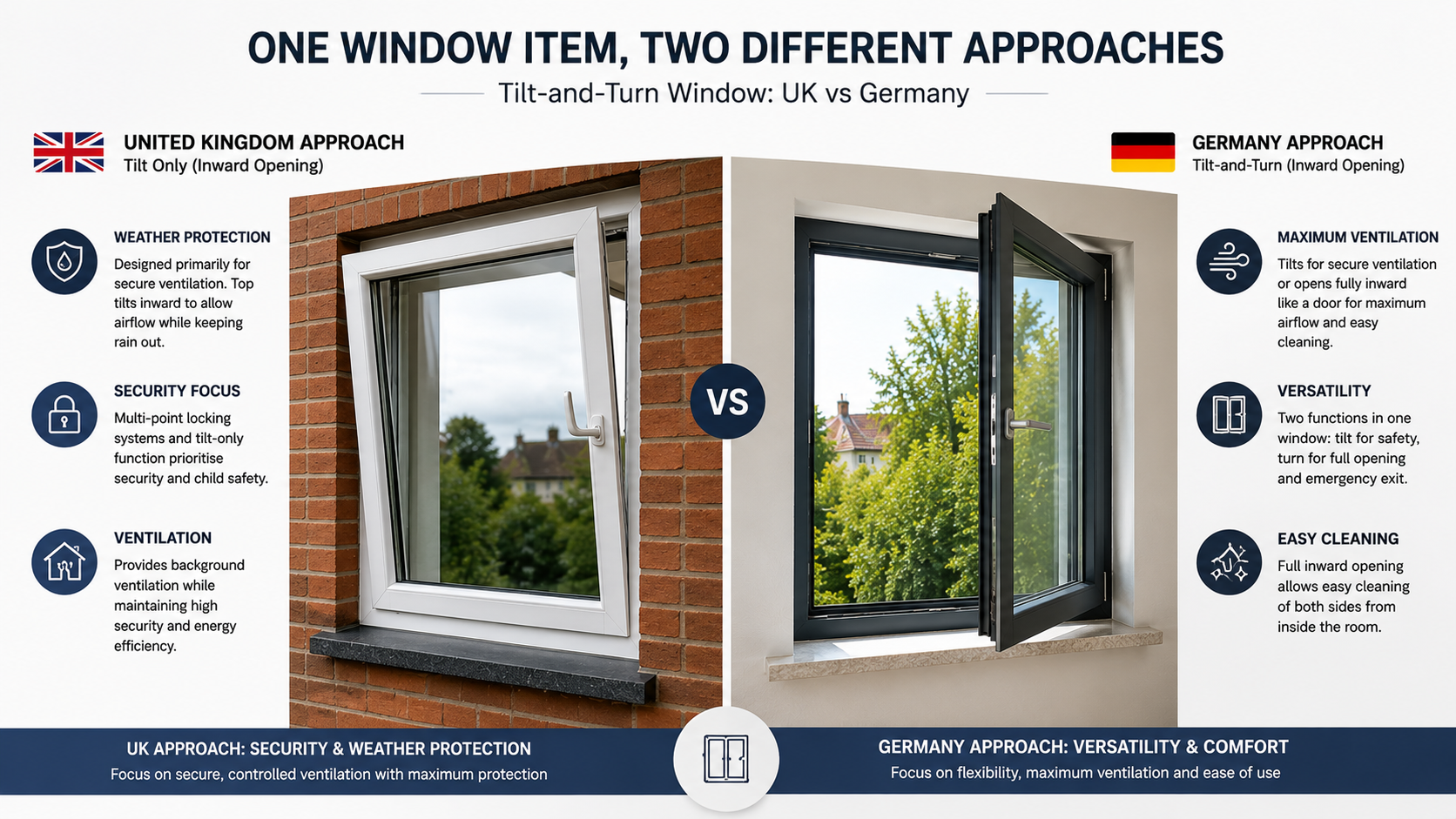
Why They Are So Different and Which System Is Better?
Anyone moving from Germany, Austria or Switzerland to the UK quickly notices something unusual: British windows often look and work completely differently from those found in Central Europe.
Questions commonly asked by newcomers include:
- Why do British windows open outward?
- What are those ventilation slots above the window?
- Why can’t I tilt the window?
- Are German windows better insulated?
- Why do British homes seem to be ventilated differently?
The answer lies in a combination of climate, building traditions, regulations and cultural habits that have developed over many decades.
.
The Typical British Window
The most common modern window in the UK is the uPVC casement window.
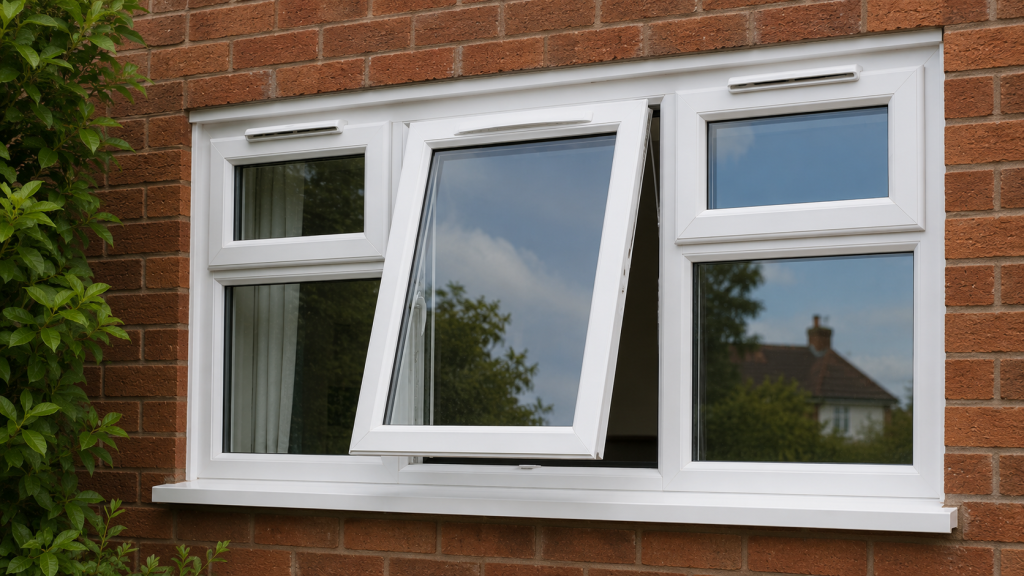
Characteristics include:
- Opens outward
- Hinged on the side or top
- Usually fitted with trickle vents
- Double-glazed
- Lockable with key-operated handles
Many British homes built since the 1990s use this style.
.
The Typical German Window
The standard window in Germany, Austria and Switzerland is usually a tilt-and-turn window.
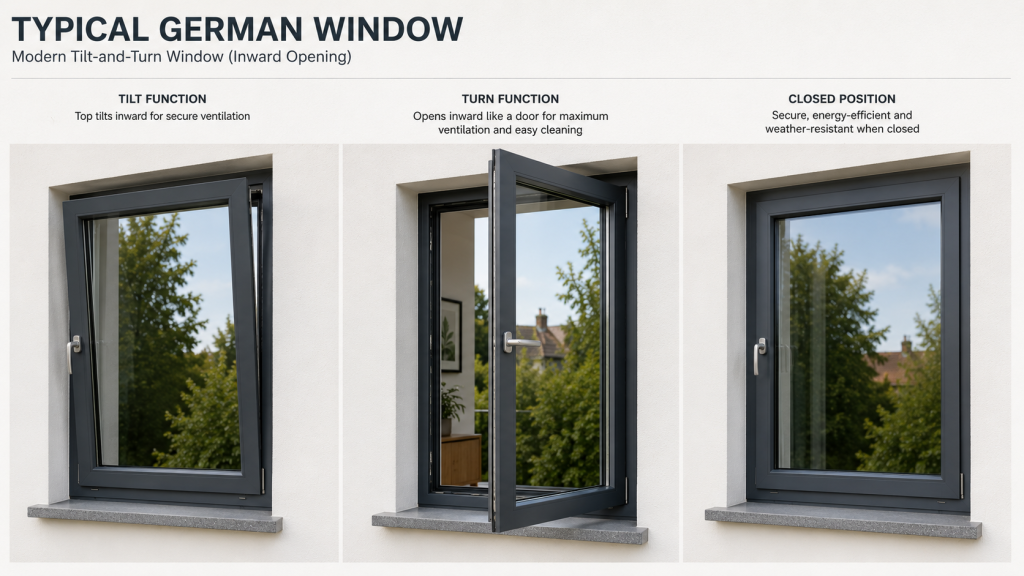
Characteristics include:
- Opens inward
- Can tilt for ventilation
- Can fully open like a door
- Usually triple-glazed in newer homes
- Heavy insulated frames
This design has become the standard throughout much of Central Europe.
.
Why Do British Windows Open Outwards?
Many people from Germany find this strange.
There are several reasons.
Weather Protection
The outward-opening design helps prevent wind-driven rain from entering.
This is particularly useful in:
- Scotland
- Wales
- Western England
- Coastal regions
.
Space Saving
Because the window opens outside, it does not interfere with:
- Curtains
- Blinds
- Furniture
This is often appreciated in smaller rooms.
.
Traditional Design
British housing has used outward-opening windows for generations.
Builders simply continued using familiar designs.
.
Why Do German Windows Open Inwards?
German windows are designed around insulation and ventilation efficiency.
Advantages include:
- Easier cleaning
- Better sealing
- Multiple opening positions
- More secure locking systems
The inward-opening mechanism allows extremely tight compression seals.
.
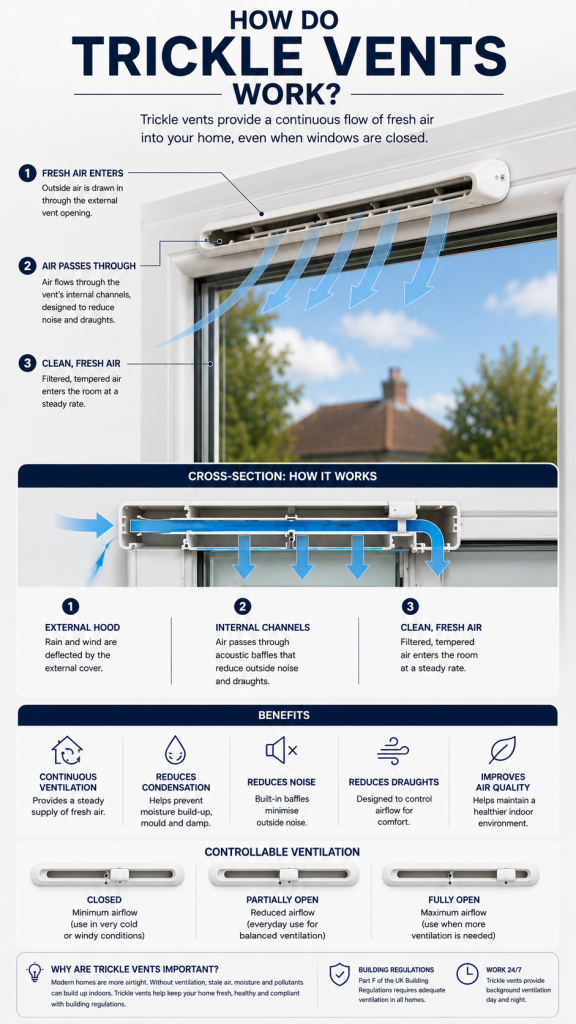
What Are Trickle Vents?
One of the biggest surprises for newcomers to the UK is the small vent above modern windows.
These are called:
Trickle Vents
They are small openings built into the window frame.
.
Why Are Trickle Vents Required?
Modern homes are increasingly airtight.
Without ventilation:
- Moisture builds up
- Condensation forms
- Mould develops
- Indoor air quality deteriorates
Trickle vents provide continuous background ventilation.
.
How Do Trickle Vents Work?
The vents:
- Remain slightly open
- Allow fresh air to enter
- Reduce condensation
- Improve airflow
They provide ventilation without fully opening the window.
.
Germany Uses a Different Approach
Germany generally relies on:
Window Ventilation
Residents commonly:
- Open windows fully
- Several times daily
- For short periods
This practice is known as:
Stoßlüften (shock ventilation)
A room is aired for a few minutes before being closed again.
.
Mechanical Ventilation
Modern German homes increasingly use:
- Heat recovery systems
- Mechanical ventilation systems
These provide fresh air while retaining heat.
.
Insulation Comparison
This is where German-speaking countries often have an advantage.
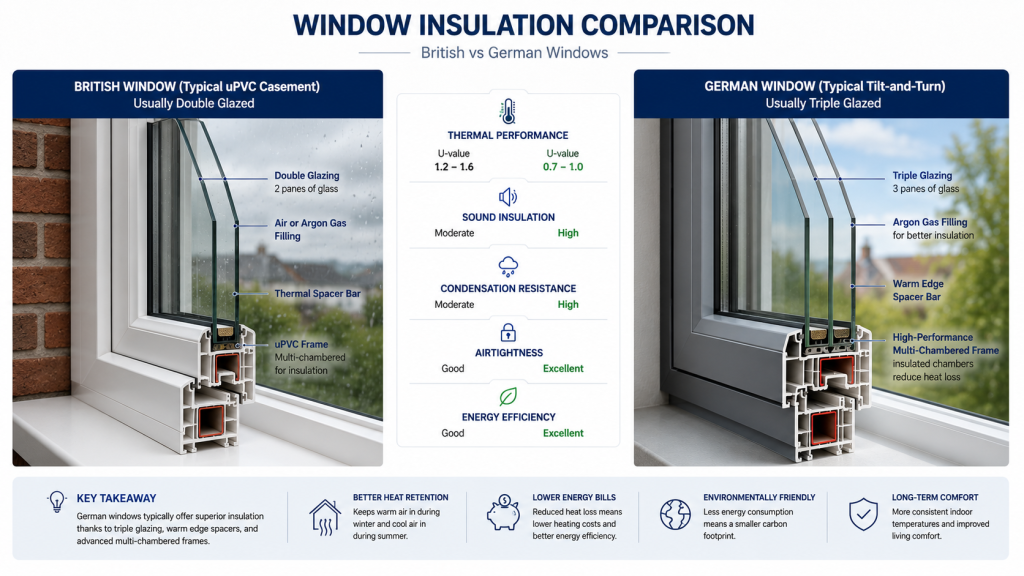
Typical UK Window
Usually:
- Double glazing
- U-value around 1.2-1.6
Good insulation but not exceptional.
.
Typical German Window
Frequently:
- Triple glazing
- U-value below 1.0
This significantly reduces heat loss.
.
Which Window Is Better for Energy Efficiency?
Generally:
🏆 Germany
Triple glazing and superior frame technology often outperform standard British windows.
However, modern high-specification British windows are rapidly closing the gap.
.
Condensation and Mould
This is one area where differences become very noticeable.
.
🇬🇧 United Kingdom
The climate is:
- Damp
- Humid
- Mild
Without proper ventilation, condensation can appear quickly.
This explains the emphasis on:
- Trickle vents
- Extractor fans
- Continuous ventilation
.
🇩🇪 Germany, 🇦🇹 Austria and 🇨🇭 Switzerland
Colder winters often encourage:
- Better insulation
- More airtight construction
- Controlled ventilation habits
Residents are accustomed to regularly airing rooms.
.
Cleaning the Windows
Many Europeans immediately notice one major disadvantage of British windows.
.
🇬🇧 British Windows
Upper-floor external glass can be difficult to clean.
Many homeowners need:
- Ladders
- Extension cleaning equipment
.
🇩🇪 German Windows
Because they open inward:
✓ Both sides can be cleaned from inside.
This is especially useful in apartments.
.
Security Comparison
Both systems are highly secure.
Modern versions include:
- Multi-point locking
- Reinforced frames
- Toughened glass options
German tilt-and-turn windows often provide slightly more sophisticated locking systems.
The difference in real-world security is generally small.
.
Everyday Practicality
🇬🇧 British Window
➕ Better in heavy rain
➕ Doesn’t interfere with furniture
➕ Usually cheaper
➕ Simpler construction
➕ Widely available
➖ Harder to clean
➖ Limited ventilation options
➖ Usually lower insulation levels
.
🇩🇪 German Window
➕ Excellent insulation
➕ Easy cleaning
➕ Tilt ventilation function
➕ Superior airtightness
➕ Flexible opening options
➖ More expensive
➖ Requires interior space
➖ Heavier
➖ More complex hardware
.
Which System Is Better?
The answer depends on priorities.
If your focus is:
- Energy efficiency
- Insulation
- Flexible ventilation
- Easy cleaning
the German tilt-and-turn system generally comes out ahead.
If your priorities are:
- Cost
- Simplicity
- Weather resistance
- Compatibility with British housing
the British outward-opening system performs very well.
Many experts would argue that the ideal modern solution combines the best of both worlds:
- German-style high-performance glazing
- Excellent insulation
- Mechanical ventilation systems
- Modern British weather-resistant design
.
Final Thoughts
British windows and German windows reflect different approaches to housing design. The British system prioritises practicality, weather resistance and cost-effective construction, while the German system focuses heavily on insulation, energy efficiency and controlled ventilation.
Neither system is inherently wrong. They simply evolved to meet different building traditions and expectations. For many people moving between the UK and Central Europe, understanding these differences helps explain why homes feel and function so differently despite often looking similar from the outside.