

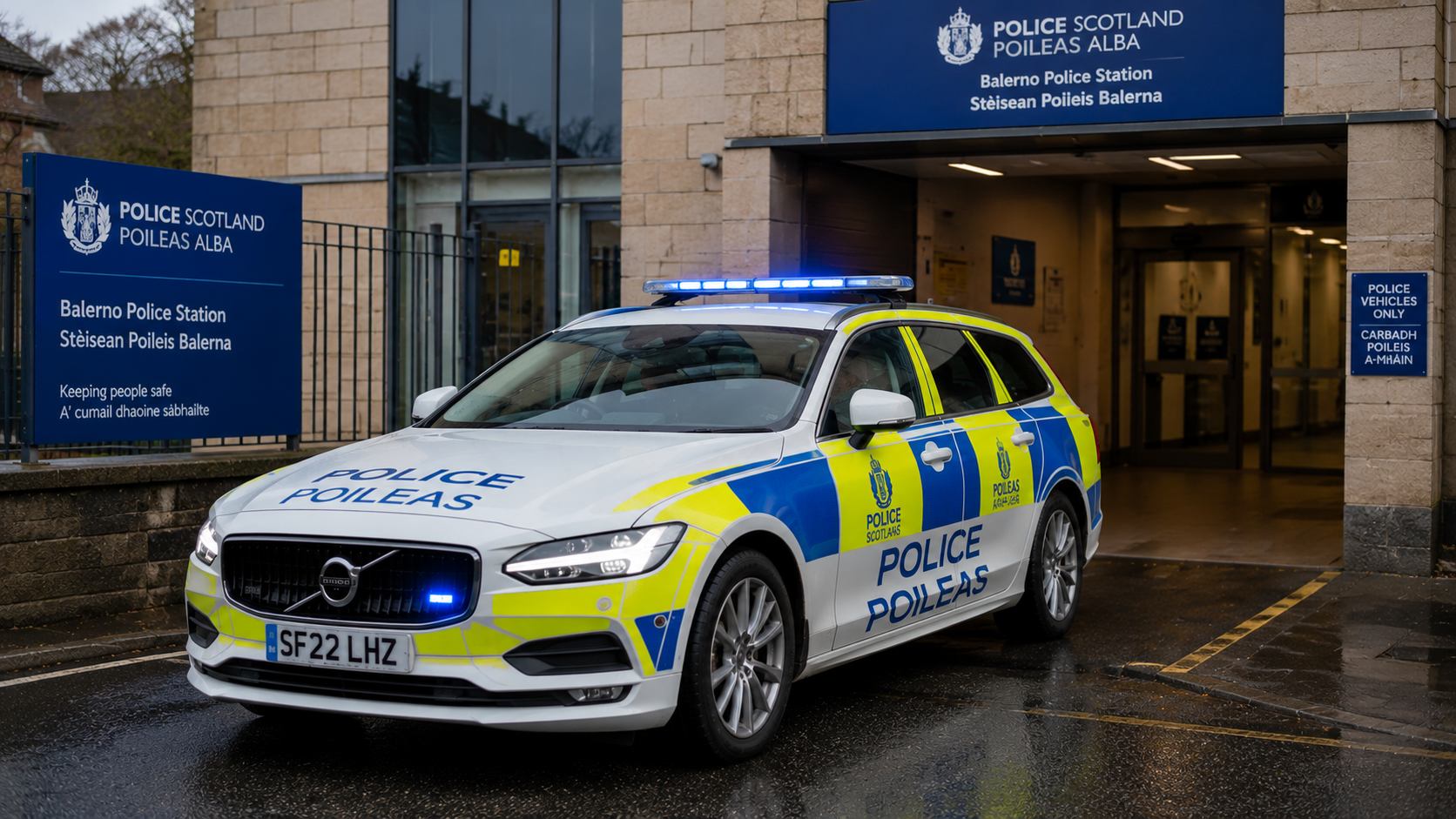
Powers, Duties, Vehicles and Specialist Units
Whether you are moving to Scotland, visiting, or simply curious about how policing works north of the border, understanding the role of Police Scotland (Poileas Alba on gaelic) can help you better navigate everyday life and emergencies.
Police Scotland is one of the largest police services in Europe and is responsible for policing the entire country, from the busy streets of Glasgow and Edinburgh to remote Highland communities and island settlements.
This guide explains what Police Scotland does, what powers officers have, what they cannot do, the vehicles they use, and the specialist branches that keep Scotland safe.
.
What Is Police Scotland?
Police Scotland was established on 1 April 2013 when eight regional police forces merged into a single national service.
Its official name is:
Police Service of Scotland (Police Scotland)
It serves a population of approximately 5.5 million people across Scotland’s mainland and islands.
.
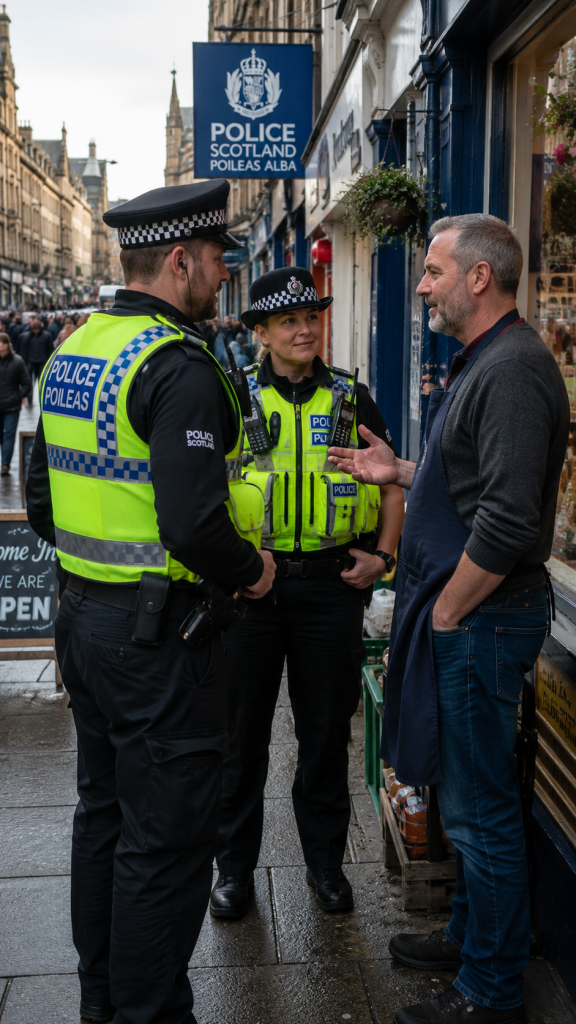
What Is Police Scotland There For?
The primary role of Police Scotland is to:
- Prevent crime
- Detect crime
- Investigate crime
- Protect life and property
- Maintain public order
- Keep communities safe
Officers deal with everything from road traffic incidents and anti-social behaviour to serious organised crime and counter-terrorism.
.
What Can Police Scotland Do?
Police officers in Scotland have significant legal powers.
These include:
🛂 Arrest Suspects
Officers can arrest individuals suspected of committing offences.
🛂 Stop Vehicles
Police may stop vehicles:
- For road traffic offences
- For routine checks
- When investigating crime
Drivers must stop when instructed.
.
🛂 Search People and Vehicles
Police can conduct searches under certain circumstances, including:
- Suspicion of drugs
- Offensive weapons
- Stolen property
Specific legal powers are required.
.
🛂 Seize Evidence
Officers can seize:
- Drugs
- Weapons
- Stolen goods
- Electronic devices
when legally justified.
.
🛂 Enter Premises
Police may enter homes or premises:
- With a warrant
- To prevent serious harm
- To save life
- To arrest suspects in certain situations
.
🛂 Issue Fixed Penalties
Police can issue fines for offences such as:
- Speeding
- Parking offences
- Disorderly behaviour
- Traffic violations
.
🛂 Use Reasonable Force
Police officers can use reasonable force when necessary to:
- Make arrests
- Protect themselves
- Protect others
- Prevent crime
The force used must always be proportionate and lawful.
.
What Police Cannot Do
Contrary to popular belief, police powers are not unlimited.
Officers must operate within strict legal boundaries.
🚫 They Cannot Enter Homes Without Legal Authority: Except for emergencies or specific legal powers.
🚫 They Cannot Arrest Someone Without Reason: Officers must have a lawful basis for arrest.
🚫 They Cannot Use Excessive Force: Force must always be proportionate.
🚫 They Cannot Search People Arbitrarily: Searches require legal authority.
🚫 They Cannot Access Personal Information Without Cause: Data protection and human rights laws apply.
🚫 They Cannot Punish People: Police investigate crime but courts determine guilt and impose sentences.
.
Your Rights When Dealing with Police
In Scotland, individuals generally have the right to:
- Know why they are being stopped
- Know why they are being arrested
- Speak with a solicitor
- Remain silent during questioning
- Be treated fairly and respectfully
.
What Vehicles Does Police Scotland Use?
Police Scotland operates one of the most diverse vehicle fleets in the UK.
Standard Patrol Cars
Common examples include:
- Volvo V60 and V90 / BMW 3 Series (phasing out)
- Volvo XC90 / BMW X5 (phasing out)
- Peugeot 508 and 308
- Ford Focus
- Vauxhall Astra
Used for everyday policing duties.
.
Roads Policing Vehicles
Specially equipped vehicles for motorway and traffic enforcement.
Examples include:
- Volvo XC90 / BMW X5 (phasing out)
- Volvo V90 T8 / BMW 5 Series Touring (phasing out)
- Volvo XC90
- Skoda Superb
- Audi A6 Avant
- Range Rover
.
Armed Response Vehicles (ARVs)
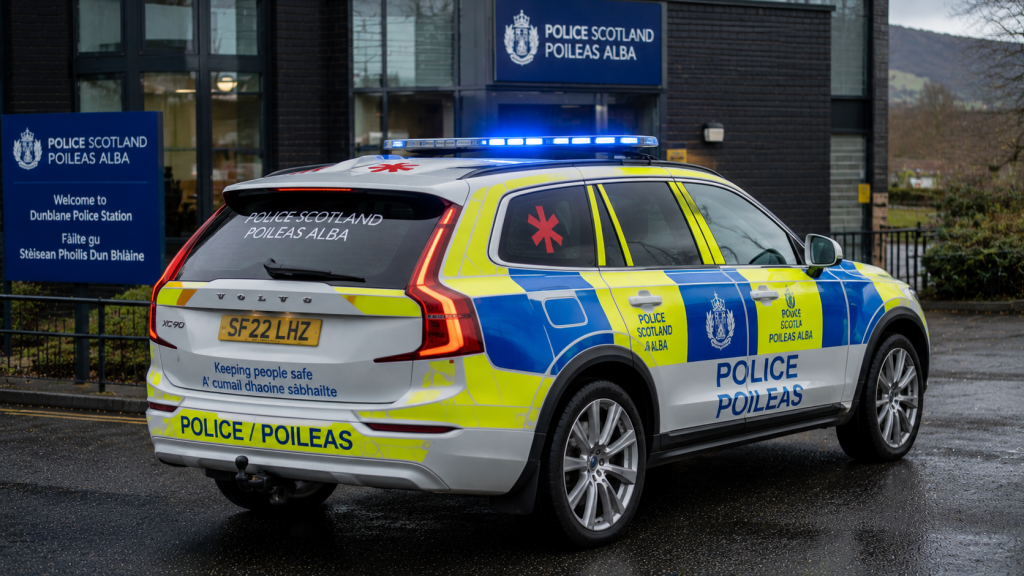
Used by specialist firearms officers. These vehicles are often marked with an orange or red asterisk * on the roof and rear windows,
Typically:
- BMW X5 (slowly phasing out)
- Volvo XC90
- BMW X3
These vehicles carry firearms officers and specialist equipment.
.
Police Vans
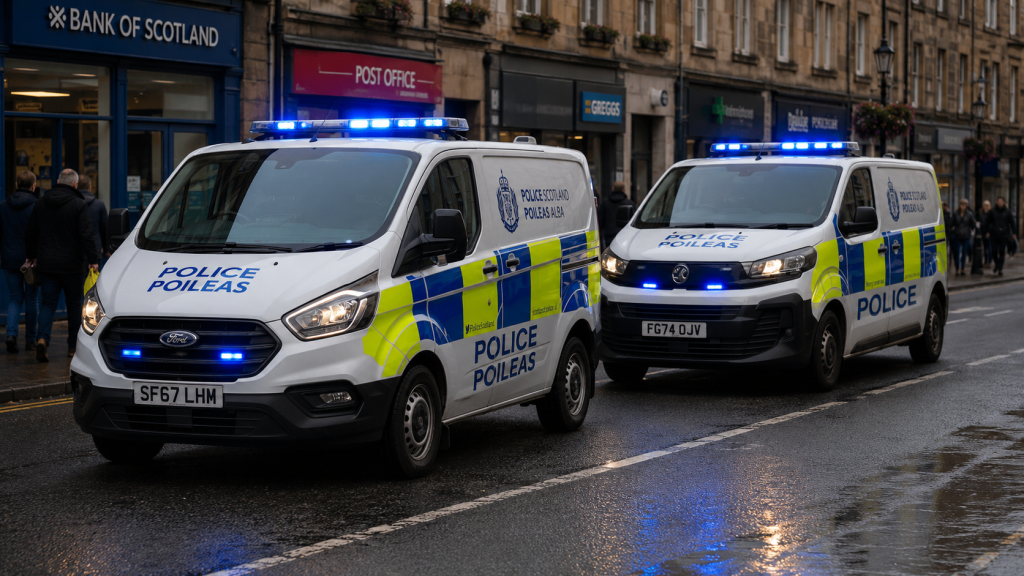
Used for:
- Public order operations
- Prisoner transport
- Large incidents
Examples:
- Ford Transit
- Mercedes Sprinter
.
4×4 Rural Vehicles
Particularly useful in the Highlands and Islands.
Examples:
- Land Rover Discovery
- Ford Ranger
- Toyota Hilux
- Mitsubishi L200
.
Motorcycles
Used for:
- Traffic enforcement
- Escort duties
- Special events
.
Marine Units
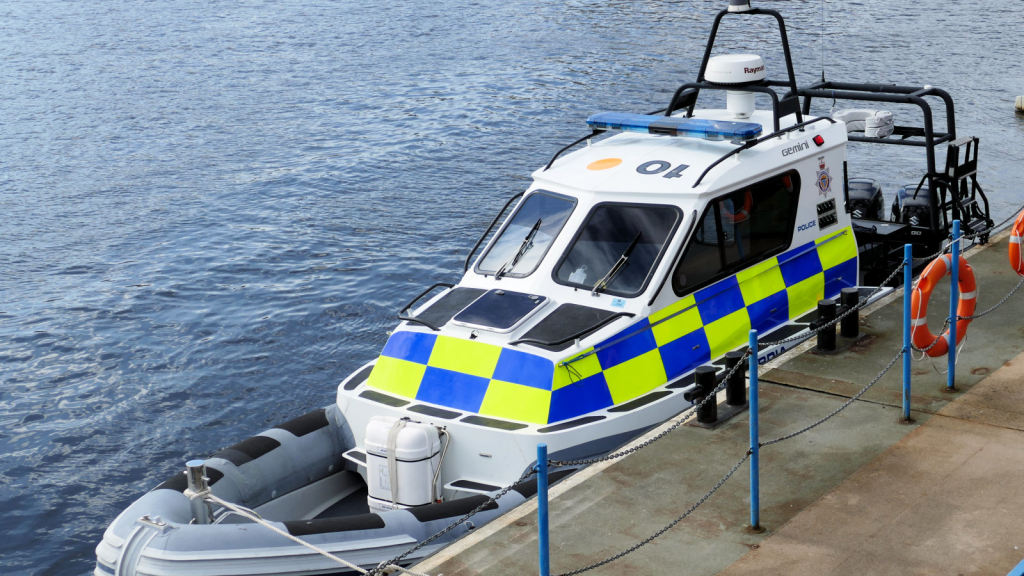
Police Scotland also operates patrol boats in coastal areas.
.
Air Support
Scotland is served by the UK’s national police helicopter service.
Helicopters assist with:
- Missing persons
- Major incidents
- Pursuits
- Search operations
.
Specialist Branches of Police Scotland
Modern policing requires many specialist departments.
.
Roads Policing Unit
Responsible for:
- Traffic enforcement
- Serious collisions
- Vehicle crime
- Motorway patrols
.
Criminal Investigation Department (CID)
CID officers investigate:
- Serious crime
- Fraud
- Assaults
- Major investigations
They usually work in plain clothes.
.
Firearms Unit
Specially trained officers who respond to incidents involving firearms or other high-risk situations.
Routine officers in Scotland are generally not armed.
.
Dog Unit
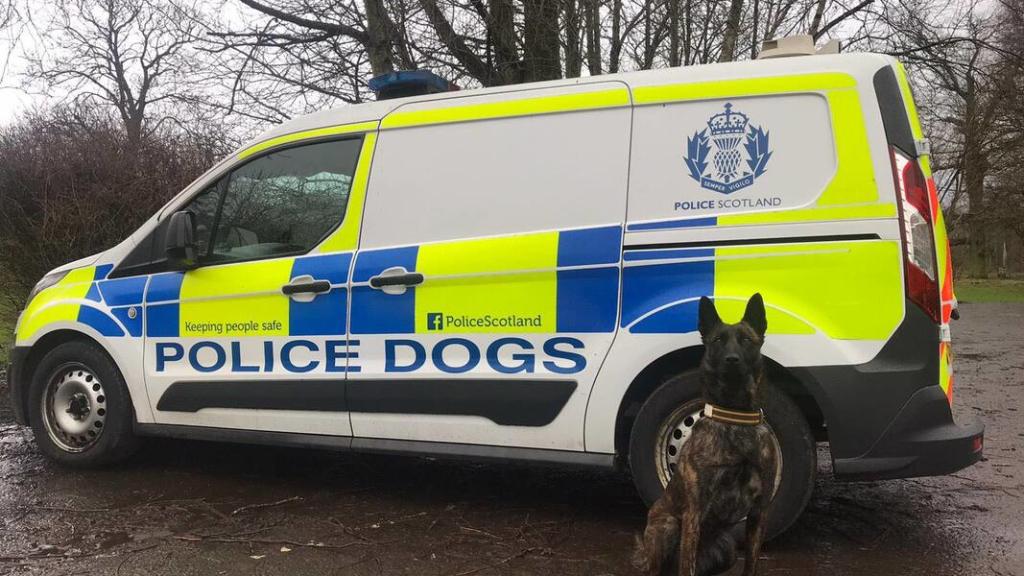
Police dogs assist with:
- Searching for suspects
- Tracking missing people
- Detecting drugs
- Detecting explosives
.
Mounted Branch
Police horses are used at:
- Football matches
- Large events
- Public order incidents
.
Marine Policing Unit
Responsible for:
- Coastal policing
- Maritime crime
- Water searches
.
Air Support Unit
Uses helicopters and aerial surveillance to support officers on the ground.
.
Cybercrime Unit
Investigates:
- Online fraud
- Hacking
- Digital crime
- Internet-based offences
.
Counter-Terrorism
Works alongside UK-wide agencies to identify and prevent terrorist threats.
.
Public Protection Unit
Focuses on:
- Child protection
- Domestic abuse
- Vulnerable adults
- Sexual offences
.
Community Policing
These are the officers most people encounter.
Their duties include:
- Local patrols
- School visits
- Community engagement
- Crime prevention advice
They form the backbone of everyday policing.
.
How Important Is Police Scotland?
Police Scotland is one of the most visible public services in the country.
Beyond fighting crime, officers provide assistance in:
- Missing person searches
- Mental health crises
- Natural disasters
- Major road incidents
- Public safety events
On any given day, officers may find themselves helping a lost child, responding to a road traffic collision, investigating a burglary, or searching a mountainside for a missing walker.
.
Final Thoughts
Police Scotland performs a wide range of duties that extend far beyond simply arresting criminals. From community policing and traffic enforcement to cybercrime investigations and specialist firearms operations, the service plays a central role in keeping Scotland safe.
While officers possess significant legal powers, those powers are balanced by strict laws, oversight and accountability. Understanding what the police can and cannot do helps residents and visitors better understand their rights and responsibilities when interacting with Scotland’s national police service.