

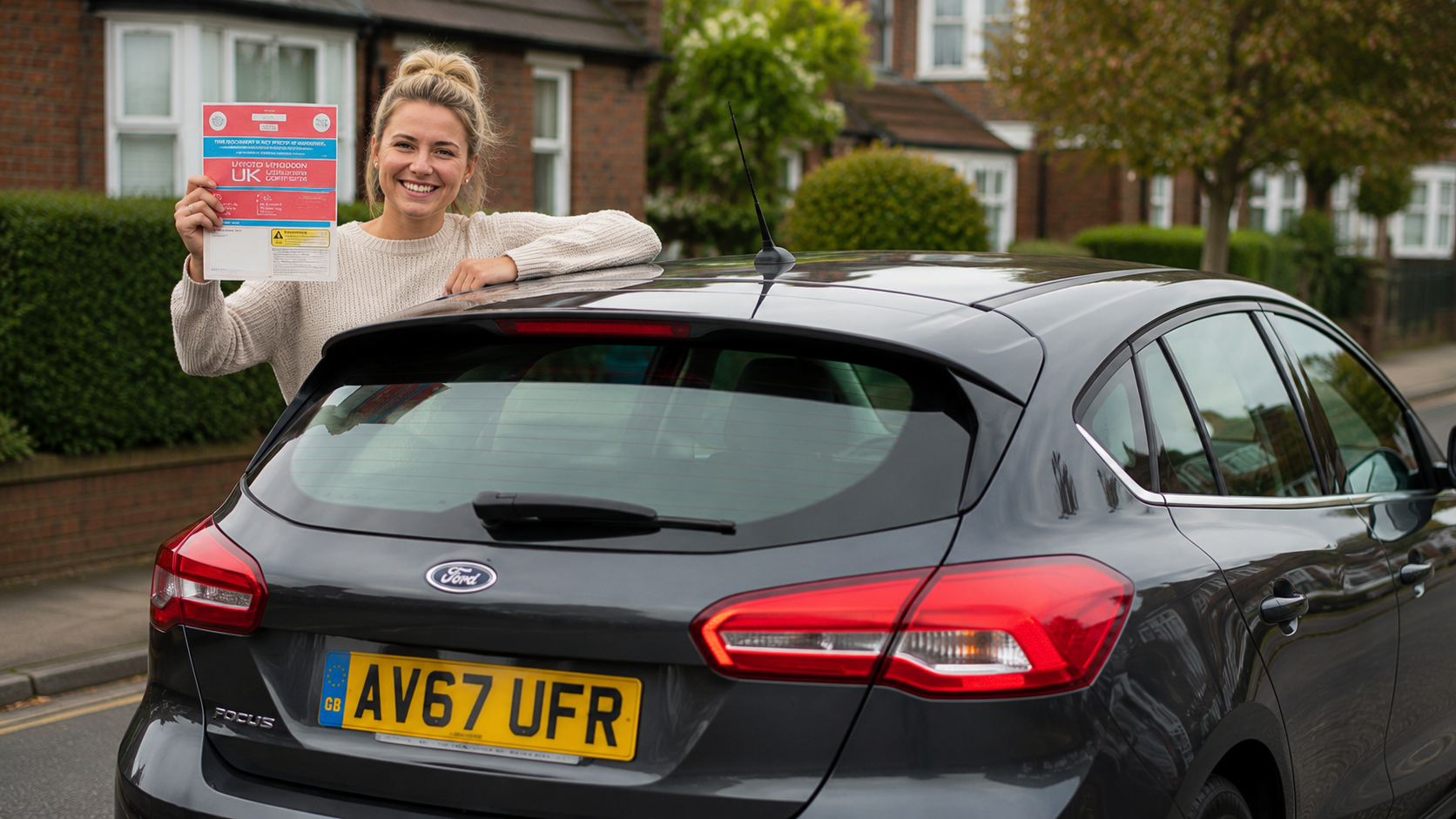
What It Is, Why You Need It, and Why It Is Not Proof of Ownership
If you own a vehicle in the UK, you’ve probably heard of the V5C, commonly known as the “logbook.” Many people assume that possessing a V5C means they own the vehicle. However, this is one of the most common misconceptions in UK motoring.
In this guide, we’ll explain what a V5C is, what it is used for, how to obtain one, what it costs, and why every vehicle keeper should make sure their details are up to date.
.
What Is a V5C?
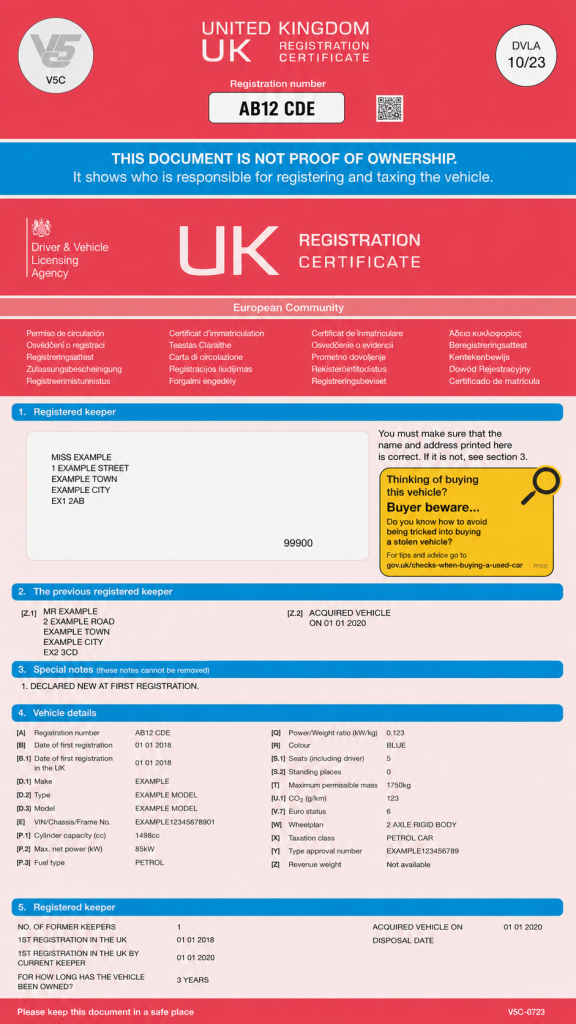
A V5C Registration Certificate is an official document issued by the UK’s Driver and Vehicle Licensing Agency (DVLA).
The V5C records important information about a vehicle, including:
- Vehicle registration number
- Vehicle Identification Number (VIN)
- Make and model
- Engine size and fuel type
- Colour of the vehicle
- Date of first registration
- CO₂ emissions
- Number of previous keepers
- Name and address of the registered keeper
The V5C helps the DVLA maintain accurate records of vehicles and their registered keepers throughout the UK.
.
The V5C Is NOT Proof of Ownership
One of the most important facts about the V5C is that it is not proof of ownership.
The V5C identifies the registered keeper of the vehicle, not necessarily the legal owner.
.
What’s the Difference?
Registered Keeper
- Responsible for taxing the vehicle.
- Responsible for keeping DVLA records up to date.
- Receives parking fines, speeding notices, and other official correspondence.
.
Legal Owner
- The person or company who legally owns the vehicle.
- May be different from the registered keeper.
.
Common Examples
Company Cars
An employee may be the registered keeper, while the company owns the vehicle.
.
Finance Agreements
If a vehicle is purchased using Hire Purchase (HP) or Personal Contract Purchase (PCP), the finance company usually remains the legal owner until the agreement is fully settled.
.
Leased Vehicles
The leasing company owns the vehicle, while the driver may be the registered keeper.
.
Why Do You Need a V5C?
The V5C is essential for many vehicle-related tasks.
.
Selling a Vehicle
When selling a vehicle, ownership of the registered keeper record must be transferred to the new keeper using the V5C.
.
Taxing a Vehicle
The V5C contains the reference number required for vehicle tax applications.
.
Applying for a Replacement Registration Certificate
You will need vehicle details contained in the V5C when contacting the DVLA.
.
Updating Vehicle Details
The V5C is used when changing:
- Name
- Address
- Vehicle colour
- Engine size
- Fuel type
- Vehicle modifications
.
Exporting or Scrapping a Vehicle
The DVLA must be informed using the relevant sections of the V5C.
.
How Do You Get a V5C?
Buying a Vehicle
When purchasing a vehicle, the previous keeper should transfer the registration to you.
This can usually be completed online, and the DVLA will then issue a new V5C in your name.
A new logbook typically arrives within 5 working days when the transfer is completed online.
.
If You Have Never Received a V5C
If you have purchased a vehicle and have not received the V5C, you can apply for a replacement.
.
Applying for a Replacement V5C
You can request a replacement if:
- The V5C has been lost.
- The V5C has been damaged.
- The V5C has been stolen.
- You never received it after becoming the registered keeper.
.
What Does a Replacement V5C Cost?
As of 2026, the DVLA charges £25 for a replacement V5C logbook.
You can apply online or by post.
Certain changes to your details, such as updating your address, are usually free of charge.
.
How Long Does It Take to Receive a V5C?
Typical processing times are:
| Application Type | Typical Time |
|---|---|
| Change of keeper (online) | Up to 5 working days |
| Change of address | Up to 5 working days |
| Replacement V5C | Up to 5 working days (online) |
| Postal applications | Up to 4 weeks |
Processing times can vary during busy periods.
.
What Happens If Your Details Are Incorrect?
It is a legal requirement to keep your details up to date.
Failure to update your address or other information can result in:
- Missing important DVLA correspondence
- Missing vehicle tax reminders
- Delayed notifications of penalties
- Potential fines from the DVLA
Always notify the DVLA promptly if your personal details change.
.
Tips When Buying a Used Vehicle
Before purchasing a vehicle:
- Check that the seller has a V5C.
- Ensure the VIN matches the vehicle.
- Verify the registration number.
- Confirm the registered keeper’s details appear genuine.
- Check the vehicle’s MOT history.
- Verify there is no outstanding finance.
Remember that having a V5C alone does not prove that the seller owns the vehicle.
.
Final Thoughts
The V5C logbook is one of the most important documents associated with a vehicle in the UK. It records who is responsible for the vehicle and allows the DVLA to maintain accurate registration records.
However, it is crucial to remember that the V5C is not proof of ownership. It simply identifies the registered keeper. Whether you’re buying, selling, taxing, or updating a vehicle, keeping your V5C accurate and up to date will help you avoid unnecessary complications and ensure your vehicle remains legally registered.