

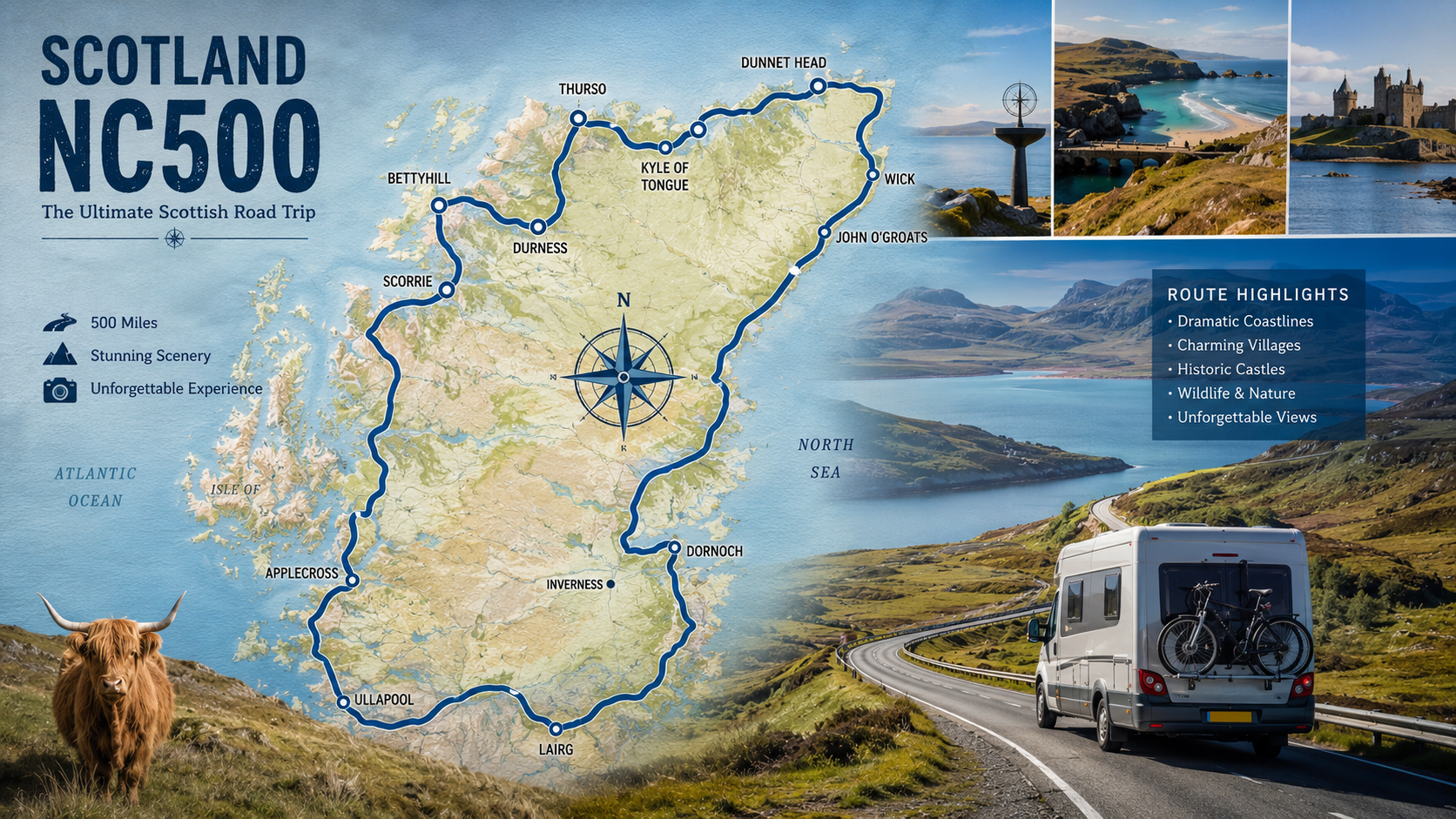
The North Coast 500, usually called the NC500, is often described as “Scotland’s Route 66.” It is a roughly 500-mile scenic driving route around the north of Scotland, beginning and ending in Inverness and passing through some of the most breathtaking landscapes in Europe.
And honestly, the scenery is ridiculous.
You get dramatic mountains, lonely beaches with turquoise water, ancient castles, winding coastal roads, waterfalls, lochs, deer, sheep, Highland cows, fishing villages, and weather that can change four times before breakfast. One moment you are driving through sunshine thinking life is perfect, and ten minutes later you are questioning your survival skills in horizontal rain and fog.
The NC500 became massively popular after its official launch in 2015. Social media played a huge role. Suddenly, thousands of people discovered that northern Scotland looked like something from a fantasy movie. Camper vans, motorhomes, motorcycles, cyclists, photographers, hikers, influencers, drone pilots, and adventurous retirees all began heading north in enormous numbers.
For local tourism businesses, this was fantastic news.
Hotels filled up.
Restaurants became busy.
Petrol stations sold impressive amounts of sausage rolls and coffee.
Tiny villages suddenly discovered they were “international travel destinations.”
But there is another side to the NC500 story — and locals know it very well.
.
The Problem With Paradise
Northern Scotland is stunningly beautiful, but it was never designed for modern mass tourism.
Many of the roads in the Highlands are:
- narrow,
- winding,
- steep,
- full of blind corners,
- and sometimes single-track roads with passing places.
These roads were originally built for small communities, sheep, tractors, and the occasional confused tourist — not endless convoys of oversized camper vans driven by people who last reversed a vehicle sometime during the early 1990s.
During summer, some villages experience traffic levels that would make residents of Edinburgh mildly uncomfortable and locals in remote Highland communities completely horrified.
.
The Legendary Camper van Problem
Not all visitors behave badly. In fact, most tourists are polite, respectful, and genuinely love Scotland.
But unfortunately, it only takes a small number of irresponsible travellers to create huge frustration.
Locals frequently complain about:
- roads being blocked by parked camper vans,
- dangerous overtaking,
- tourists stopping in the middle of roads for photographs,
- littering,
- overflowing bins,
- human waste problems,
- campfires,
- damaged verges,
- and noise late at night.
Some visitors seem to believe the Highlands are an enormous outdoor campsite where normal rules magically disappear.
They do not.
A passing place on a single-track road is not:
- a picnic area,
- a sleeping place,
- a photography studio,
- or somewhere to cook pasta while twelve angry locals wait behind you.
To Highland residents, blocking a road is not just inconvenient. These roads are essential daily infrastructure. People use them to:
- get to work,
- deliver supplies,
- reach hospitals,
- transport livestock,
- attend school,
- and generally continue normal life in places where alternatives simply do not exist.
When tourists stop carelessly for “just one quick photo,” locals may suddenly find themselves trapped behind a line of motorhomes moving at the speed of continental drift.
.
The Waste Problem
One of the biggest complaints is rubbish.
The Highlands are famous for their natural beauty, so locals become understandably furious when roadsides, beaches, and parking areas begin looking like the aftermath of a failed music festival.
Problems include:
- abandoned rubbish bags,
- disposable barbecues,
- toilet waste,
- plastic bottles,
- food packaging,
- and occasionally entire camping setups left behind.
Nothing destroys the magical feeling of a Highland beach faster than discovering somebody left behind six beer cans and a folding chair.
Many local communities spend enormous amounts of time and money cleaning up after visitors — resources that small Highland councils often struggle to afford.
.
Social Media vs Reality
Instagram and YouTube created a dream version of the NC500:
- empty roads,
- peaceful beaches,
- lonely mountain viewpoints,
- romantic sunsets beside isolated lochs.
Reality in July can occasionally feel more like:
“European Camper van Grand Prix: Highland Edition.”
At peak season, some beauty spots become overcrowded with vehicles, queues, and parking chaos. Locals sometimes joke that they need to leave home at dawn simply to avoid getting trapped behind tourists trying to photograph sheep.
And yes — tourists stopping suddenly for sheep is an actual thing.
.
Highland Hospitality Has Limits
Scottish people are famously welcoming, and Highland communities genuinely appreciate respectful tourism.
Tourism supports:
- jobs,
- local businesses,
- hotels,
- cafés,
- activity companies,
- museums,
- and remote communities that might otherwise struggle economically.
But locals increasingly ask visitors for something very simple:
Respect.
Respect the roads.
Respect private land.
Respect local communities.
Respect the environment.
And perhaps most importantly:
learn how passing places actually work.
(Quick lesson: they are for allowing traffic to pass, not for making coffee in your camper van while admiring the view.)
.
How To Be a Good NC500 Visitor
If you want locals to smile rather than silently curse your vehicle, follow these rules:
.
Use Campsites
Wild camping rules in Scotland do not automatically apply to motorhomes and campervans parked everywhere.
.
Do Not Block Passing Places
Ever.
Especially not while making sandwiches.
.
Take Your Rubbish With You
The Highlands are not a giant bin with mountains attached.
.
Let Faster Traffic Pass
If you have fifteen cars behind you, congratulations:
you are now a temporary public event.
.
Respect Local Villages
People actually live there. It is not a film set created for tourism.
.
Final Thoughts
The NC500 is genuinely one of the most spectacular road trips in the world. The landscapes are unforgettable, the scenery often feels almost unreal, and the Highlands leave a lasting impression on nearly everyone who visits.
But the Highlands are also somebody’s home.
The balance between tourism and protecting local communities has become one of the biggest modern challenges in northern Scotland. Most locals do not hate tourists — they simply want visitors to behave responsibly and remember that behind every beautiful scenic route there are real people trying to live normal lives.
So enjoy the beaches, the castles, the mountains, the whisky, the Highland cows, and the incredible roads.
Just maybe avoid parking your camper van sideways across a single-track road while attempting to photograph a sheep wearing sunglasses.
The locals would appreciate it enormously.