

Why UK Homes Still Have Separate Hot and Cold Taps
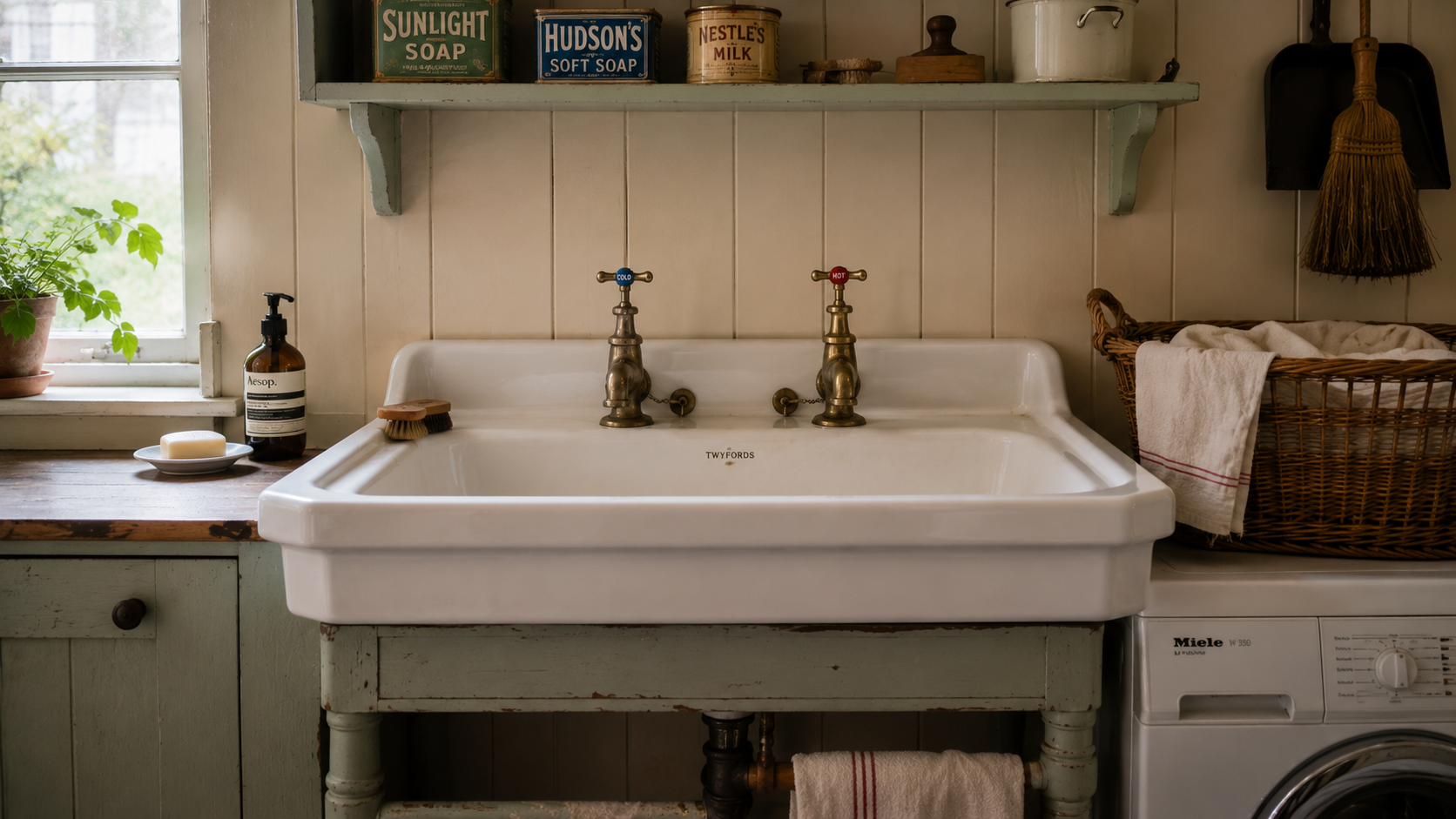
Every foreigner visiting Britain eventually encounters the same baffling cultural experience. It usually happens in an otherwise perfectly normal bathroom. You approach the sink, turn on the tap and suddenly discover that the British apparently believe water should come in only two possible temperatures: Antarctic glacier or active volcano.
One tap produces freezing cold water capable of numbing your fingers within seconds. The other unleashes boiling liquid that feels suitable for brewing industrial quantities of tea. Somewhere between these two extremes exists a tiny, almost mythical temperature zone known as “comfortable”, but reaching it requires timing, courage and the reflexes of a Formula One driver.
WARNING:____________________
If you ever come across a sink / handwash basin / basin with two taps, DO NOT USE THE HOT TAP FOR DRINKING WATER ! ! !
Especially not in public toilets / restrooms, older buildings or public buildings till 2000.
For most Europeans, Americans and practically everyone else on Earth, this immediately raises one important question:
Why do British houses still have separate taps?
At first glance, it looks like one of those wonderfully eccentric British traditions that somehow survived into the modern world alongside cricket terminology, queueing etiquette and apologising when somebody else walks into you. But surprisingly, the famous two-tap system was not originally designed to confuse tourists or test the pain tolerance of unsuspecting visitors. In fact, it once made perfect sense.
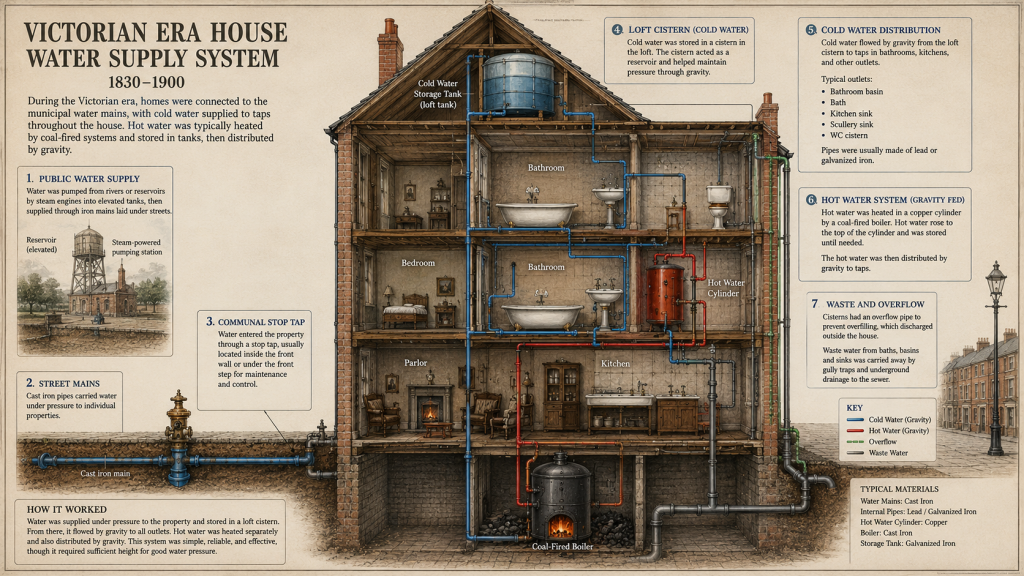
To understand the mystery, we have to travel back into the world of older British plumbing systems. Historically, many homes in the UK operated with two completely separate water supplies. Cold water came directly from the public mains supply and was considered safe, fresh drinking water. Hot water, however, was usually stored in tanks located in lofts or attics before being heated and distributed through the house.
This is where things become less comforting.
Those old attic tanks were not always the cleanest or most hygienic places imaginable. While technically covered, they were still vulnerable to dust, dirt, insects and occasionally the sort of mysterious floating object nobody wants to think about too carefully. Because of this, regulations discouraged mixing hot and cold water before it reached the tap. Separate taps helped prevent potentially contaminated water from flowing back into the clean public supply.
So originally, the British dual-tap system was actually a clever health and safety solution rather than an elaborate national prank.
The problem is that the world changed while Britain, as it occasionally likes to do, carried on regardless.
Modern plumbing systems are vastly improved. Most newer British homes now use sealed combi boilers or modern pressurised systems where hot water is perfectly clean and safe. Mixer taps – the sensible invention allowing hot and cold water to combine peacefully into one usable stream – have become increasingly common in kitchens and modern bathrooms across the country.
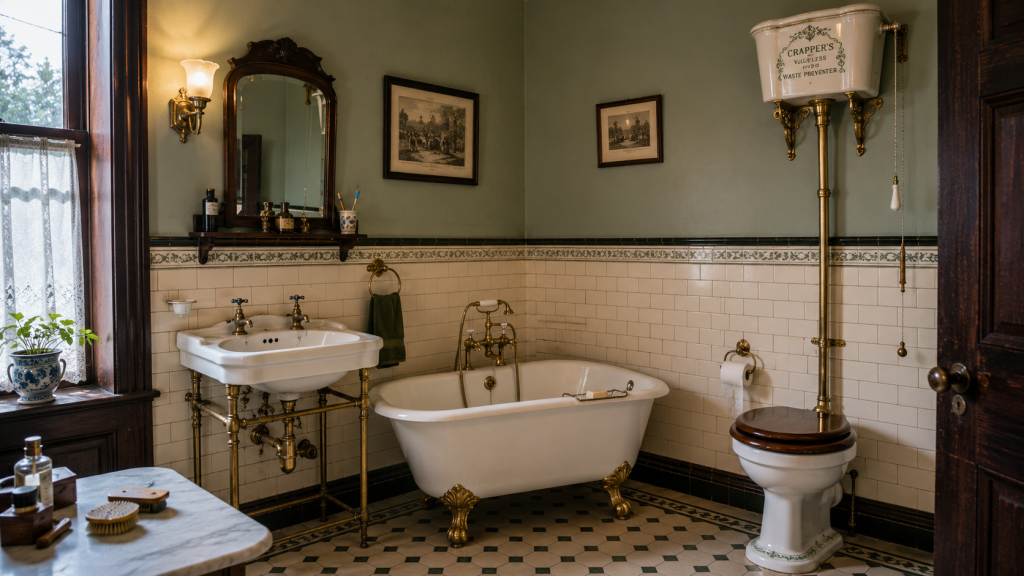
Yet millions of older homes throughout Britain still proudly maintain separate taps. The reason is simple: Britain has an enormous number of old houses. Victorian terraces, Edwardian townhouses, Georgian properties, centuries-old cottages and homes older than electricity itself continue to form a huge part of the British housing landscape. Replacing entire plumbing systems in these buildings is expensive, disruptive and often leads to homeowners discovering at least three unrelated disasters hidden behind the walls.
British renovation projects have a habit of beginning with:
“We’ll just modernise the bathroom.”
…and ending six months later with:
- exposed Victorian pipework,
- mysterious damp problems,
- questionable wiring from the 1970s,
- and somebody quietly crying in a hardware store.
As a result, many older plumbing systems simply remained in place.
Over time, British people adapted to the two-tap system in the same way humans adapt to many strange things: through experience, denial and muscle memory. Experienced Britons can somehow wash their hands using separate taps with remarkable efficiency. Foreigners, meanwhile, often spend the first few attempts performing a desperate balancing act between frostbite and second-degree burns.
There is usually a brief phase of optimism:
“This cannot possibly be as difficult as people claim.”
This is followed by panic.
Then comes the classic British sink technique: rapidly alternating hands between taps while trying to catch the tiny moment where the water temperature becomes briefly survivable before immediately turning volcanic again.
Interestingly, kitchens in Britain often adopted mixer taps far earlier than bathrooms. This is likely because washing dishes requires practical functionality, whereas bathroom sinks somehow remained trapped in a historical time capsule powered entirely by tradition and stubbornness.
Despite the international confusion, separate taps still have defenders. Some people genuinely prefer them, arguing they are traditional, charming, easier to repair or simply “what they grew up with”. Others have lived with them for so long they no longer even notice how strange they appear to outsiders. To many Britons, separate taps are completely normal. Mixer taps, by comparison, feel suspiciously continental.
Thankfully for international diplomacy, modern Britain is slowly embracing the mixer tap revolution. New homes increasingly feature contemporary plumbing systems, thermostatic showers and bathrooms less likely to cause emotional distress to foreign guests. Younger generations often view separate taps the same way they view cassette tapes or fax machines: fascinating relics from another era.
Still, the famous British taps remain an oddly lovable piece of national character. They perfectly represent Britain itself: practical, historical, slightly eccentric and deeply attached to traditions long after the rest of the world quietly moved on.
So the next time you encounter separate hot and cold taps in a British house, remember that you are not simply washing your hands. You are experiencing a small but enduring piece of British history – one capable of simultaneously freezing and scalding you within the same thirty seconds.