

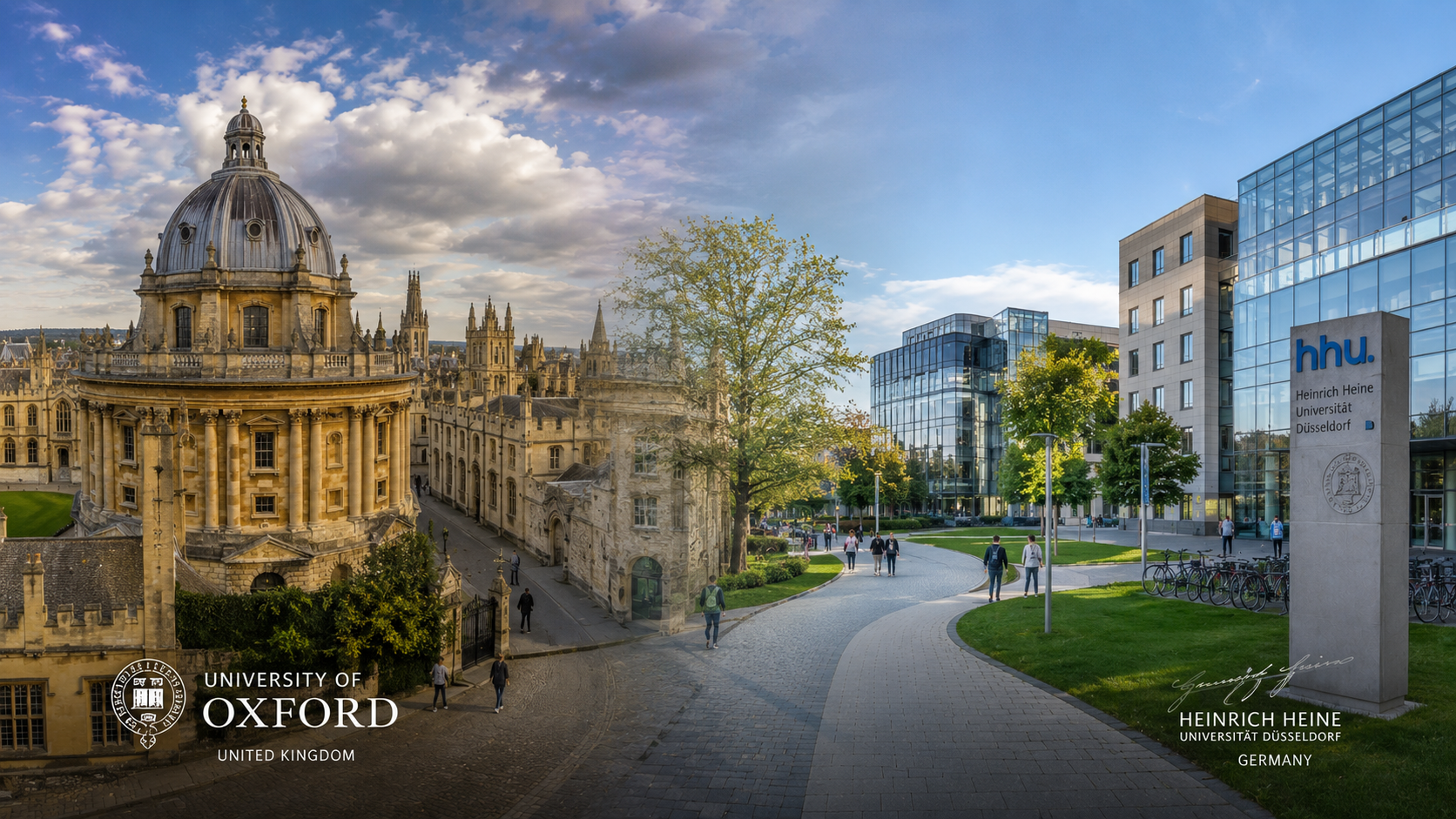
Education, Discipline and the International Mystery of School Lunches
When Germans and British people begin discussing school systems, the conversation usually starts politely and ends somewhere between educational philosophy and mild cultural confusion. Both countries are highly developed, both produce intelligent graduates and both are quietly convinced the other nation’s approach to education is slightly chaotic.
The British school system often feels traditional, flexible and built around gradual specialisation. The German system, meanwhile, sometimes feels as though education was handed over to a committee of engineers armed with clipboards, regulations and a deep emotional commitment to efficiency.
Neither system is perfect. Both have strengths, weaknesses, traditions, frustrations and enough bureaucracy to permanently exhaust parents and teachers alike. And despite living in some of the safest and wealthiest countries in the world, children in both nations continue insisting that school is essentially a human rights violation.
The differences begin surprisingly early. In the UK, children usually start primary school around the age of four or five. British children therefore enter classrooms while many German children are still enjoying one final glorious year of freedom, sandcastles and blissful ignorance about homework. In Germany, children generally begin “Grundschule” at age six, giving them a slightly longer childhood before the educational machinery slowly begins rolling towards them.
British primary schools often feel colourful, warm, creative and slightly chaotic in an oddly charming way. There are posters everywhere, handmade decorations, cheerful reading corners and tiny children running around carrying backpacks almost larger than themselves. German primary schools, by contrast, often appear more structured and organised, as though somebody decided children should begin preparing for administrative adulthood immediately. There is frequently paperwork involved. Germans trust paperwork. Sometimes perhaps a little too much.
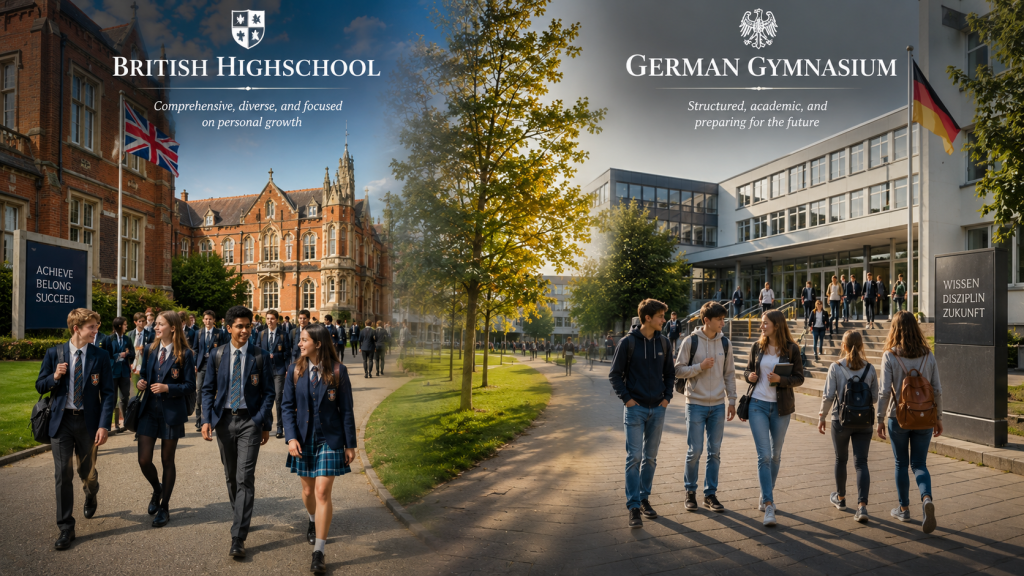
One of the most visually obvious differences is Britain’s passionate relationship with school uniforms. British schools absolutely adore uniforms. Blazers, ties, jumpers, school logos, approved shoes, approved socks, approved hairstyles and occasionally rules strict enough to make airport security look relaxed. British students often resemble miniature office workers preparing for an emergency shareholder meeting.
German schools, meanwhile, largely looked at this concept and collectively responded:
“Perhaps children simply wearing clothes will be sufficient.”
School uniforms are extremely uncommon in Germany. Students usually dress casually, which means German teenagers spend considerably less time adjusting ties and considerably more time debating philosophy, music, politics or why mathematics should legally qualify as psychological warfare.
British schools argue that uniforms improve discipline, reduce social pressure and create school identity. They are also remarkably useful during school trips when somebody inevitably disappears into a museum gift shop and must be retrieved before accidentally boarding the wrong bus home. German schools generally prioritise individuality and personal freedom. Both sides remain firmly convinced they are correct.
Things become significantly more complicated once secondary education begins. Germany traditionally separates students into different academic pathways at a relatively young age, often around ten years old. Historically, this meant dividing pupils between Hauptschule, Realschule, and Gymnasium. Gymnasium is the academic route leading towards university, while the other pathways focus more heavily on practical or vocational education. Some German states now use more integrated systems, but the idea of early academic sorting still plays an important role in German education.
Supporters argue this system allows targeted education and creates exceptionally strong vocational training. Critics, however, question whether deciding a child’s educational future at the age of ten might be slightly ambitious considering many ten-year-olds still regard eating glue as a scientifically valid experiment.
The British system tends to keep students together longer in comprehensive schools before they begin specialising later through GCSEs, A-levels, vocational qualifications or apprenticeships. This gives teenagers more time to develop academically before making major educational decisions. It also means British teenagers spend several years attempting to determine whether future success requires chemistry, business studies, history or somehow becoming a YouTube influencer.
Exams, however, remain the shared national trauma of both countries.
Germany loves exams. Britain also loves exams. Possibly both countries love exams a little too much.
German students face written tests, oral examinations, presentations, strict grading systems and the legendary “Abitur” final exams. German grading itself creates immediate confusion for British people because in Germany:
- 1 means excellent
- 6 means complete academic disaster
To British minds, this appears entirely backwards and emotionally unsettling.
British students endure GCSEs, A-levels, coursework, revision timetables, predicted grades and tea-fuelled panic attacks every summer. British exam culture often includes dramatic statements such as:
“This exam determines your entire future.”
This may technically be a slight exaggeration, although stressed sixteen-year-olds are rarely willing to discuss nuance.
One area where Germany receives enormous international respect is vocational training. Germany’s dual education system combines workplace experience with vocational schools and practical training, producing highly skilled technicians, engineers, electricians, mechanics and craftspeople. Vocational careers in Germany are generally respected and can lead to stable, well-paid careers. Britain also has apprenticeships and these have improved considerably over recent years, but Germany is still often viewed as Europe’s undisputed heavyweight champion of vocational education.
German efficiency occasionally reaches almost frightening levels. Some apprentices probably understand tax regulations before they are legally allowed to rent a car.
The school buildings themselves also reflect cultural differences beautifully. British schools often look historic, traditional and atmospheric – sometimes resembling Hogwarts with fewer dragons and slightly more health-and-safety paperwork. Older schools in England and Scotland can be genuinely beautiful, full of stone corridors, ancient assembly halls and windows that appear to have survived several centuries entirely out of stubbornness.
German schools often prioritise practicality instead. Functional design, clean lines, concrete, efficiency and windows apparently designed by people passionately committed to ventilation dominate the landscape. Some German classrooms occasionally resemble municipal office buildings that accidentally became educational institutions after a bureaucratic misunderstanding.
Then there is the deeply emotional issue of school lunches.
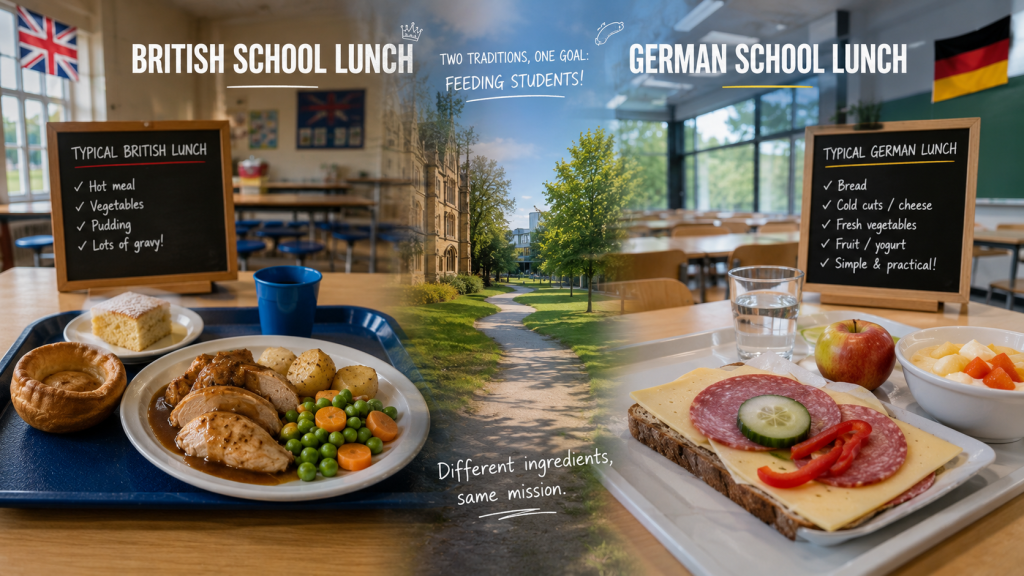
British school meals have improved enormously over recent decades, but historically developed a reputation somewhere between “questionable nutrition experiment” and “legendary survival training”. Germany traditionally operated shorter school days, meaning many students simply returned home for lunch, although full-day schools are becoming increasingly common.
German school meals often revolve around bread, sausage, cold lunches and highly practical food. British school lunches traditionally focused on potatoes, gravy, puddings (or the typical Fish & Chips from the nearby Chippy) and emotionally comforting children during endless rain. Both nations remain entirely convinced their bread (while the Britains know there’s is NOT the best bread of the world) is superior and this argument can continue for several hours without resolution.
Relationships between teachers and students also differ subtly. German schools often maintain a more formal atmosphere, while British schools can feel socially more relaxed depending on the school. British humour frequently appears inside classrooms, something that occasionally shocks German exchange students who are not emotionally prepared for teachers making jokes during lessons instead of immediately discussing examination regulations.
Perhaps the greatest shock arrives at university level. Public universities in Germany are often free or very inexpensive, allowing many students to graduate with relatively low debt levels despite constant complaints about student life. British university tuition fees, meanwhile, can be extremely expensive. British students often leave university carrying significant student loans and a highly advanced understanding of financial anxiety. On the other hand, British universities also enjoy enormous international prestige and global recognition.
In many ways, both education systems reflect their national cultures perfectly.
Germany values structure, organisation, technical expertise, efficiency and clearly defined educational pathways. Britain prioritises flexibility, broader development, gradual specialisation and tradition.
Germany trains students like highly efficient future professionals.
Britain trains students to survive essays, presentations and unpredictable weather simultaneously.
Both systems produce intelligent, capable adults.
Both systems frustrate parents.
Both create lifelong nostalgia and mild psychological scars in roughly equal proportions.
And no matter the country, one universal truth remains unchanged:
Homework will always feel unfair.