

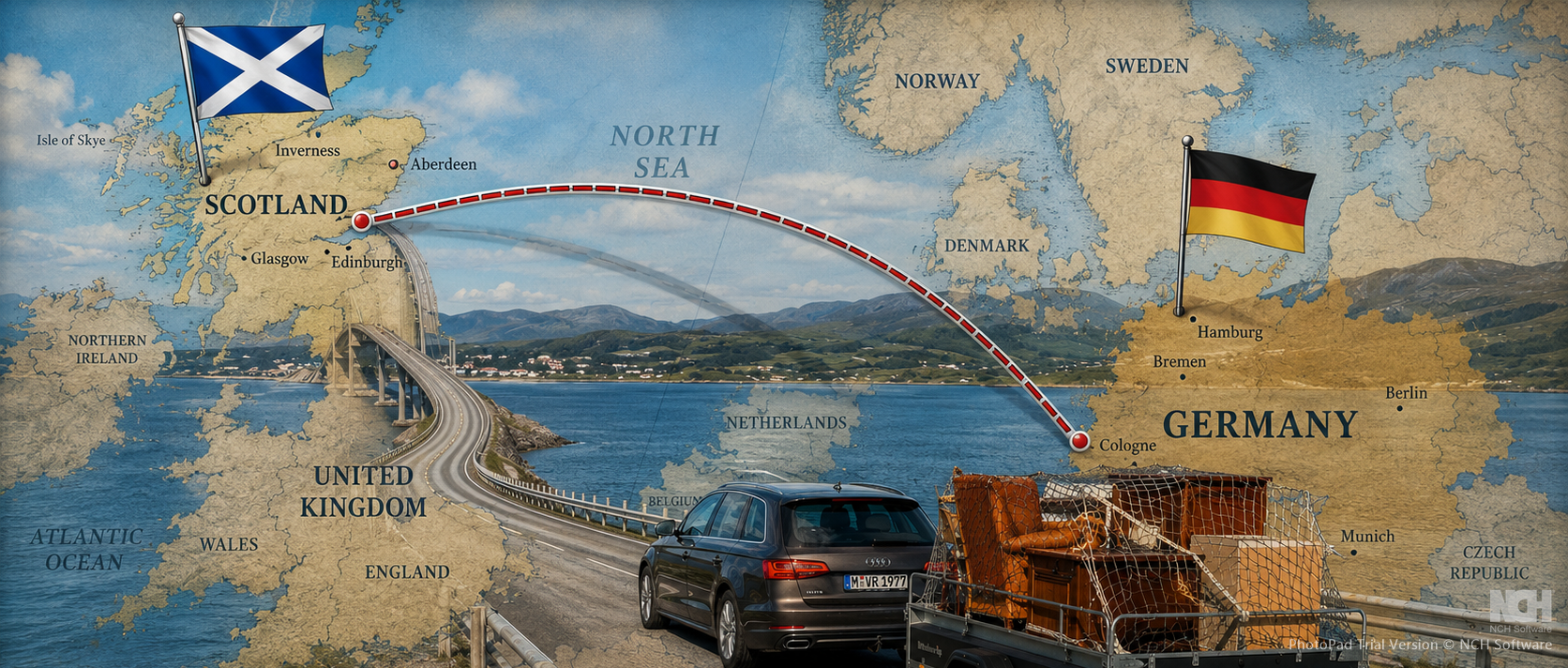
Germans Moving to Scotland – A Survival Guide With Rain, Paperwork, and Unexpected Happiness
Every year, Germans / Austrian / Swiss move to Scotland for many different reasons: work, study, love, adventure, nature, whisky, castles or simply because somebody visited the Highlands once and suddenly decided that sheep, fog and unpredictable weather were exactly what had been missing in life.
And honestly? Scotland has a lot to offer.
You get dramatic landscapes, friendly people, fascinating history, excellent hiking, cosy pubs and a national talent for making weather forecasts sound like warnings from ancient mythology. Germans / Austrian / Swiss moving to Scotland often discover that life becomes slightly wetter, considerably more relaxed and somehow much more humorous.
But before you start packing your furniture into a trailer and emotionally preparing yourself for deep-fried cuisine, there are a few important things you need to know.
First Important Reality Check: Brexit Happened
Before Brexit, Germans / Austrian / Swiss could simply move to Scotland with little more than a passport, optimism and perhaps a suspiciously large supply of Haribo (we all need some comfort).
Those days are unfortunately over.
Germany / Austria are still part of the European Union, but the United Kingdom is no longer part of the EU. This means Germans / Austrian / Swiss now generally need a visa or immigration status to live and work in Scotland long term.
The rules are UK-wide, which means Scotland does not have its own immigration system, even if many Scots occasionally wish it did.
So What Visa Do You Need?
That depends entirely on your situation.
1. Skilled Worker Visa (Most Common)
This is the main route for Germans / Austrian / Swiss moving to Scotland for work. You usually need:
- A job offer from an UK employer
- A company licensed to sponsor visas
- Proof of English language skills
- A salary meeting minimum requirements
Typical professions in demand include:
- healthcare
- engineering
- IT
- social care
- teaching
- construction
- skilled trades
Scotland especially needs workers in rural healthcare, engineering, hospitality and technical industries. The visa can often lead to permanent residency later.
2. Student Visa
If you study at a Scottish university, you can apply for a student visa.
Scotland has famous universities such as:
- University of Edinburgh
- University of Glasgow
- University of Aberdeen
Student life in Scotland is excellent, although many German / Austrian / Swiss students require several weeks to emotionally recover from hearing strong Scottish accents for the first time.
3. Family Visa
If your partner or close family member already lives legally in the UK, you may qualify through family routes. This process can involve:
- relationship proof
- financial proof
- housing proof
- approximately 14 kilograms of paperwork
Romance may be beautiful, but immigration authorities still want documentation.
4. EU Settlement Scheme (Only Special Cases)
If you already lived in the UK before Brexit deadlines, you may still qualify for settled or pre-settled status. For most new arrivals today, however, normal visa routes apply.
Documents You Will Need
Here comes the truly international part of moving abroad:
Paperwork.
German (not so much Austrian / Swiss) efficiency meets British bureaucracy in an epic crossover event nobody asked for.
Common required documents include:
- valid passport
- birth certificate
- employment contract
- university acceptance letter (if studying)
- proof of savings
- proof of accommodation
- English language certificate
- criminal record check (sometimes)
- visa approval documents
Important:
Your German ID card alone is usually no longer enough for long-term relocation. A passport is essential.
Money – The Part Nobody Likes Talking About
Moving to Scotland is not cheap.
Typical startup costs can include:
| Expense | Estimated Cost |
|---|---|
| Visa fees | £500–£2,000+ |
| Immigration Health Surcharge | often £1,000+ |
| Rental deposit | 1–2 months rent |
| First month rent | upfront |
| Travel costs | variable |
| Furniture / moving costs | painful |
| Emergency savings | highly recommended |
Many landlords also require:
- proof of income
- employment contract
- references
- credit checks
If you arrive without a UK credit history, some landlords may look at you as if you personally invented financial uncertainty.
Opening a UK Bank Account
This sounds simple but it is not always simple. Most banks require:
- proof of address
- passport
- visa
- sometimes proof of employment
Meanwhile, obtaining proof of address often requires a bank account first. Welcome to the legendary British Administrative Circle. Many newcomers initially use online banks while sorting out permanent banking arrangements.
National Insurance Number (Very Important)

To work legally in the UK, you need a National Insurance Number (NIN). This is essentially your tax and social security number. Without it:
- payroll becomes complicated
- taxes become strange
- employers become nervous
Apply for it as early as possible after arrival.
Finding Accommodation
Scottish housing differs quite a bit from Germany / Austria / Switzerland. Things Germans / Austrian / Swiss often discover:
- carpets everywhere
- separate hot and cold taps in older houses
- mysterious electric heating systems
- windows that appear decorative rather than insulating
- landlords deeply proud of “character properties” with visible dampness
Rental demand is extremely high in cities like:
- Edinburgh
- Glasgow
- Aberdeen
Rural areas are cheaper but often require a car because buses may operate according to mysterious ancient rituals.
Typical Timeline for Moving
6–12 Months Before
- research visas
- improve English skills
- save money
- update CV
- search for jobs
3–6 Months Before
- apply for jobs or university
- apply for visa
- organise documents
- start housing search
1–2 Months Before
- book travel
- arrange temporary accommodation
- prepare banking and insurance
- emotionally prepare for Scottish weather
First Month After Arrival
- register with GP doctor
- apply for National Insurance Number
- open bank account
- arrange internet
- learn difference between “wee”, “aye” and “nae bother”
Cultural Surprises Germans Often Experience
Weather Discussions Are Serious Business

Scots discuss weather professionally. A sentence like:
“Bit windy today”
may actually describe conditions under which aircraft reconsider landing.
Scottish People Are Very Friendly
Strangers talk to you.
Bus drivers talk to you.
Cashiers talk to you.
Somebody in a queue may suddenly tell you their life story.
This can initially confuse Germans trained in efficient silence.
Humour Is Everywhere
Scottish humour is fast, sarcastic, dry and relentless. If people joke with you constantly, it usually means they like you. If they stop joking, start worrying.
Final Thoughts
Moving from Germany / Austria / Switzerland to Scotland can be challenging, expensive, bureaucratic, stressful, exciting, confusing and absolutely worth it.
You trade some German efficiency for Scottish friendliness, dramatic landscapes and a lifestyle that often feels more relaxed and human. You may lose predictable weather, but you gain castles, lochs, Highland scenery and the strange ability to consider 12°C and sunshine as “excellent summer conditions”.
And eventually, one day, you will catch yourself saying things like:
“Actually, this drizzle isn’t too bad”.
At that moment, congratulations: your Scottish transformation has officially begun.