

A Friendly Architectural Culture Shock
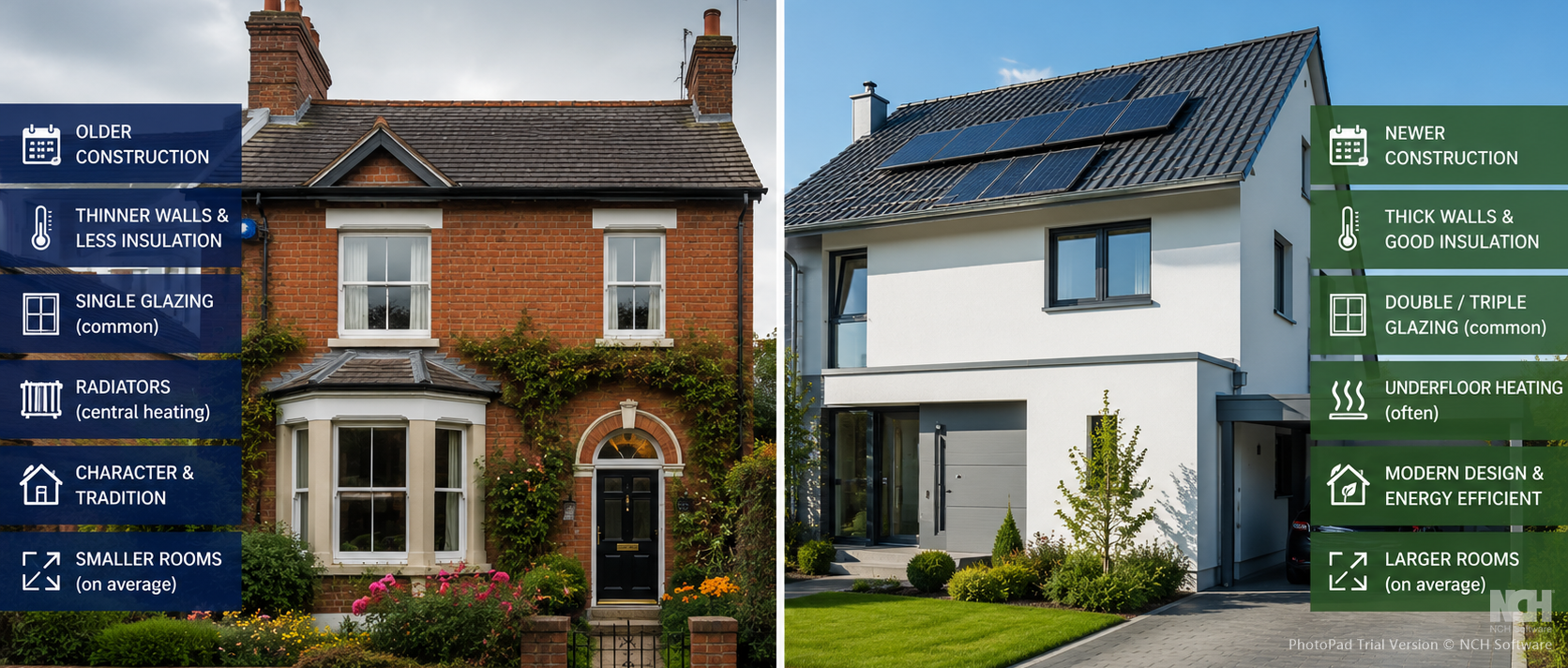
When Germans move to the UK – especially to Scotland – one of the first things they notice is that houses look… different. Very different.
At first glance, both countries appear perfectly civilised. They both have doors, windows, roofs, kitchens and occasionally even insulation. But once you start living in them, you quickly realise that German and British houses follow two completely different philosophies.
German houses were apparently designed by engineers determined to survive the apocalypse.
British houses were often designed by history, weather, optimism and the phrase:
“That’ll do”.
Neither is necessarily better. Both have charm, advantages, disadvantages and enough confusing details to keep international couples arguing about heating systems for decades.
Size Matters… Usually

One of the biggest differences is space.
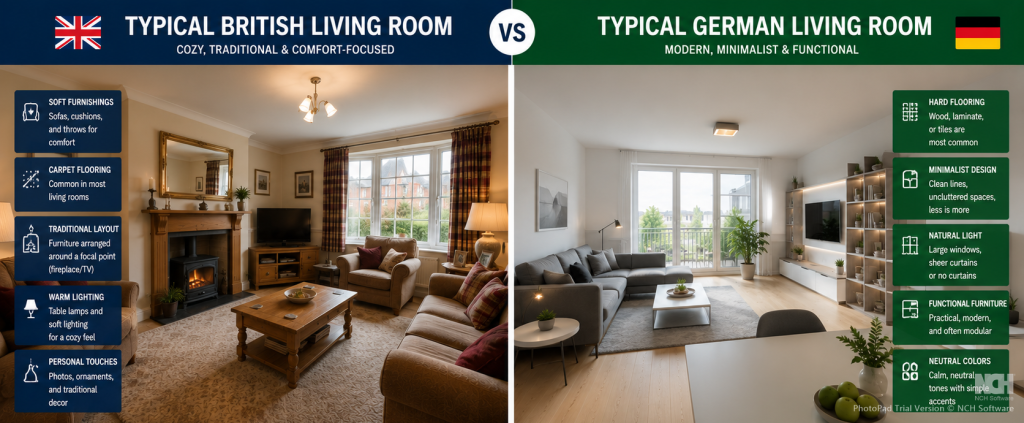
German houses and flats are generally larger than British ones. Rooms tend to be more spacious, ceilings often higher and storage space exists in quantities British people consider slightly suspicious.
British houses, meanwhile, are experts in creative compact living.
A German visiting a typical British semi-detached house may eventually ask:
“Where is the utility room?”
to which the British answer is often:
“You are standing in it.”
In Germany:
- washing machines often live in basements,
- storage rooms exist,
- cellars are common,
- and staircases feel designed for humans carrying furniture.
In Britain:
- washing machines live in kitchens or in more modern houses in utility rooms,
- vacuum cleaners live wherever they fit (most commonly in the cupboard),
- and moving a sofa upstairs becomes an extreme sport.
Insulation – The Great European Divide

This is where Germans become deeply emotionally invested.
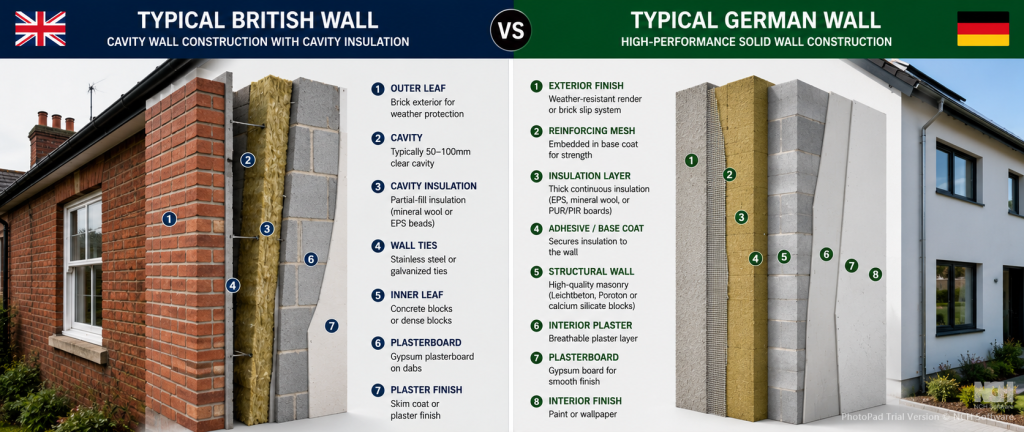
German houses are generally much better insulated and built with energy efficiency in mind. Thick walls, triple glazing, insulated roofs, proper ventilation systems and highly efficient heating are common – especially in modern homes.
German engineering takes heating very seriously.
A German house often treats winter as a technical challenge to defeat scientifically.
British houses, especially older ones, sometimes treat insulation more as a vague suggestion.
Single glazing still exists in older UK homes.
Draughts appear mysteriously.
Windows occasionally whistle.
And some houses seem to maintain a permanent indoor climate best described as:
“historic”
Of course, modern British houses are improving significantly, but older housing stock in the UK – particularly Victorian and pre-war properties – can be expensive to heat.
German newcomers are often shocked when they discover:
- radiators beneath every window,
- (possibly) carpets or vinyl in bathrooms,
- and indoor temperatures that feel emotionally linked to outdoor weather.
The Mystery of British Carpets
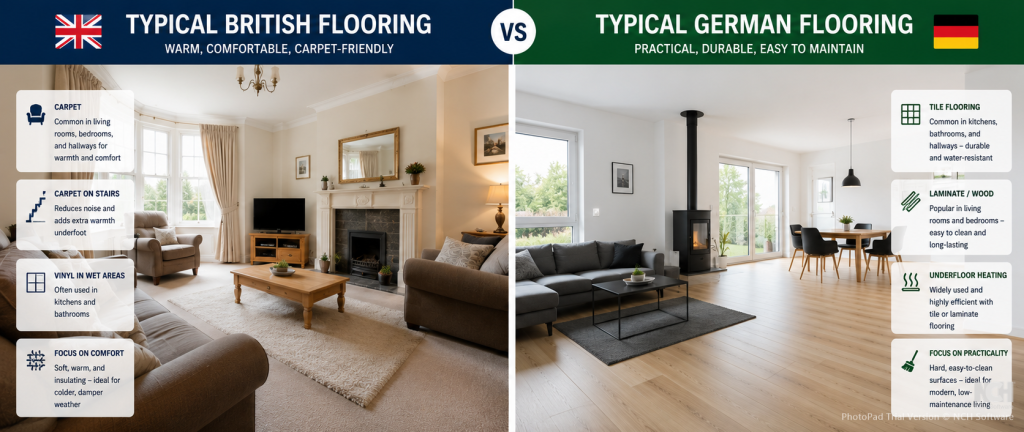

Germans love practical flooring:
- tiles,
- laminate,
- parquet,
- hardwood.
British people, meanwhile, looked at perfectly good floors and decided:
“What if everything was carpet?”
Bedrooms? Carpet.
Hallways? Carpet.
Stairs? Definitely carpet.
Sometimes even bathrooms – a design choice that continues to confuse continental Europeans on a spiritual level.
British carpets do create cosy homes, however. Especially in Scotland, where warm flooring feels less like luxury and more like survival equipment.
The Bathroom Situation
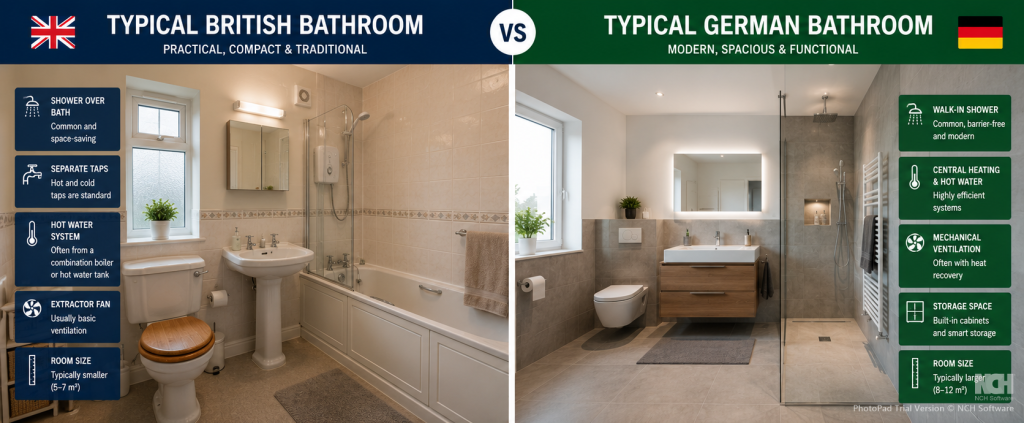

German bathrooms often feel modern, tiled, practical and slightly futuristic.
British bathrooms, especially in older homes, can feel like time capsules from several different decades simultaneously.
Germans are often fascinated by:
- separate hot and cold taps,
- electric showers (with the irony that the light switch is outside),
- water tanks in attics,
- mysterious boiler systems,
- and bathrooms where light switches are located outside the room because apparently electricity and British bathrooms maintain a complicated relationship.
And then there is the legendary British shower experience:
turning one knob slightly too far and instantly discovering the full temperature range of the sun.
Basements and Cellars
Germany loves basements.
British houses largely said:
“No thank you !”
In Germany, basements are common and extremely useful:
- storage,
- laundry,
- workshops,
- hobby rooms,
- panic shelters for DIY projects.
In Britain, especially in Scotland, basements are much rarer in normal housing because:
- dampness,
- flooding,
- geology,
- and centuries of building traditions.
Instead, British people perfected the art of storing everything in:
- lofts,
- cupboards,
- sheds,
- garages,
- or that one mysterious room nobody fully understands.
Building Materials
German houses are often built like fortresses.
Concrete, brick, reinforced walls, heavy doors – many German homes feel capable of surviving small meteor impacts.
British houses are lighter in construction and often rely heavily on brickwork, timber, plasterboard and cavity walls.
A German drilling into a British wall may accidentally create a new room.
A British person drilling into a German wall may require industrial equipment and emotional support.
Gardens and Outdoor Space
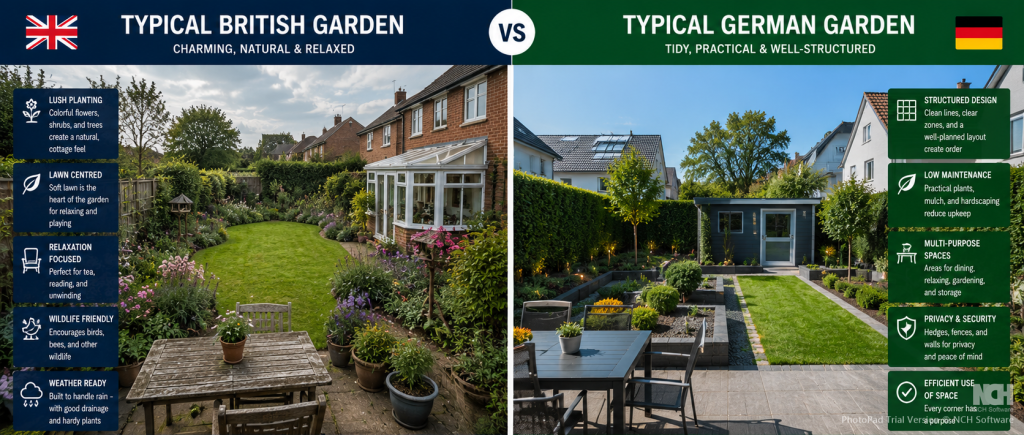

British people absolutely love gardening.
Even tiny gardens receive enormous emotional investment:
- flowers,
- hedges,
- decorative stones,
- bird feeders,
- tiny ponds,
- grass maintained with military precision,
- and “chuckies” (landscaping gravel, mostly coloured), lots of chuckies.
German gardens are often larger and practical.
British gardens are frequently smaller but treated like sacred personal kingdoms.
And then there are British garden sheds.
Some contain tools, others contain twenty years of unresolved decisions.
The Heating Philosophy
German homes:
- highly regulated heating,
- energy efficiency,
- thermostats everywhere,
- scientifically calculated warmth.
British homes:
- “Put another jumper on”
This is only partially a joke.
British people often tolerate indoor temperatures that would cause Germans to contact building inspectors immediately.
Age of Houses
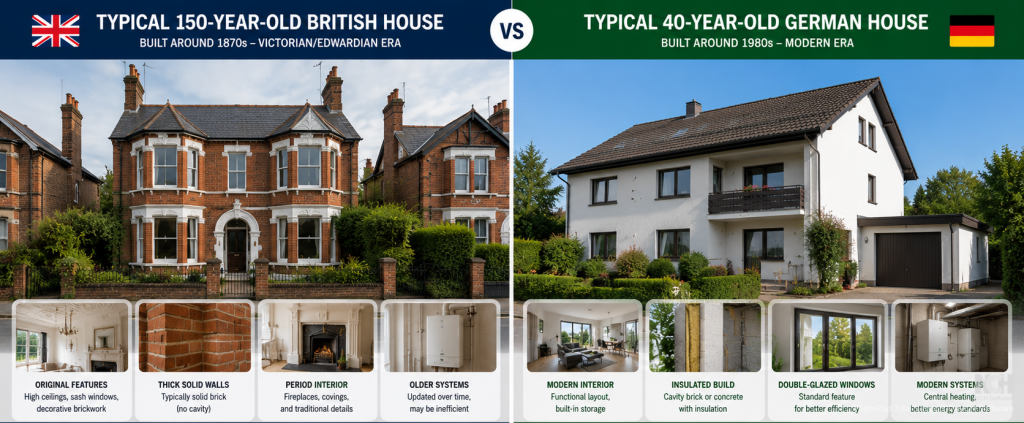

Britain has enormous amounts of older housing stock:
- Victorian houses,
- Georgian terraces,
- cottages,
- converted buildings,
- stone houses older than some countries.
This gives British housing incredible character and charm.
It also gives:
- uneven floors,
- mysterious noises,
- hidden pipes,
- and windows that technically close but emotionally remain open.
German housing tends to be more modern overall, especially because large parts of Germany were rebuilt after World War II.
Parking – The National Sport
German houses often come with:
- proper driveways,
- garages,
- sensible parking arrangements.
British houses often come with:
- determination,
- hope,
- and parallel parking skills developed through years of psychological training.
Particularly in older towns and cities, British streets were built long before anyone imagined every household owning two cars and a small SUV.
Final Thoughts
German houses and British houses reflect the cultures that built them.
German homes prioritise:
- efficiency,
- practicality,
- insulation,
- engineering,
- and long-term durability.
British homes prioritise:
- character,
- comfort,
- history,
- charm,
- and surviving another winter with tea and sarcasm.
Both styles have their strengths.
German houses may feel technically superior.
British houses often feel emotionally warmer – even if physically they sometimes are not.
And eventually, after enough time abroad, most Germans living in Britain discover something strange:
they begin complaining about draughty windows while simultaneously falling deeply in love with crooked cottages, stone houses, fireplaces, and old homes with “character”.
At that point, the transformation is complete.