

Their Role, Responsibilities and Why They Are Essential to Modern Healthcare
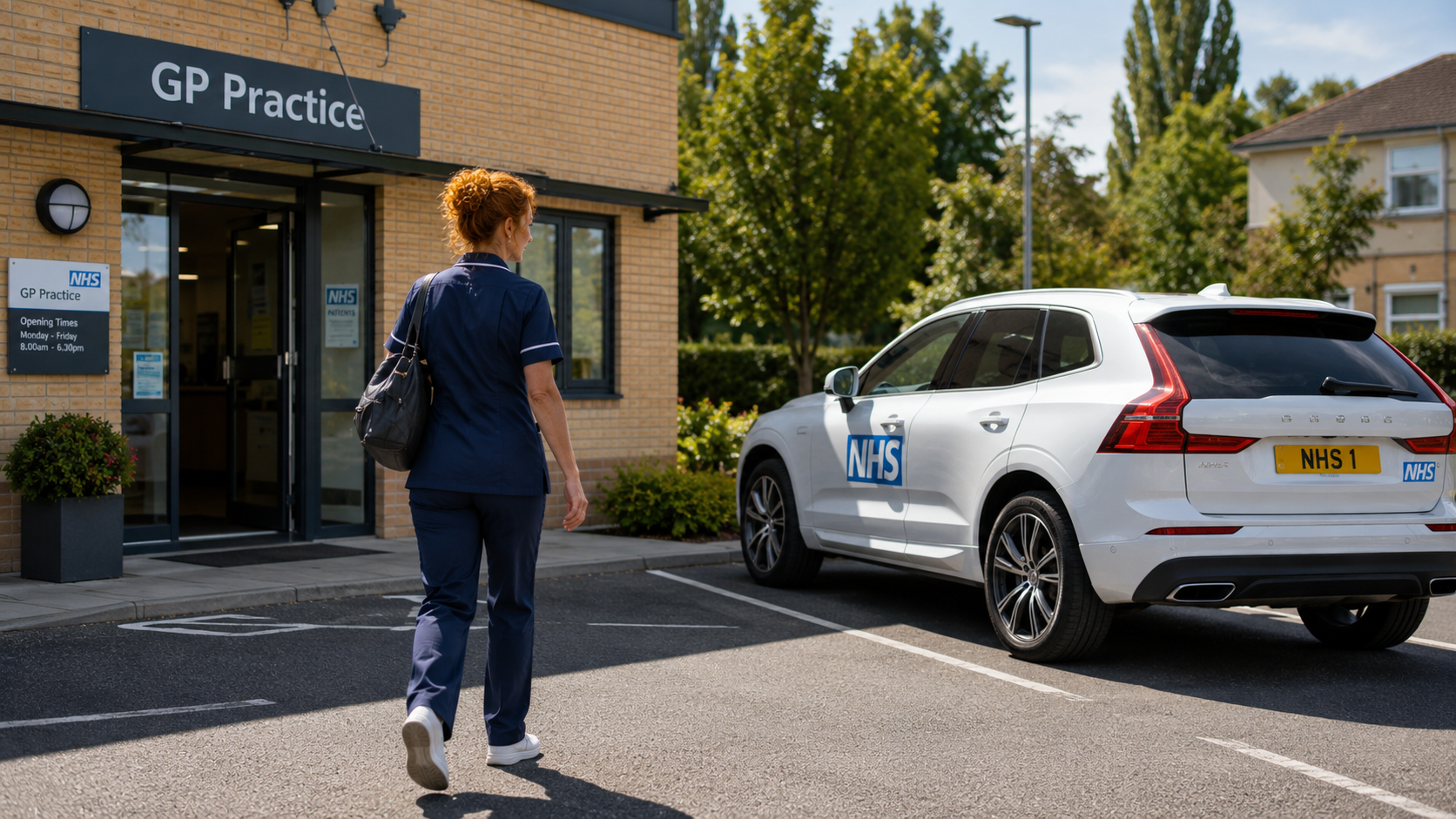
Many people moving to the United Kingdom are surprised to discover that not every appointment at a GP practice is with a doctor. In fact, a significant proportion of patient care is now delivered by highly trained specialist nurses who play a vital role in the NHS.
These nurses are far more than assistants. Many run their own clinics, manage chronic diseases, prescribe medications and provide expert care in specific medical fields.
This guide explains what specialist nurses do in GP practices, when you might see one instead of a doctor, and why they have become an essential part of modern primary healthcare.
.
What Is a Specialist Nurse?
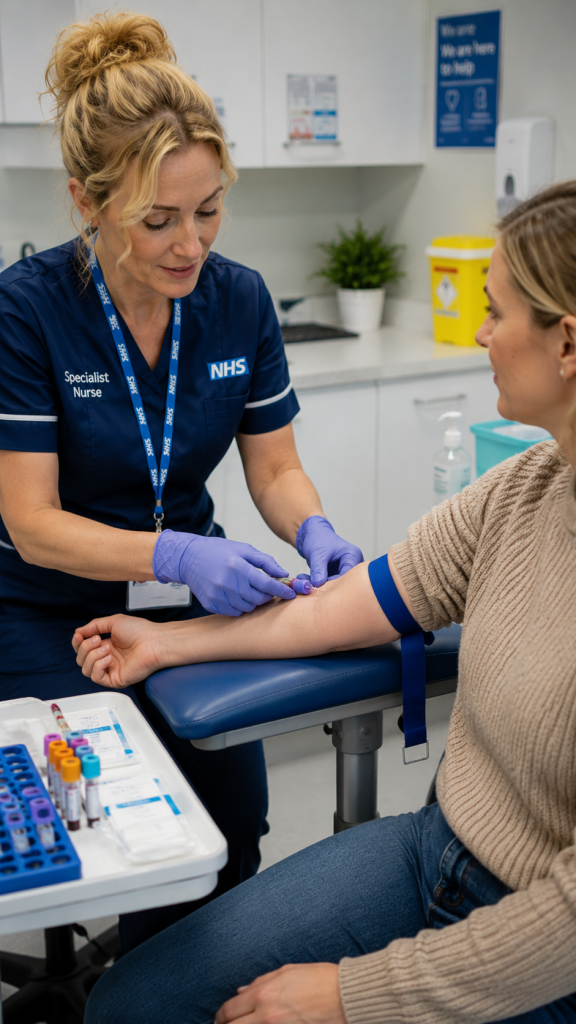
A specialist nurse is a registered nurse who has received additional training and expertise in a particular area of healthcare.
Many specialist nurses work within GP surgeries and provide care that was traditionally delivered by doctors.
Their responsibilities can include:
- Assessing patients
- Diagnosing common conditions
- Monitoring chronic diseases
- Prescribing medication (where qualified)
- Health education
- Preventive healthcare
- Screening programmes
They often work independently while remaining part of the wider GP team.
.
Why Are Specialist Nurses Used?
The NHS faces increasing demand due to:
- An ageing population
- Rising rates of chronic disease
- More complex healthcare needs
- GP shortages in some areas
Specialist nurses help ensure patients receive timely access to care while allowing GPs to focus on more complex medical issues.
In many cases, a specialist nurse may actually have more expertise than a GP in a particular long-term condition.
.
Common Types of Specialist Nurses in GP Practices
Diabetes Nurse
One of the most common specialist nursing roles.
What They Do
- Diabetes reviews
- Blood sugar monitoring
- Medication management
- Insulin advice
- Lifestyle support
You May See Them For
- Type 1 diabetes
- Type 2 diabetes
- Prediabetes
- Annual diabetic reviews
.
Asthma and COPD Nurse
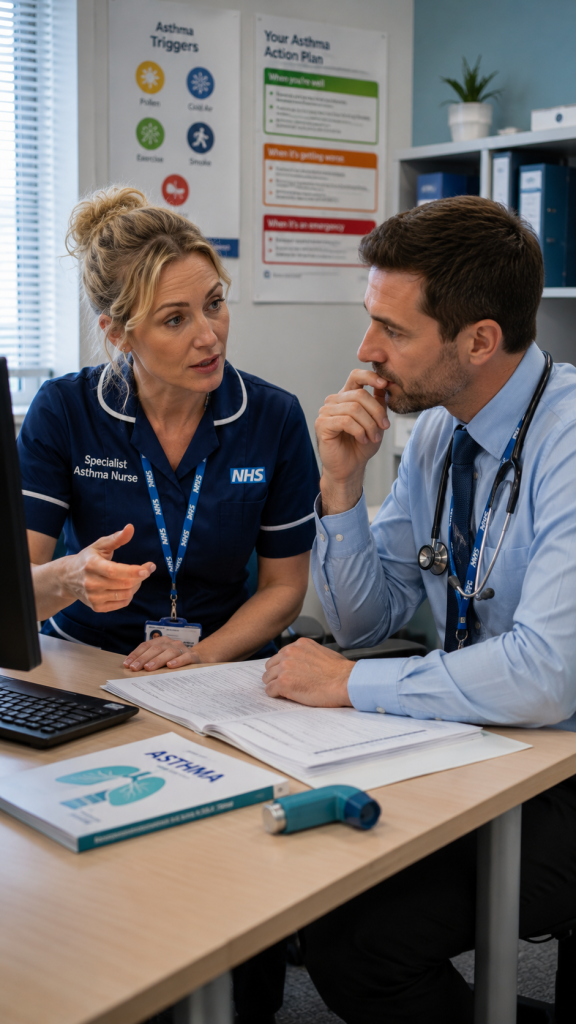
These nurses specialise in respiratory conditions.
What They Do
- Lung function tests
- Inhaler reviews
- Medication adjustments
- Symptom monitoring
You May See Them For
- Asthma
- COPD
- Chronic bronchitis
- Breathing difficulties
.
Practice Nurse
Practice nurses provide a broad range of routine healthcare services.
What They Do
- Blood tests
- Vaccinations
- Cervical screening
- Wound care
- Health checks
You May See Them For
- Flu vaccinations
- Travel vaccinations
- Blood pressure checks
- Dressings and wound management
.
Cardiovascular Nurse
Specialising in heart and circulatory conditions.
What They Do
- Blood pressure monitoring
- Cholesterol reviews
- Medication monitoring
- Lifestyle counselling
You May See Them For
- Hypertension
- High cholesterol
- Heart disease monitoring
.
Mental Health Nurse
Some GP practices employ mental health specialists.
What They Do
- Initial assessments
- Ongoing support
- Monitoring treatment effectiveness
- Signposting services
You May See Them For
- Anxiety
- Depression
- Stress-related conditions
- Long-term mental health support
.
Women’s Health Nurse
Specialising in female healthcare needs.
What They Do
- Cervical screening
- Contraceptive advice
- Menopause support
- Sexual health services
You May See Them For
- Smear tests
- Family planning
- Hormonal treatments
.
Paediatric Nurse
Some larger practices offer specialist paediatric (child health care) services.
What They Do
- Childhood vaccinations
- Development monitoring
- Advice for parents
.
Advanced Nurse Practitioners (ANPs)
One of the most important developments in modern NHS care.
Advanced Nurse Practitioners often perform duties traditionally associated with doctors.
They may:
- Diagnose illnesses
- Order tests
- Prescribe medication
- Refer patients to specialists
Many patients mistakenly assume they are seeing a GP when attending an appointment with an ANP.
.
Difference Between a GP and a Specialist Nurse
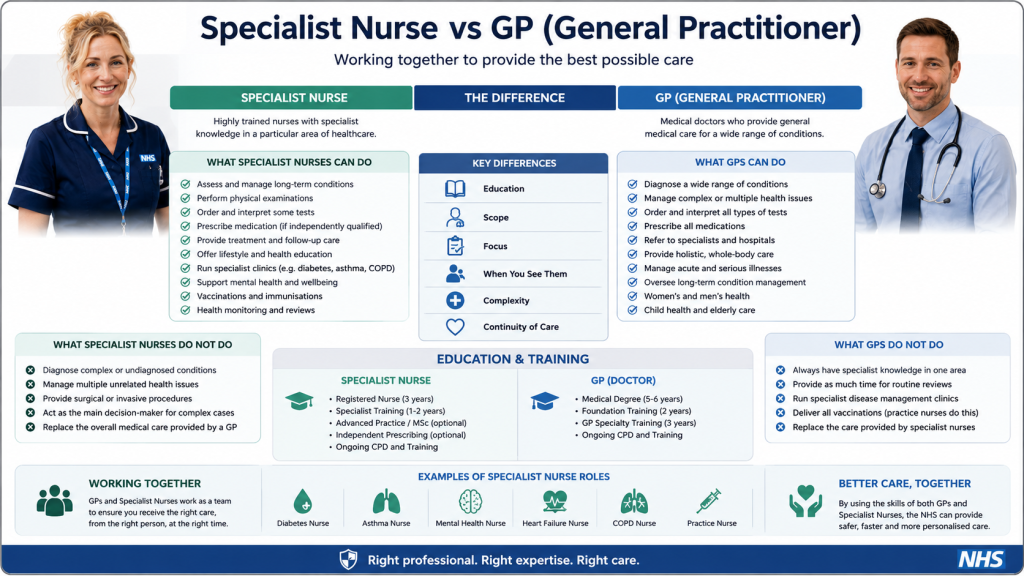
General Practitioner (GP)
A GP is a medical doctor.
GPs Typically Handle
- Complex diagnoses
- Multiple health conditions
- Serious illnesses
- Specialist referrals
- Uncertain or unusual symptoms
.
Specialist Nurse
A nurse focuses on a specific area of expertise.
Specialist Nurses Typically Handle
- Routine monitoring
- Long-term condition management
- Preventive healthcare
- Patient education
- Follow-up appointments
.
Example: Diabetes Care
GP
Initial diagnosis and overall management.
Diabetes Nurse
Regular reviews.
Monitoring:
- Blood sugar levels
- Diet
- Medication
- Insulin usage
Patients with diabetes often spend far more time with a diabetes nurse than with their GP.
.
What Can Specialist Nurses Prescribe?
Many specialist nurses hold independent prescribing qualifications.
This allows them to:
- Start medication
- Change medication
- Renew prescriptions
without requiring GP approval.
Examples include:
- Asthma medication
- Blood pressure medication
- Diabetes medication
- Antibiotics for certain conditions
.
Advantages of Specialist Nurse Clinics
- Faster Appointments: Patients can often be seen sooner.
- More Time: Nurse appointments are frequently longer than GP appointments.
- Specialist Knowledge: Many nurses focus exclusively on a particular condition.
- Better Long-Term Support: Patients often build strong relationships with specialist nurses who monitor them over many years.
.
Are Specialist Nurses as Good as Doctors?
For many routine and chronic conditions, studies consistently show excellent outcomes from specialist nurse-led care.
Patients often report:
- High satisfaction levels
- Better education about their condition
- More time to ask questions
Complex medical diagnoses and serious illnesses still require GP or consultant involvement.
The relationship is complementary rather than competitive.
.
Comparison with Germany, Austria and Switzerland
The UK uses specialist nurses more extensively than most German-speaking healthcare systems.
🇩🇪 Germany
Specialist nurses are usually based in:
- Hospitals
- Specialist clinics
Patients generally see the Hausarzt rather than a specialist nurse.
.
🇦🇹 Austria
Similar to Germany.
Nurses play important roles but generally have less autonomy in primary care than in the UK.
.
🇨🇭 Switzerland
Switzerland increasingly uses advanced nursing roles, although GP-led care remains dominant.
The UK remains one of the leaders in Europe for nurse-led primary care services.
Why Specialist Nurses Are Essential
Without specialist nurses, many GP practices would struggle to function effectively.
They help by:
✅ Reducing GP workload
✅ Improving access to care
✅ Managing chronic diseases
✅ Delivering preventive medicine
✅ Supporting patient education
✅ Improving health outcomes
They are now considered one of the foundations of modern NHS primary care.
.
Final Thoughts
Specialist nurses are among the most valuable healthcare professionals working in GP practices today. Whether managing diabetes, asthma, heart disease, mental health conditions or preventive healthcare, they provide expert care that complements the work of GPs.
For many patients, specialist nurses become their primary point of contact within the NHS and play a crucial role in helping them stay healthy, manage long-term conditions and navigate the healthcare system.
Modern GP practices would look very different without them, and the growing importance of specialist nurses is likely to continue as healthcare needs evolve in the years ahead.