

Understanding the 12 O’Clock Rule and Essential Highway Code Tips
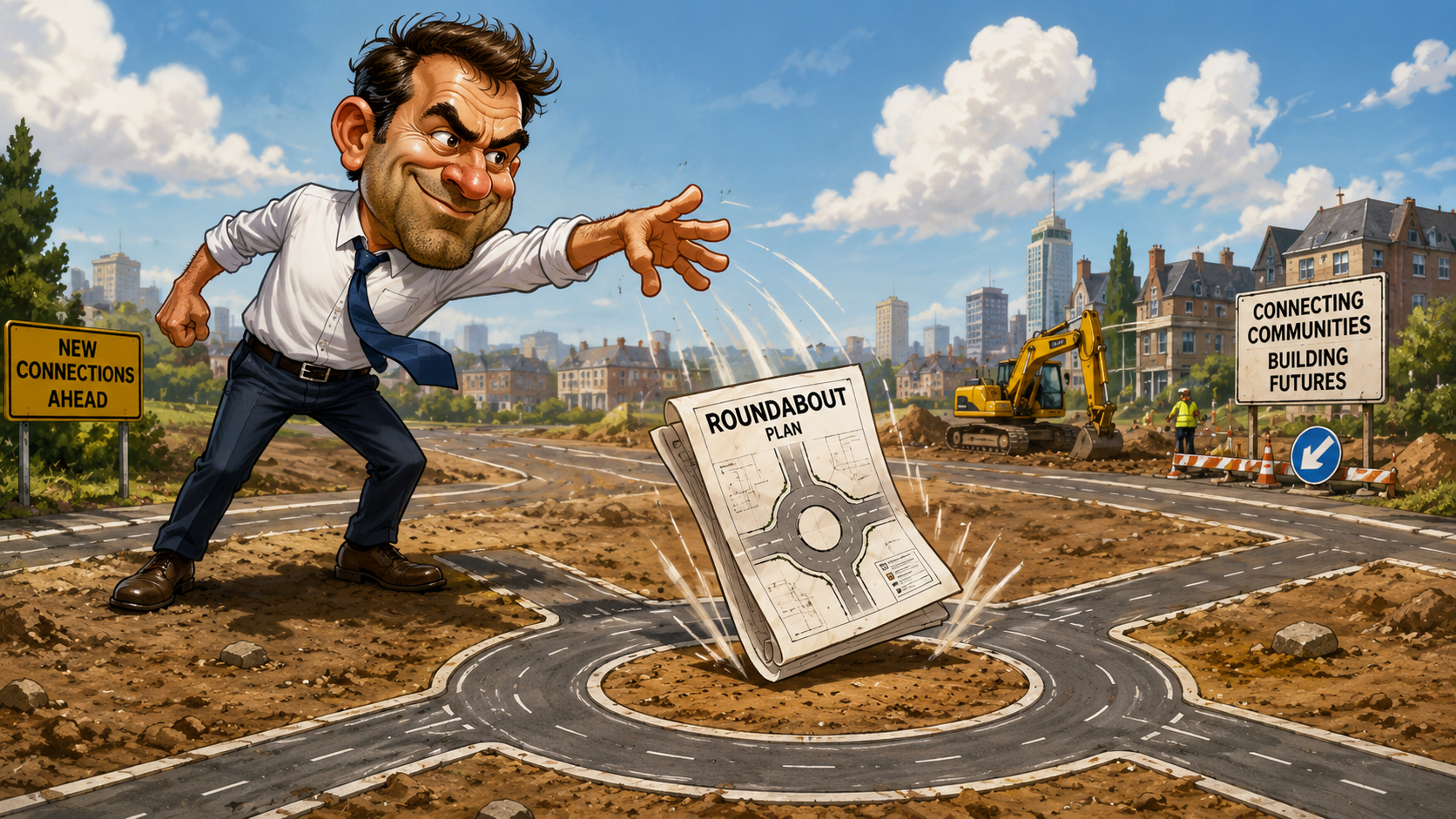
For many drivers moving to the UK or learning to drive, roundabouts can seem confusing at first. However, once you understand the basic rules, they are one of the safest and most efficient ways to manage traffic flow.
In this guide, we’ll explain the famous 12 o’clock rule, how to correctly use roundabouts, and highlight some important Highway Code facts every driver should know.
.
What Is a Roundabout?
A roundabout is a circular junction designed to keep traffic moving smoothly without the need for traffic lights in many situations.
Instead of crossing paths directly, vehicles travel around a central island in a clockwise direction in the UK.
Roundabouts help:
- Reduce congestion
- Improve traffic flow
- Lower accident severity
- Reduce vehicle idling times
- Increase road safety

.
The Famous 12 O’Clock Rule
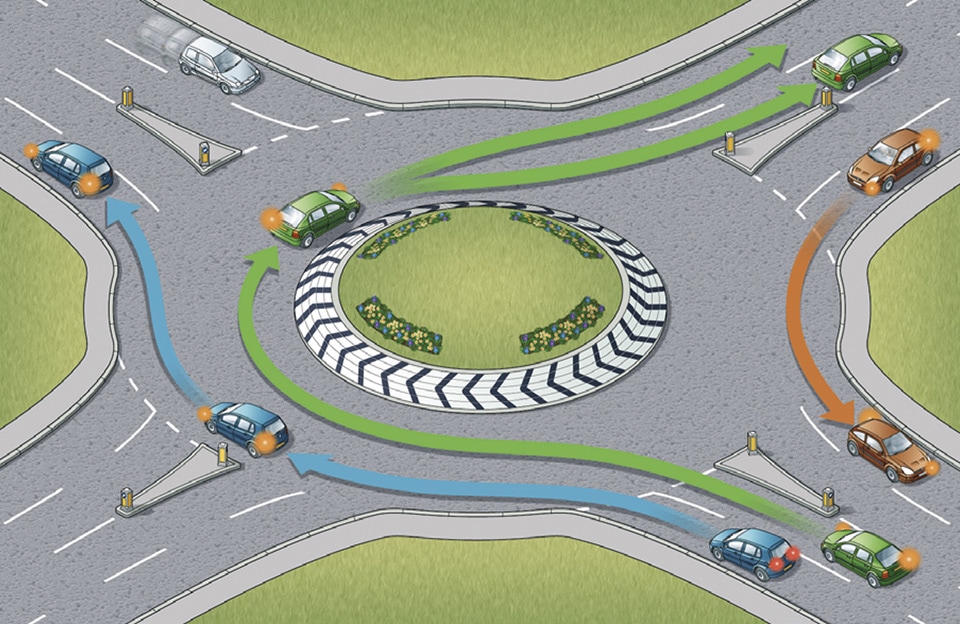
One of the easiest ways to understand lane positioning on a roundabout is the “12 o’clock rule.”
Imagine the roundabout as a clock face.
If Your Exit Is Before 12 O’Clock
Use the left lane.
Examples:
- First exit (left turn)
- Second exit if it is straight ahead but slightly left
Signal left when approaching.
If Your Exit Is At 12 O’Clock
Usually use the left lane unless road markings indicate otherwise.
Typically no signal is required on approach.
Signal left after passing the exit before your own.
If Your Exit Is After 12 O’Clock
Use the right lane.
Examples:
- Third exit
- Fourth exit
- U-turn
Signal right on approach.
Signal left once you pass the exit before your intended exit.
.
Who Has Priority?
One of the most important Highway Code rules is:
Give Way to Traffic From the Right
Before entering a roundabout, drivers must give way to vehicles already on the roundabout approaching from the right.
Never force your way into circulating traffic.
Watch for:
- Cars
- Motorcycles
- Cyclists
- Buses
- Emergency vehicles
.
Mini Roundabouts
Mini roundabouts are common in towns and cities throughout Scotland and the rest of the UK.
The same rules apply:
- Give way to the right
- Travel clockwise around the centre marking whenever possible
- Never park on a mini roundabout
Because of their small size, positioning becomes even more important.
.
Multi-Lane Roundabouts
Large roundabouts often have two or more lanes.
Always:
- Follow road markings
- Choose the correct lane early
- Stay in your lane
- Check mirrors before changing lanes
- Signal clearly
Many accidents occur because drivers change lanes suddenly while on the roundabout.

.
Spiral Roundabouts
Spiral roundabouts are becoming increasingly common.
These roundabouts guide drivers naturally towards their exit.
Key tips:
- Follow lane arrows
- Stay in your designated lane
- Do not change lanes unnecessarily
- Read signs well before entering
If you follow the lane markings, the roundabout will guide you towards the correct exit.
.
Roundabouts and Cyclists
The Highway Code now places greater emphasis on protecting vulnerable road users.
Drivers should:
- Allow cyclists plenty of space
- Avoid cutting across cyclists
- Check mirrors carefully
- Give cyclists time to move safely through the junction
Remember that cyclists may remain in the centre of a lane for visibility and safety.
.
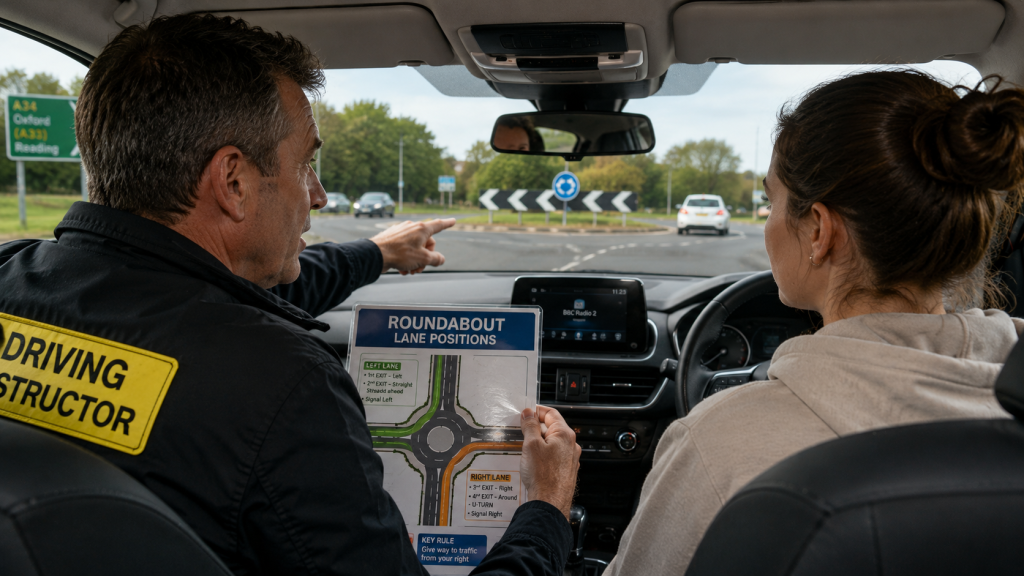
Roundabouts and Learner Drivers
Many learner drivers find roundabouts intimidating initially.
The key is:
- Slow down early
- Observe carefully
- Choose the correct lane
- Commit when a safe gap appears
- Avoid hesitation once you’ve decided to go
Confidence develops with practice.
.
Important Highway Code Facts Every Driver Should Know
Highway Code Is More Than Advice
Many Highway Code rules are backed by law.
Failing to follow them can result in:
- Penalty points
- Fines
- Prosecution
- Increased insurance premiums
,
Mobile Phone Use
It is illegal to hold and use a mobile phone while driving.
This includes:
- Texting
- Browsing
- Taking photographs
- Watching videos
.
Seat Belts
Seat belts must be worn by drivers and passengers unless a specific exemption applies.
.
Stopping Distances
At 30 mph, a typical stopping distance is approximately 23 metres.
This distance increases dramatically in wet, icy, or snowy conditions.
.
Give Way to Pedestrians
Recent Highway Code updates place greater responsibility on drivers to give way to pedestrians waiting to cross at junctions.
.
Common Roundabout Mistakes
Drivers frequently make the following mistakes:
- Using the wrong lane
- Forgetting to signal
- Failing to check mirrors
- Cutting across lanes
- Hesitating excessively
- Not giving way to traffic already on the roundabout
Understanding these common errors can help improve safety and confidence.
.
Final Thoughts
Roundabouts are a fundamental part of driving in the UK and are designed to keep traffic moving safely and efficiently. The 12 o’clock rule provides a simple way to understand lane selection, while the Highway Code ensures that all road users know who has priority and how to navigate these junctions safely.
Whether you’re a learner driver, new to Scotland, or simply looking to refresh your knowledge, understanding roundabouts will make your driving experience smoother, safer, and far less stressful..