

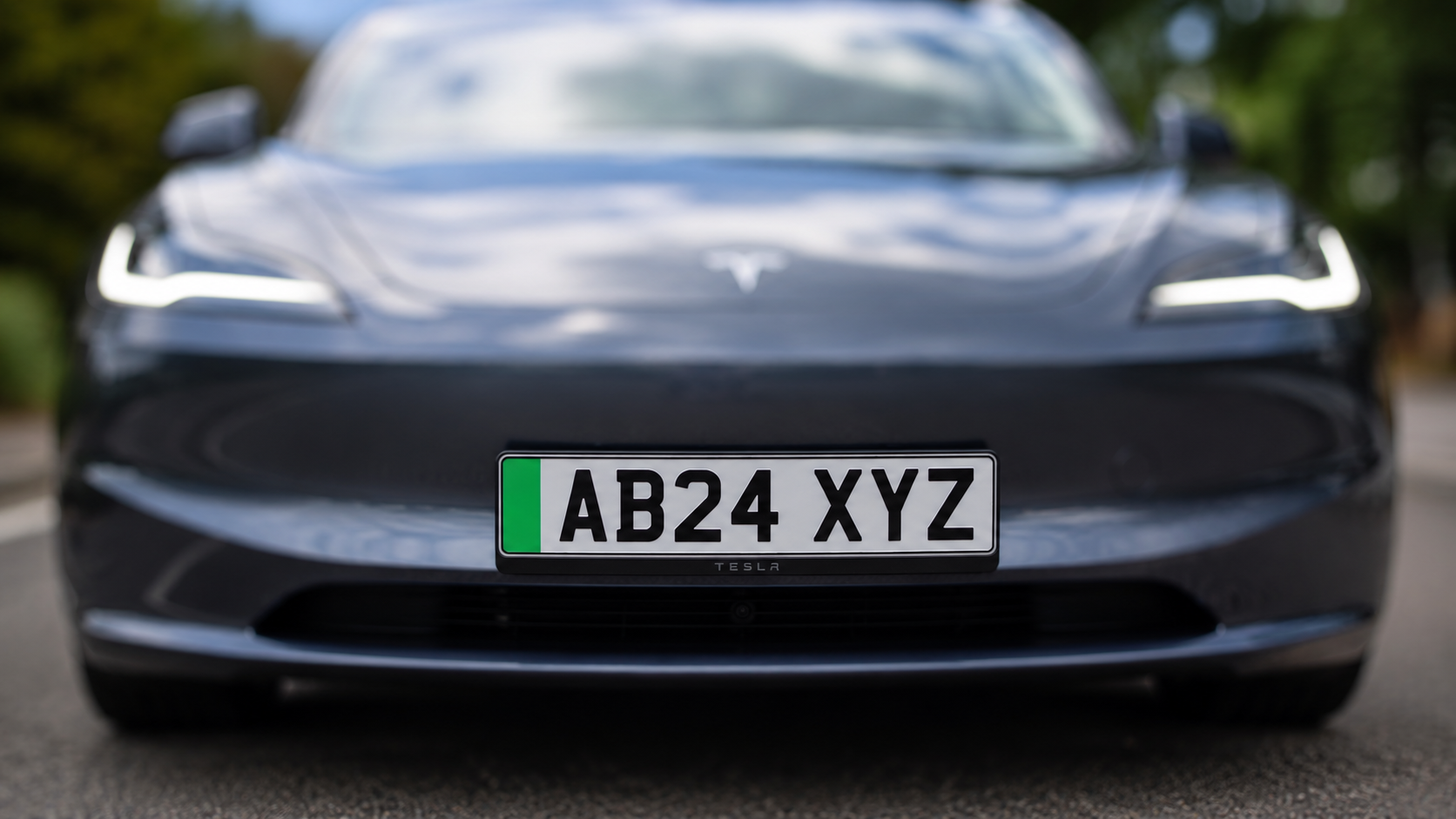
Everything You Need to Know
If you’ve recently moved to the United Kingdom, one of the first things you’ll notice is that British number plates look very different from those used in many other countries. Unlike Germany, Austria or Switzerland, where registration numbers often change when a vehicle changes owner or moves to another region, British registration plates usually stay with the vehicle for its entire life.
But what do all those letters and numbers mean? Why don’t they change when a car is sold? Can you buy a personalised registration? And what can a number plate actually tell you about a vehicle?
Let’s take a closer look.
.
A Registration Plate is the Vehicle’s Identity
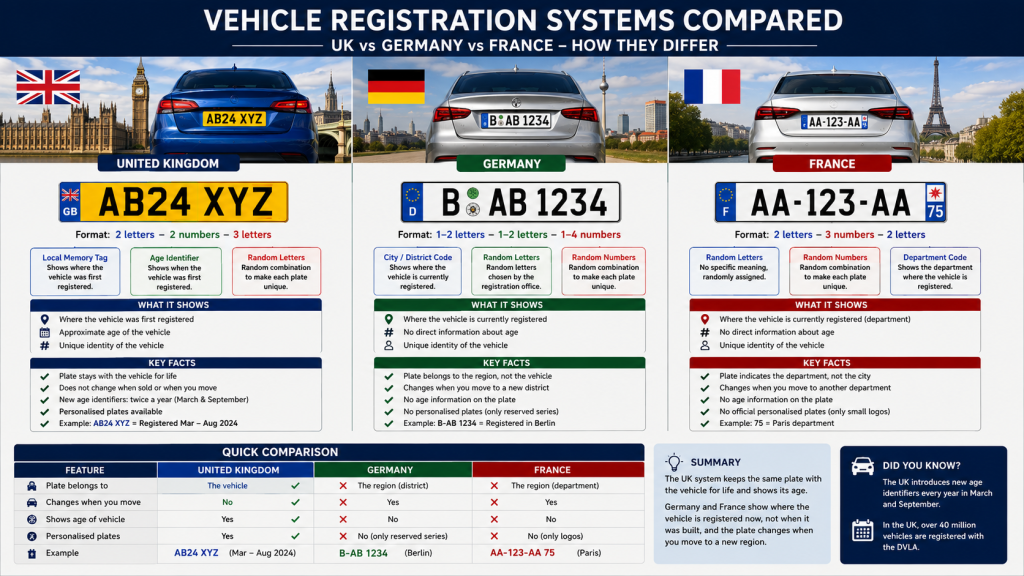
In the UK, a registration plate belongs to the vehicle, not the owner.
Once a vehicle is first registered with the Driver and Vehicle Licensing Agency (DVLA), it receives a registration number that normally remains with that vehicle for life.
This means the registration stays exactly the same when:
- the owner sells the vehicle
- the vehicle moves to another part of the UK
- the owner changes address
- the vehicle changes insurance companies
- the vehicle is inherited
This is one of the biggest differences compared with many European countries.
.
Why Doesn’t the Registration Change?
The UK system was designed around the idea that every vehicle should have one permanent identity.
Keeping the same registration throughout the vehicle’s life makes it much easier to:
- trace ownership history
- check MOT records
- monitor insurance
- identify stolen vehicles
- simplify police databases
- reduce administration
Instead of changing the registration, the DVLA simply updates the registered keeper.
The car keeps its identity.
.
How Does the Current Number Plate Format Work?
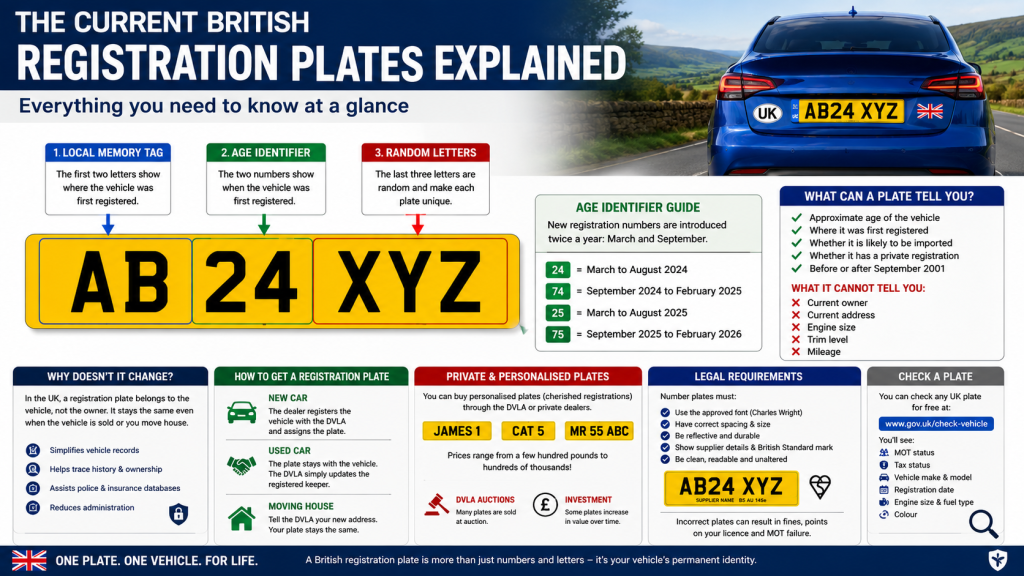
The current registration format has been used since September 2001.
Example:
AB24 XYZ
It consists of three parts.
press ▶️ to expand details
1. Local Memory Tag
The first two letters identify where the vehicle was first registered.
For example:
- SB = Glasgow
- SN = Edinburgh
- SG = Aberdeen
- ND = Newcastle
- ML = Manchester
- LK = London
The letters do not tell you where the owner lives today.
Only where the vehicle was originally registered.
.
2. Age Identifier
The two numbers show when the vehicle was first registered.
Examples:
| Number | Registration Date |
|---|---|
| 24 | March to August 2024 |
| 74 | September 2024 to February 2025 |
| 25 | March to August 2025 |
| 75 | September 2025 to February 2026 |
The UK introduces two new registration numbers every year.
- March
- September
This allows you to estimate the age of almost every modern vehicle immediately.
.
3. Random Letters
The final three letters are simply random.
They have no geographical meaning.
Example:
AB24 KLM
“KLM” doesn’t stand for anything.
It simply makes each registration unique.
.
What Can a Registration Plate Tell You?
A surprising amount.
From a registration plate you can usually determine:
- 🟢 Approximate age of the vehicle
- 🟢 Where it was first registered
- 🟢 Whether it is likely to be imported
- 🟢 Whether it has a personalised registration
- 🟢 Whether it was originally registered before or after September 2001
What it cannot tell you:
- 🔴 Current owner
- 🔴 Current address
- 🔴 Engine size
- 🔴 Trim level
- 🔴 Colour
- 🔴 Mileage
For that information you would need to perform a vehicle history check.
.
How Do You Get a Registration Plate?
When buying a brand-new car from a dealer, you don’t need to do anything.
The dealer will:
- register the vehicle with the DVLA
- arrange the registration number
- fit the number plates
- tax the vehicle (if applicable)
You simply collect your new car.
.
Buying a Used Car
When purchasing a used vehicle, the registration remains with the vehicle.
The seller completes the ownership transfer online or by post. Make sure and eventually check on this, otherwise you could get in trouble when selling the car later since you won’t get a proper and correct V5C (or you would have to pay a fee of £25 and have to wait up to four weeks for the new V5C)
The DVLA updates the registered keeper.
The registration plate stays exactly the same.
No new plates are issued.
.
What About Moving House?
Unlike many countries, moving house has no effect whatsoever on your registration number.
You simply tell the DVLA your new address.
The vehicle keeps exactly the same registration.
This is one reason why many classic British vehicles still carry the registration they received decades ago.
.
Private and Personalised Registrations
The UK has one of the world’s largest personalised registration markets.
You can buy a registration such as:
- JAMES 1
- CAT 5
- BMW 1
- MR 55 ABC
or registrations that resemble names.
These registrations are known as cherished registrations.
They can be:
- bought
- sold
- transferred
- inherited
- retained for future use
A personalised registration belongs to the person who owns the rights to it, not permanently to the vehicle.
If you sell the car without removing it first, the registration normally transfers with the vehicle. So make sure that you keep the standard registration plates when applying the cherished registration plates. They go back onto the vehicle when selling it later on and you keep your cherished registrations.
.
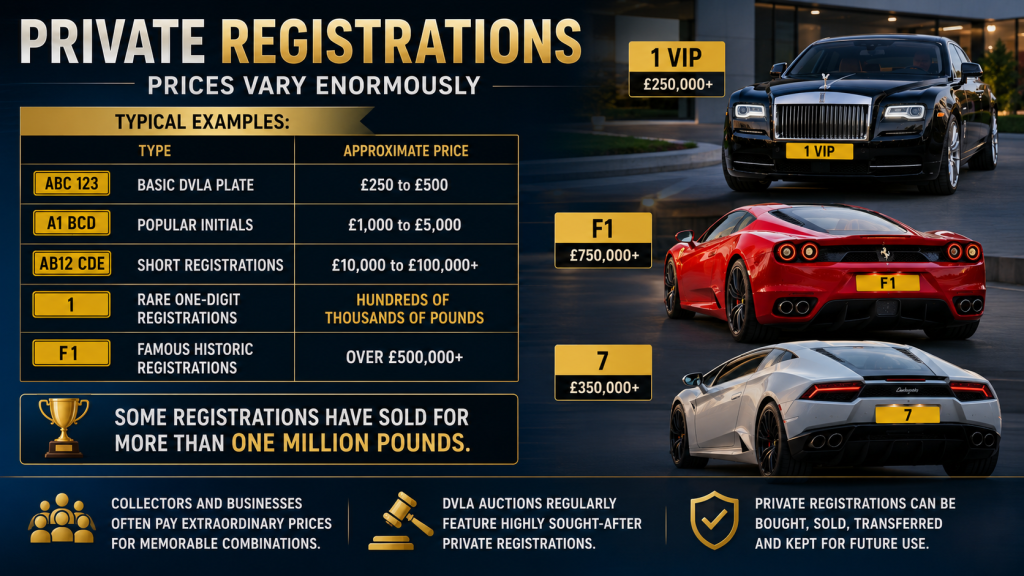
How Much Do Personalised Plates Cost?
Prices vary enormously.
.
DVLA Auctions
The DVLA regularly auctions desirable registrations.
Popular registrations include:
- initials
- company names
- lucky numbers
- short registrations
- memorable words
Many registrations appreciate in value over time and are treated almost like collectibles.

.
Can I Make My Own Number Plate?
No.
Registration plates must follow strict legal rules.
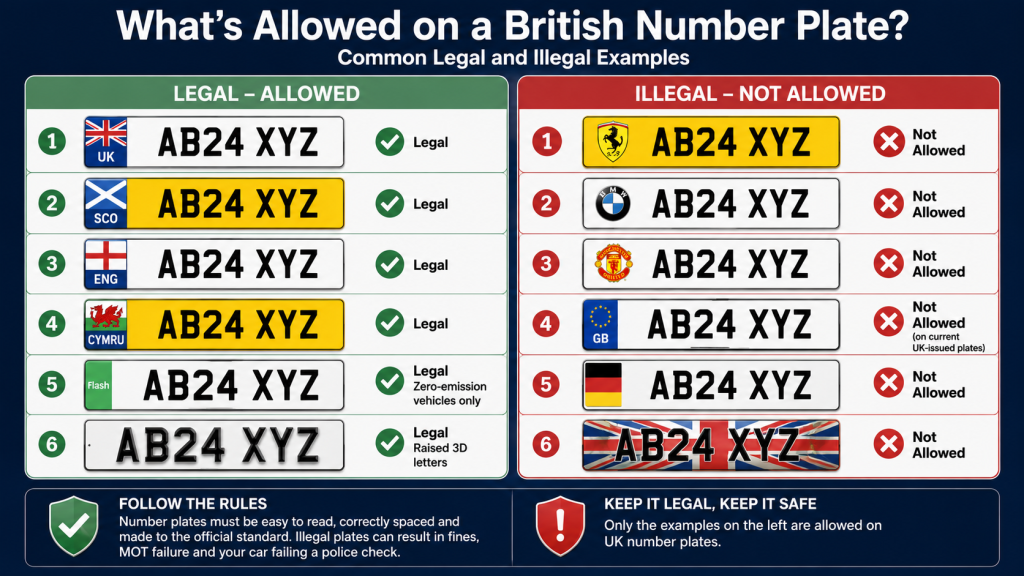
They must:
- use the approved font
- have the correct spacing
- display the supplier’s details
- include the British Standard mark
- use reflective materials
- be clearly readable
Changing spacing to spell a word is illegal.
Using decorative fonts is also illegal.
Drivers risk fines and MOT failures if the plates do not comply.
.
What About Imported Cars?
Imported vehicles may receive:
- an age-related registration
- a current registration
- occasionally a “Q” registration
A Q plate indicates that the age or identity of the vehicle cannot be reliably established.
This is common with:
- heavily rebuilt vehicles
- kit cars
- vehicles assembled from multiple donor vehicles
.
Historic Vehicles
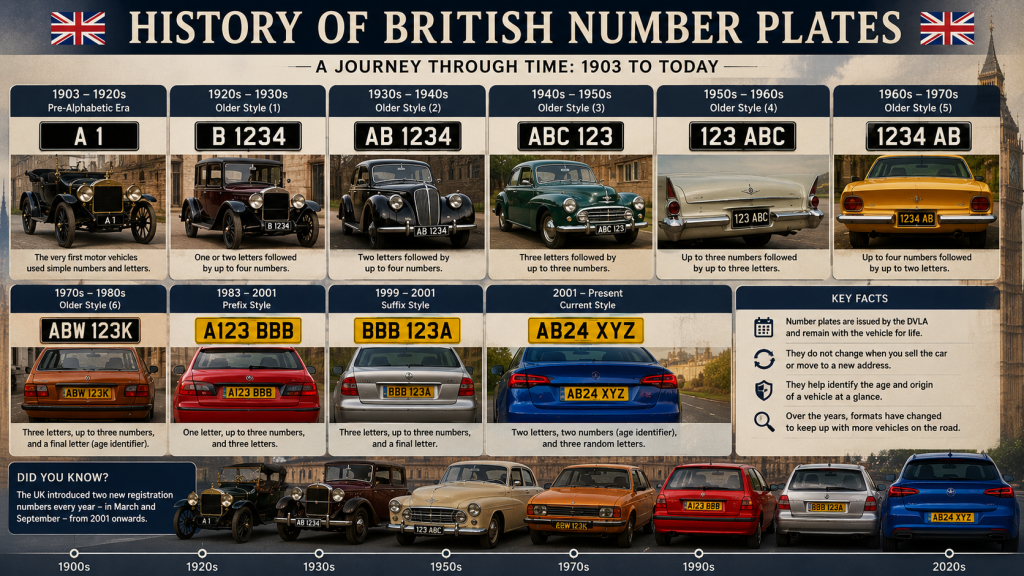
Older vehicles may display historic registration formats.
Examples include:
ABC 123
or
123 ABC
These registrations were issued before the current system and are often highly sought after by collectors.
Many classic cars still proudly wear their original registrations from the 1950s, 60s or 70s.
.
Can I Check a Registration Plate?
– Yes –
The DVLA offers a free online service where you can check:
- MOT status
- MOT history
- Tax status
- Vehicle details
- Registration date
- Engine size
- Fuel type
- Colour
This is particularly useful when buying a used vehicle. There are also apps for your mobile phone like “Vehicle Smart”, just type in the registration and it tells you the most important things about the car like quoted in the listing above. The MOT history goes back to the last five test results.
.
Fun Facts
- The current registration system began in September 2001.
- Two new age identifiers are introduced every year.
- Registrations usually remain with the vehicle for life.
- Personalised registrations can be worth more than many luxury cars.
- The UK’s registration database contains over 40 million vehicles.
- Some collectors buy registrations purely as investments.
.
Final Thoughts
British registration plates are far more than just a legal requirement. They tell the story of a vehicle’s age and origin while providing a permanent identity that follows the car throughout its life.
Unlike many countries where registrations change with ownership or location, the UK system keeps administration simple and preserves a vehicle’s history. Whether you’re buying your first car in Britain, collecting classic vehicles, or simply curious about the numbers you see every day, understanding how UK registration plates work helps make sense of one of the country’s most distinctive motoring traditions.
Next time you spot a registration like SG24 ABC or AB74 XYZ, you’ll know exactly what those letters and numbers are trying to tell you.