

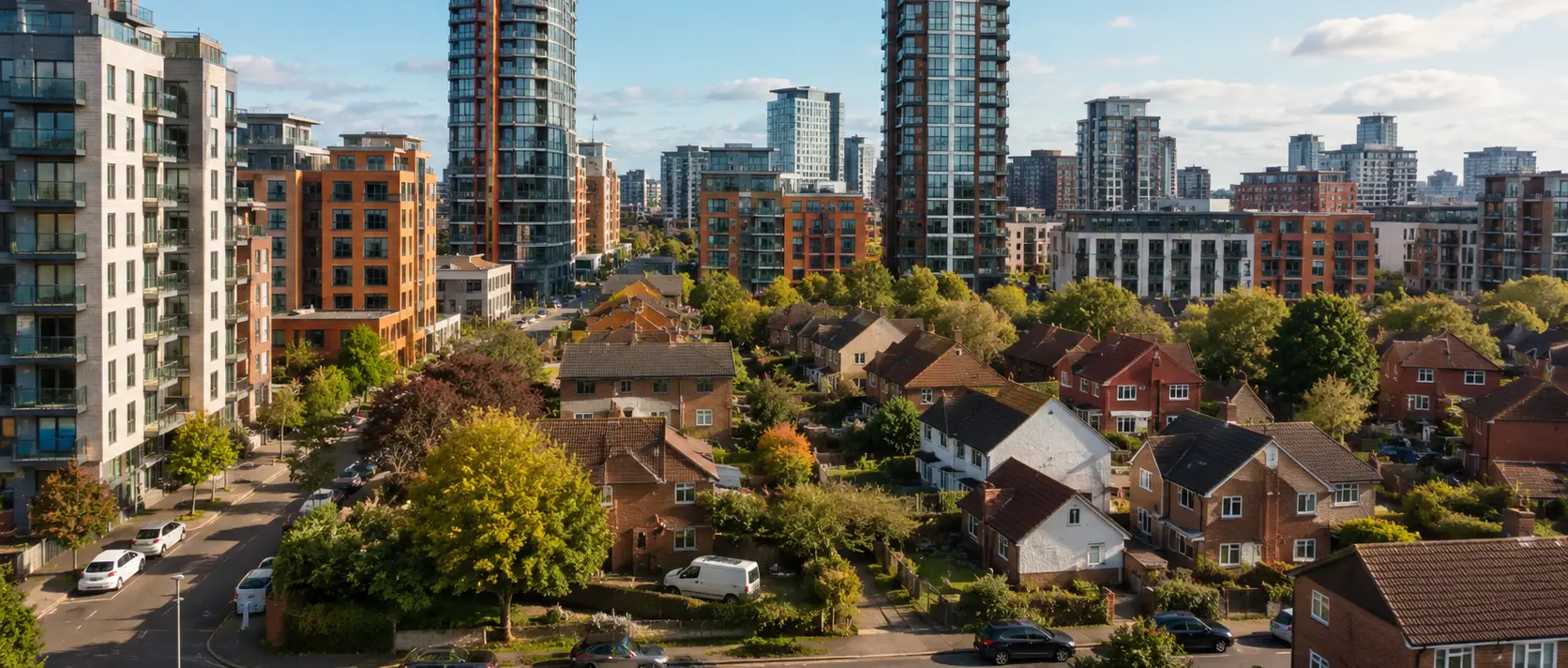
What is the best property for me?
If you are reading this, chances are you are thinking about renting or buying a property in the UK – or you simply enjoy voluntarily researching one of life’s most financially terrifying decisions. Either way, welcome.
The UK property market offers a wide range of housing options, from tiny city apartments to countryside mansions with heating bills large enough to qualify as historical events. Choosing the right property is not only about what looks nice in estate agent photos. Different types of homes come with different advantages, disadvantages, maintenance costs, lifestyles and levels of neighbour interaction.
Unfortunately, the type of property you choose can have a major impact on the price – both for renting and buying. However, while property type matters, location remains the single biggest factor affecting value. In the UK housing market, location is king, queen and most of the royal treasury.
For example, building a house in a rural area is usually far cheaper than constructing the exact same property in a major city such as Glasgow or Edinburgh. Of course, the plots itself will be more expensive in a city, but even the actual building process costs more. Labour, construction materials, transportation, permits and general operating expenses all tend to increase in urban environments. In simple terms, cities somehow manage to make even bricks feel more expensive.
Rural properties, on the other hand, are often more affordable and may offer larger plots, quieter surroundings and more space overall. The trade-off is usually convenience. Shops, schools, healthcare facilities, restaurants and public transport may not be right around the corner. In some rural areas, “nearby supermarket” can become an optimistic interpretation of geography.
When choosing a property, it is important to think about more than just price. Questions such as privacy, parking, commuting, maintenance, garden size, energy efficiency and future renovation costs all play an important role. The perfect home for one person may be completely impractical for another. A young professional in a city centre may love a compact apartment close to nightlife and transport, while someone else dreams of a detached countryside house where the loudest noise is a sheep expressing strong opinions.
To make things slightly less confusing, properties in the UK are generally divided into three main categories:
- Flats
- Houses
- Static Caravans / Lodges
A Quick Note About Static Caravans and Lodges
Before continuing, it is worth mentioning that this guide will not cover static caravans or lodges in detail. While they are technically forms of housing, the lifestyle associated with them is quite different from living in a traditional flat or house.
In recent years, living in static caravans and lodges has become increasingly common in Scotland, particularly among older residents and people looking for more affordable living options. With property prices, energy bills and general living costs continuing to rise, many people are beginning to view this type of housing as a practical alternative rather than simply a holiday arrangement.
The main reason is simple: living in a static caravan or lodge is often significantly cheaper than renting or owning a conventional house or flat. Lower purchase prices, smaller living spaces and reduced maintenance requirements can make them financially attractive, especially for retirees or people seeking a quieter lifestyle. While modern lodges can be surprisingly luxurious and comfortable, they still offer a very different experience compared to living in a standard house or flat.
Because this type of housing deserves its own proper discussion, a separate post covering static caravans and lodges in more detail would make far more sense – preferably one that explains how an entire modern lifestyle can somehow fit into a building smaller than some people’s kitchens.
Flats
Apartments – Compact Living and the Fine Art of Using Every Square Metre

Apartments are the smallest and most common type of flat in the UK housing market. They are especially popular in towns and cities where space is limited, property prices are high and developers have mastered the ancient architectural skill of fitting an entire lifestyle into the size of a generous garage.
Apartment sizes usually range between 15 and 45 square metres, with an average around 36 square metres. In practical terms, this means every piece of furniture must earn its place in the property. Owners and tenants quickly become experts in multifunctional living, where a sofa can become a guest bed, a dining table becomes a workspace and storage space is treated with the same importance as gold reserves.
Most apartments offer one or one-and-a-half bedrooms. In smaller units, the bedroom may be partially combined with the living area, creating the classic “living-bedroom” concept where your sofa and your bed maintain an unusually close relationship. More commonly, apartments combine the living room and kitchen into one open-plan area, allowing residents to cook dinner while simultaneously watching television and questioning whether they own too many chairs.
Kitchens in apartments are often compact. Smaller apartments frequently include only a kitchenette or open kitchen area rather than a separate full-sized kitchen. This setup is practical for space-saving purposes, although it can occasionally result in the entire apartment smelling enthusiastically of whatever was cooked most recently. In studio apartments especially, making fried food becomes less of a meal and more of an environmental event.
Parking is often one of the more challenging aspects of apartment living. Many apartment buildings rely on on-street parking, assuming parking is available at all. In busy towns and cities, residents may depend on nearby public car parks, which are frequently chargeable during the day and sometimes free after 6 p.m. This creates the unique urban tradition of carefully timing car movements like a tactical military exercise to avoid parking charges.
Modern apartment developments occasionally offer private parking or underground garages, but these are usually considered premium features and are often priced with impressive confidence. In city centres, simply having a guaranteed parking space can sometimes feel more luxurious than the apartment itself.
Apartments are particularly attractive for students, young professionals, single occupants, couples and anyone seeking affordable housing close to workplaces, shops, restaurants and public transport. They require less maintenance than larger homes and are generally cheaper to heat, clean and furnish. Cleaning an apartment, for example, can often be completed in the time it takes owners of large detached houses to locate the vacuum cleaner.
Of course, apartment living also means adapting to close proximity with neighbours. Shared hallways, communal entrances and mysterious noises from adjacent units are all part of the experience. In some buildings, residents unintentionally become familiar with their neighbour’s music taste, exercise routine, or impressive ability to drop heavy objects at exactly 2 a.m.
Despite their compact nature, apartments remain one of the most practical and accessible forms of housing in modern urban life. They may not offer huge gardens, grand staircases or three-car driveways, but they do provide convenience, affordability and the valuable life skill of learning exactly how much furniture can fit into 36 square metres before it becomes a safety concern.
Flats – The Middle Ground Between Apartment Living and Actual Space
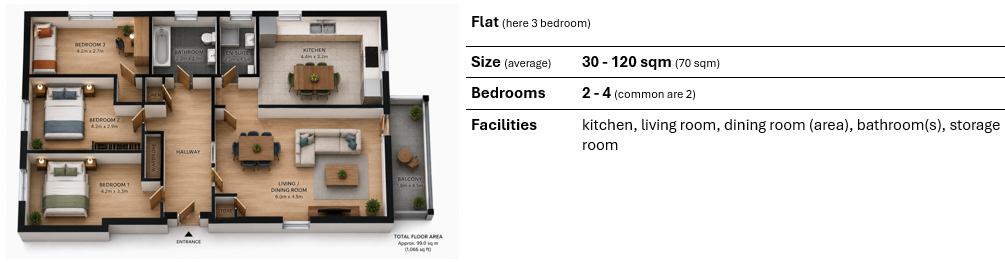
Flats are one of the most common forms of housing in the UK and can be found almost everywhere, from small rural towns to massive city centres. Technically, a flat exists within a building containing at least two separate homes, although in practice the numbers can vary dramatically. In smaller towns and townships, buildings with four to eight flats are very common, while in larger cities entire residential towers may contain dozens of flats – sometimes up to 60 or more. At that point, the building starts feeling less like “a block of flats” and more like its own postcode with elevators.
Compared to smaller apartments or studio-style accommodation, flats are often larger and provide a more separated layout between living spaces and bedrooms. This makes them particularly attractive for families, couples or anyone who enjoys the revolutionary concept of not sleeping three metres away from the refrigerator.
One of the defining features of many flats is the presence of a proper kitchen. Unlike compact apartments that may rely on kitchenettes or open-plan “kitchen corners”, flats more commonly include full kitchens with separate workspaces, storage and room for actual cooking. In housing terms, this usually means enough space to prepare dinner without simultaneously sitting on the sofa.
The internal layouts of flats are generally more practical and structured. Living rooms, bedrooms, bathrooms and kitchens are often clearly separated, creating a stronger sense of privacy and organisation. This separation becomes especially valuable during remote working, family life or arguments over who left dishes in the sink.
Parking arrangements for flats vary widely depending on the location and age of the building. In older town-centre properties, residents may rely entirely on on-street parking or nearby public car parks, which can occasionally turn everyday parking into a tactical exercise requiring patience and excellent timing. More modern developments often include private resident parking areas, while larger city complexes may provide underground or multi-storey parking facilities – a feature that instantly increases property appeal in any urban environment where parking spaces are treated like rare wildlife sightings.
Flats are popular because they offer a balance between affordability, practicality and space efficiency. They are usually less expensive than houses while still providing more comfort and separation than smaller apartment-style accommodation. In towns and cities especially, flats allow residents to live close to shops, transport links, workplaces and entertainment without needing to maintain gardens, roofs, fences and every other object that mysteriously breaks when you own a house.
Of course, flat living also comes with the realities of shared buildings. Neighbours, communal entrances, stairwells and occasionally mysterious noises from somewhere above remain part of the experience. However, for many people, the convenience, location and practicality easily outweigh the disadvantages.
Overall, flats represent one of the most versatile housing options in the UK – offering enough space to feel comfortable, enough separation to feel organised and just enough shared living experience to occasionally know far more about your neighbours than you originally planned.
Maisonettes – The Flat That Secretly Wants to Be a House
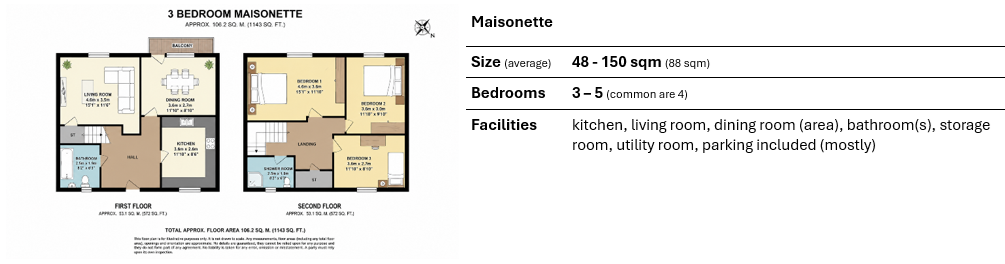
Maisonettes are generally considered the largest and most luxurious type of flat available in the UK housing market. In many ways, they sit somewhere between a traditional apartment and a small house, offering far more space and separation than standard flats. If ordinary flats are “compact urban living”, then maisonettes are the housing market quietly saying, “What if we added stairs and made everything more expensive?”
The defining feature of a maisonette is its two-storey layout. Most maisonettes are designed with the living areas on the lower floor and the bedrooms on the upper level, creating a much clearer separation between social and private spaces. This arrangement makes them feel more like a traditional home rather than a single-level apartment where the kitchen, sofa, laundry basket and life decisions all exist within immediate visual range.
Maisonettes usually come with proper full-sized kitchens rather than the compact “kitchen corners” sometimes found in smaller flats. Dining areas are also common, either as separate spaces or integrated into the kitchen or living room. Depending on the size of the property, maisonettes often include one or two bathrooms, and larger examples may even feature additional en-suite facilities.
Storage is another major advantage. Utility rooms, cupboards and separate storage spaces are frequently included, which is highly appreciated in Britain where residents have historically developed advanced skills in storing vacuum cleaners inside impossible spaces.
Parking arrangements are generally better than those found with smaller flats. Residents often have access to private parking areas, secured underground car parks or dedicated residential parking spaces. This removes one of the classic urban housing problems: driving around the block for 40 minutes hoping somebody finally leaves.
Maisonettes are also commonly associated with higher-end residential developments and luxury apartment complexes. As a result, they may include facilities such as elevators, concierge services, landscaped communal gardens, fitness centres, swimming pools or recreational areas. This can create a very comfortable living environment, although residents eventually learn that “luxury communal facilities” often also translates into “service charges capable of causing mild emotional damage”.
Location-wise, maisonettes are usually found in larger towns and cities rather than rural areas. They are especially popular in modern developments close to business districts, shopping areas and transport links, making them attractive to professionals, families and anyone who likes the convenience of city living without completely sacrificing living space.
Of course, all these advantages come at a price. Maisonettes are typically the most expensive type of flat both to rent and to purchase. Buyers are essentially paying for additional space, privacy, better layouts, improved facilities and the rare luxury of being able to say, “The bedrooms are upstairs”, while technically still living in a flat.
Overall, maisonettes offer an appealing compromise between apartment convenience and house-style living. They provide more room, better layouts and a touch of luxury – proving that sometimes a flat simply refuses to remain “just a flat”.
Houses
What You Want Is What You Get… or More Accurately, What You Can Afford
When it comes to housing, people often begin with a dream. A detached house with a large garden, a countryside view, a double garage and perhaps enough spare rooms to impress relatives during Christmas visits. Unfortunately, the housing market usually responds to these dreams by politely presenting a calculator and a mortgage advisor.
There are many different styles of houses available and each type comes with its own advantages, disadvantages, lifestyle expectations and financial surprises. The type of property you choose has a major impact on both purchase prices and rental costs. However, the location of the property often matters just as much – sometimes even more.
In general, houses in rural areas tend to be cheaper than equivalent homes in large towns or cities. A detached house in a quiet village may cost significantly less than the exact same property in a major city such as Glasgow. This is partly because land prices in cities are far higher, but also because nearly every aspect of construction becomes more expensive in urban environments.
For example, building a three-bedroom detached house in a rural area may be relatively affordable compared to constructing the identical property in a city. In cities, plots of land are more expensive, labour costs are higher, materials often cost more to transport and store and construction work itself is usually more expensive due to increased wages and operational costs. Essentially, the same pile of bricks becomes dramatically more valuable once surrounded by traffic, coffee shops and difficult parking.
Location also influences lifestyle. Rural properties may offer more space, quieter surroundings, larger gardens and lower prices, but they often come with longer travel distances to shops, schools, healthcare services and workplaces. City properties, meanwhile, provide easier access to public transport, entertainment and employment opportunities – although this convenience is usually reflected in the price tag with remarkable enthusiasm.
The style of house itself also plays an important role. Detached houses offer privacy but cost more. Semi-detached homes provide a balance between affordability and space. Terraced houses are usually cheaper but involve closer contact with neighbours than some people emotionally prepared for. Bungalows offer accessibility and practicality, while cottages provide charm, character and occasionally unexpected relationships with mice.
In reality, choosing a home often becomes a balancing act between budget, location, space, convenience and personal priorities. Most people begin their search imagining a luxury countryside mansion and gradually adjust expectations until they are excited about “good natural light” and “a surprisingly large cupboard”.
At the end of the day, the housing market follows one simple rule: what you want is important – but what you can realistically afford usually gets the final vote.
Detached Houses – The British Dream of Peace, Privacy and Expensive Mortgage Payments


Detached houses are widely considered the most desirable standard type of family home in the UK. Unlike terraced or semi-detached houses, a detached house stands completely on its own and does not share any external walls with neighbouring buildings. In simple terms, this means maximum privacy, fewer neighbour-related sound effects and a greatly reduced chance of hearing somebody else’s washing machine entering orbit at midnight.
Because detached houses sit independently on their own plots, they usually come with both front and rear gardens, private driveways and a more spacious overall layout. Parking is typically located on the property itself, often with enough space for two or three cars. This alone can dramatically improve quality of life in Britain, where street parking has occasionally evolved into a competitive sport with unwritten rules and long-standing rivalries.
Detached homes are also the most flexible when it comes to extensions, renovations and modernisation projects. Since there are no shared walls, owners generally have greater freedom to expand kitchens, add conservatories, convert lofts or build extensions without immediately involving the structural concerns of neighbouring properties. Of course, this flexibility often leads homeowners to confidently begin “small improvement projects” that somehow turn into six-month construction adventures and a permanent relationship with local builders.
One major reason detached houses remain so desirable is their strong property value. They typically experience lower depreciation rates than many other types of housing and are more likely to increase in value over time. Unfortunately, the purchase prices are fully aware of this fact. Detached homes tend to sit firmly in the “expensive but worth it” category of the housing market, where dreams of peace and privacy are carefully balanced against monthly mortgage payments capable of inspiring deep reflection.
Detached houses can be found in a wide range of locations, from quiet rural villages to suburban residential areas in towns and cities. In urban areas, they are often associated with more affluent neighbourhoods due to the larger plot sizes required.
In terms of size, detached houses commonly range from two to five bedrooms and approximately 60 to 150 square metres, although luxury versions can become considerably larger. Architectural styles vary widely, from modern minimalist designs to traditional cottage-inspired homes. Common exterior finishes include brick, harling (roughcast render), stonework and occasionally concrete panel construction, particularly in certain post-war developments.
The most common detached houses in Scotland are one-and-a-half-storey homes with saddle roofs. These designs often feature upper-floor rooms where the ceiling slopes downward near the outer walls, creating cosy spaces where taller residents may develop a close personal relationship with roof beams. Fully flat roofs are relatively uncommon in Scotland due to weather conditions, although they do exist, usually attached to more modern architectural designs or homes built by people who looked at Scottish rain and said, “How bad could it be?”
Overall, detached houses represent the ideal balance of privacy, space, flexibility and long-term value. They are the classic “forever home” for many families – offering gardens, parking, peaceful living and just enough distance from neighbours to maintain friendly relations without accidentally becoming part of each other’s daily soundtrack.
Semi-Detached Houses – Britain’s Favourite “Almost Detached” Home
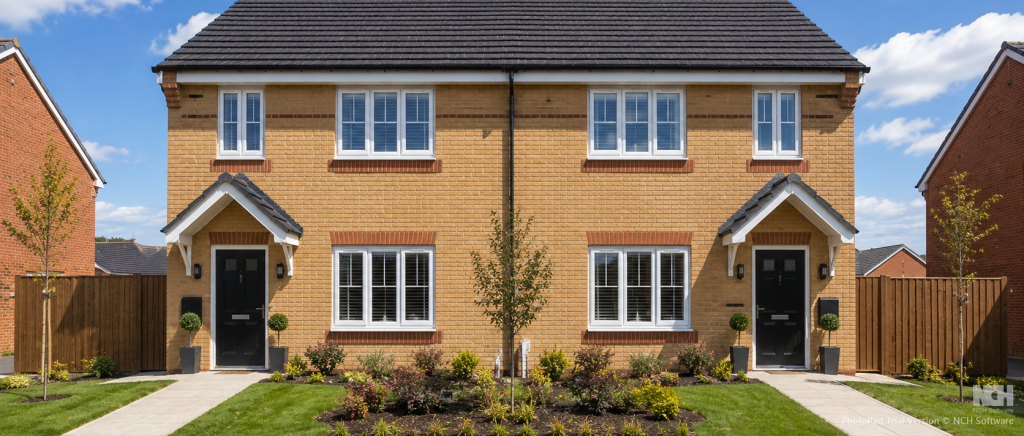

Semi-detached houses are one of the most common and recognisable types of housing in the UK. A semi-detached house shares one outside wall with another property, creating a pair of homes that are often nearly identical inside and out but mirrored. The easiest way to describe them is with the German term Doppelhaus – essentially two houses politely attached to each other while still trying to maintain independent identities.
In many cases, semi-detached homes are mirrored designs. If your kitchen is on the left side of your house, there is a very good chance your neighbour’s kitchen is directly on the other side of the shared wall. This arrangement is practical, cost-effective and occasionally helpful when both households decide to renovate at the exact same time and unintentionally create a synchronised drilling competition.
Semi-detached houses can be found almost everywhere in the UK. They are common in rural villages, suburban estates, residential areas in towns and the outer districts of cities. They became especially popular during the 20th century because they offered a balance between affordability and privacy – giving people many of the advantages of a detached house without the full detached-house price tag.
Most semi-detached houses are built as one-and-a-half or two-storey homes, often with crawl attics or loft spaces used for storage, insulation or ambitious DIY projects that remain unfinished for several years. Compared to terraced housing, semi-detached homes generally provide significantly more privacy, outdoor space, and parking.
Driveways are very common and often provide space for two or even three cars. This immediately removes one of the great British housing stress factors: the nightly search for street parking while silently judging neighbours who own caravans.
In practical terms, a semi-detached house is very similar to a detached house, except for the fact that it shares one wall with another property. Owners still benefit from private entrances, front and back gardens, larger living areas and more separation from neighbours. At the same time, heating costs can sometimes be slightly lower because one side of the house is sheltered by the neighbouring property – effectively creating an accidental teamwork arrangement between two households.
In terms of size, semi-detached houses vary considerably. Most offer between two and five bedrooms and range from approximately 60 to 150 square metres. Layouts can differ from compact starter homes to spacious family houses with extensions, conservatories and converted lofts.
Architecturally, semi-detached houses come in many styles. In Scotland and other parts of the UK, they are frequently finished with harling, a roughcast render commonly used because it is durable, weather-resistant and relatively inexpensive. To improve appearance, many homes also include decorative brickwork or stone features, helping prevent entire streets from looking like giant matching cereal boxes.
Because they are cheaper to build than detached homes while still offering good living space and privacy, semi-detached houses became the dominant “family home” across much of Britain. In many ways, they represent the classic middle ground of UK housing: more affordable than a detached house, more private than a terrace and just close enough to your neighbour to occasionally borrow a ladder without formal diplomatic negotiations.
Terraced Houses – Britain’s Favourite Row of Shared Opinions
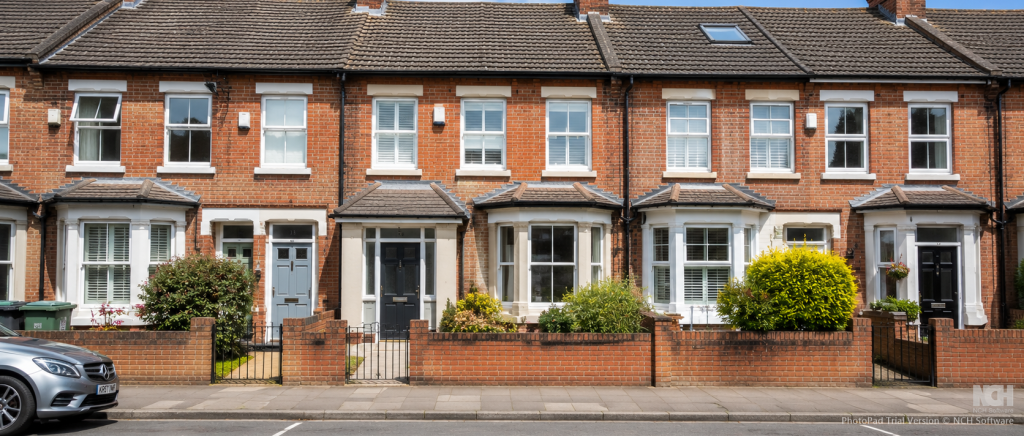

Terraced houses are one of the most common forms of housing in the UK and are especially widespread throughout Scotland‘s towns, and larger cities. A terraced house forms part of a continuous row of at least three homes, although in many Scottish towns it is common to see rows of six to eight houses or more standing side by side in neat formation – rather like a residential domino set that nobody wants to disturb.
Terraced housing became extremely popular because it is efficient and relatively inexpensive to build. Since neighbouring houses share walls, construction costs are reduced significantly. In some traditional designs, houses even share front and rear wall structures, meaning builders managed to save materials with an efficiency modern accountants can only dream about.
Of course, shared walls also mean shared acoustics. Privacy in terraced housing can sometimes be limited, especially if you live in a middle terrace rather than one of the more desirable end-of-terrace houses. Depending on the age and construction quality of the property, walls may be thin enough for residents to become unexpectedly familiar with their neighbour’s television habits, arguments, choice of music or enthusiastic late-night vacuuming schedule.
Some terraced houses are built in an offset layout, where each property is slightly set back by one or two metres compared to the next. This design can improve appearance and provide a little extra separation between homes, although it does not entirely solve the “accidental participation in next door’s conversations” issue.
Parking is another well-known feature – or challenge – of terraced living. Driveways are uncommon, particularly in older terraces built before widespread car ownership. Most residents rely on on-street parking, which can become highly competitive in busy areas. In some streets, finding a parking space after work resembles a low-speed tactical operation involving patience, timing and silent judgement of anyone owning more than one vehicle.
Terraced houses are found almost everywhere in the UK, from rural villages to dense city neighbourhoods. They are especially common in former council housing developments because the design allowed large numbers of affordable homes to be built quickly and efficiently. As a result, terraced housing became the “mass production accommodation” of Britain – practical, compact and available in nearly every town, township and city.
In terms of size, terraced houses typically offer between two and four bedrooms and average around 60 to 110 square metres of living space. Rooms are generally smaller than those found in detached or semi-detached homes, particularly in older Victorian or post-war terraces where space efficiency was clearly considered more important than fitting modern furniture through the hallway.
Location-wise, terraced housing is often found close to town centres, shopping streets and mixed-use neighbourhoods rather than quiet suburban residential areas. This can be highly convenient, as local shops, grocery stores, takeaways, convenience stores and small businesses are often located within walking distance. In practical terms, this means you can buy milk, visit the barber and overhear three local arguments without ever starting your car.
Despite their limitations in privacy and parking, terraced houses remain extremely popular due to their affordability, central locations and strong sense of community. Living in a terrace often means you know your neighbours well – sometimes slightly better than you intended – but for many people, that closeness is part of the charm.
End-of-Terrace Houses – The Terraced House with a Small Upgrade Package
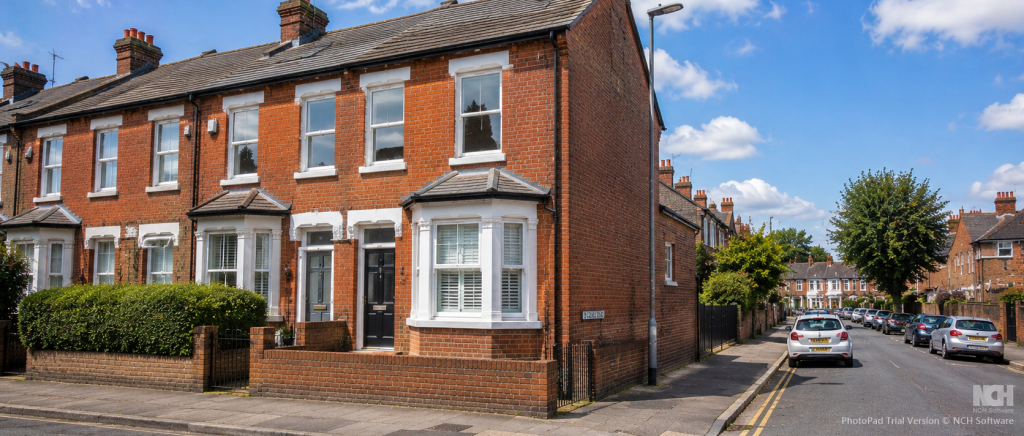

End-of-terrace houses occupy a special position in British housing. Technically, they are still terraced houses, but with one important advantage: they only share one side wall with a neighbouring property instead of two. This may not sound dramatic at first, but in the world of UK housing, reducing neighbour-related sound effects by 50% can feel like a luxury feature.
Apart from this additional privacy, end-of-terrace houses are generally very similar to standard terraced homes. They are found in the same towns, cities, suburban streets and former council housing estates and they face many of the same practical realities. Street parking is still common, privacy is still lower than in detached or semi-detached homes and you may still develop an involuntary awareness of your neighbour’s music preferences or midnight furniture-moving activities.
However, end-of-terrace houses do provide a noticeable psychological benefit. There is something comforting about knowing only one household can accidentally drill into your wall.
Like other terraced homes, end-of-terrace houses are usually located close to shops, public transport, schools, takeaways, convenience stores and other local services. This makes daily life very practical, as most essentials are within walking distance. In many cases, residents can buy groceries, collect prescriptions and debate local parking etiquette all within a five-minute radius.
In terms of size, end-of-terrace houses are generally similar to regular terraced houses, usually offering between two and four bedrooms with compact but functional layouts. Some end-of-terrace properties are slightly larger due to their position at the end of the row and they may benefit from larger gardens or additional outdoor space. This extra land is often one of their most attractive features, particularly for families, pet owners or anyone who dreams of owning more than two garden chairs at once.
Because the plot is occasionally larger, some end-of-terrace houses also offer rare luxuries such as private parking spaces or even small driveways. In areas dominated by on-street parking, this can elevate the property to near-mythical status among local residents. Having your own parking spot in a busy terraced street can sometimes feel less like a property feature and more like winning a long-term strategic battle.
Overall, end-of-terrace houses are often seen as the “best compromise” within terraced housing. They retain the affordability, convenience and central locations associated with terrace living, while offering slightly more privacy, more outdoor space and occasionally enough parking to avoid nightly laps around the block searching for a space.
Bungalows – Practical Living with a Surprisingly Expensive Price Tag
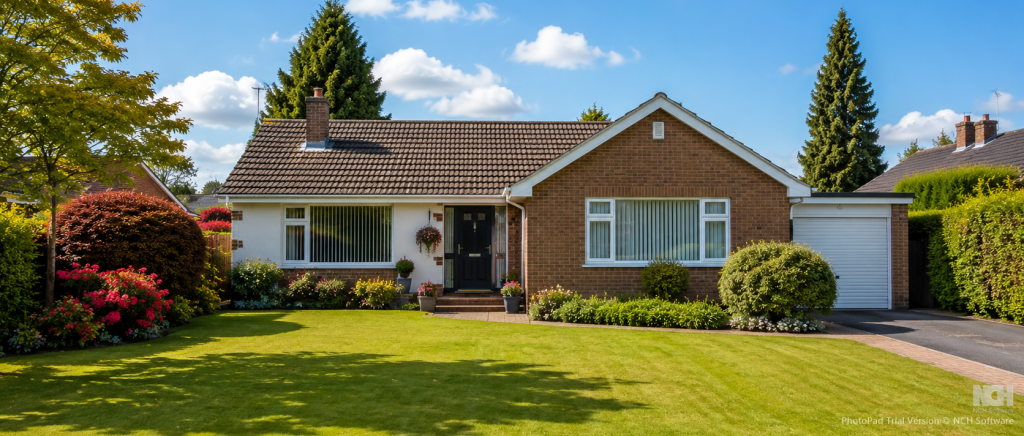

Bungalows are a rather unique category of housing. They are highly desirable for many buyers and tenants, yet they often manage to be both slightly outdated and surprisingly expensive at the same time. In the housing market, bungalows have achieved the rare status of being considered “old-fashioned” while also costing more than many larger modern homes. It is one of property’s great mysteries.
The biggest advantage of a bungalow is its practicality. Since bungalows are single-storey homes without staircases, they are ideal for wheelchair users, people with limited mobility or anyone who simply does not enjoy carrying laundry up and down stairs for the rest of their life. Everything is located on one level, making daily living far more accessible and convenient.
Bungalows also tend to come with generous outdoor space. Many include driveways with parking for up to three cars, large front gardens and sizeable back gardens. This creates a spacious and peaceful atmosphere, although it also means there is more grass to mow and more hedges silently plotting against your weekends.
In modern housing developments, bungalows have become increasingly rare. Most construction companies prefer building multi-storey houses because they maximise land use and profitability. As a result, new bungalows are usually only built for specific demand or specialist housing projects. Developers generally look at a bungalow and see a perfectly good plot of land that could have held three townhouses and a small argument over parking spaces.
Despite their sometimes dated appearance, bungalows are excellent properties for extensions and modernisation. Their layouts are often straightforward, making renovations easier compared to older multi-storey homes. Open-plan kitchens, larger living areas, conservatories and loft conversions are all common upgrades. With enough investment, an outdated 1970s bungalow can transform from “retired geography teacher’s home” into a modern luxury property surprisingly quickly.
Location-wise, bungalows are most commonly found in rural areas, villages and residential suburbs. They are much less common in mixed-use or commercial districts. This means bungalow living is usually quieter and more relaxed, but it often comes with a trade-off: commuting. Shops, petrol stations, doctors and other services may require a short drive rather than a quick walk around the corner. In bungalow life, owning a car becomes less of a convenience and more of an unofficial requirement.
Bungalows themselves vary considerably in size, typically ranging between 60 and 150 square metres and offering anywhere from two to five bedrooms. The most common layouts are square or rectangular designs, although L-shaped bungalows are also popular and often provide more privacy between living and sleeping areas.
One important consideration is maintenance. Many existing bungalows are now between 15 and 35 years old, with some considerably older. As properties age, repairs and updates become more frequent, particularly regarding roofing, insulation, heating systems and older plumbing or electrical installations. Because the roof covers the entire footprint of the home, roofing repairs can also become more expensive than expected – there is simply a lot more roof involved.
Bungalows are frequently criticised for being overpriced, especially when compared to larger two-storey homes. However, they tend to hold their value exceptionally well due to strong demand, limited supply and their practicality for long-term living. In simple terms: people complain about bungalow prices right up until the moment one becomes available nearby.
Cottages – Countryside Charm with Character, Quirks and the Occasional Mouse
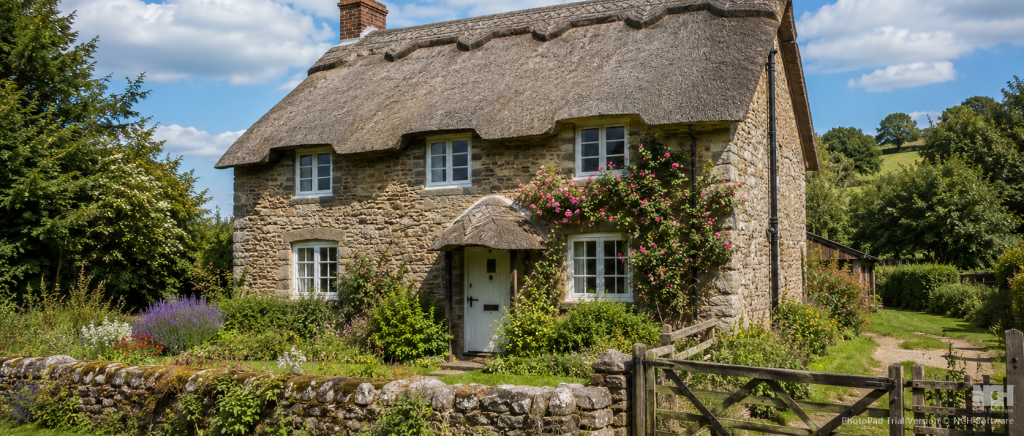

Cottages are one of the most recognisable and charming types of homes, often associated with rural living, quiet countryside views and enough climbing plants to make gardeners very happy. They are most commonly found in villages and rural areas, although some can occasionally be seen on the edges of towns or in older suburban districts. What you generally will not find is a cottage sitting neatly among rows of modern detached houses looking perfectly normal – cottages tend to have far too much personality for that.
Older cottages, particularly those built before the 1950s, can become surprisingly expensive to maintain. While they may look picturesque from the outside, behind the charming stone walls often hides insulation technology best described as “optimistic”. Heating costs can quickly become a major issue, especially during winter months, as many older cottages were built long before modern energy efficiency standards existed. Owners sometimes discover that they are effectively attempting to heat the outdoors while sitting beside a fireplace pretending everything is fine.
More modern cottages are generally far easier to manage and often provide a lifestyle and running cost similar to bungalows or detached houses. They usually combine traditional cottage-style appearances with modern insulation, central heating and kitchens designed for more than boiling soup over a fire.
Cottages themselves come in a range of sizes, most commonly with one to three bedrooms. Four-bedroom cottages do exist, although they are relatively rare and often move dangerously close to becoming “country houses” rather than cottages. Layouts are usually cosy and practical, with smaller rooms, lower ceilings and compact staircases that appear to have been designed for people significantly shorter than modern adults.
Kitchens in older cottages can sometimes feel delightfully historic – or simply outdated, depending on personal optimism. It is not uncommon to find older fuel systems such as wood-burning ranges, gas cookers or traditional potbelly stoves. While these certainly add atmosphere and character, they also introduce the exciting possibility of spending winter mornings enthusiastically chopping firewood before coffee.
Most cottages are single-storey buildings, although one-and-a-half-storey cottages are also common, especially in rural areas. Traditional stone cottages often feature extremely thick walls, sometimes hidden beneath layers of plaster. These thick walls help with durability and character but can make renovations, rewiring or even hanging shelves a surprisingly ambitious engineering project.
Another well-known feature of countryside cottages is wildlife – and not always the charming kind shown in nature documentaries. Due to their rural locations, older cottages can occasionally experience rodent problems, particularly mice or rats seeking warmth during colder months. In some cases, the local mice may feel they have ancestral rights to the property and show little concern about your tenancy agreement.
Despite these quirks, cottages remain highly desirable homes thanks to their charm, unique appearance, peaceful surroundings and cosy atmosphere. Living in a cottage may require patience, maintenance and occasionally a good mousetrap, but for many people the character and lifestyle are well worth it.
Townhouses in Scotland – Vertical Living with Style, Stairs and Strategic Grocery Carrying
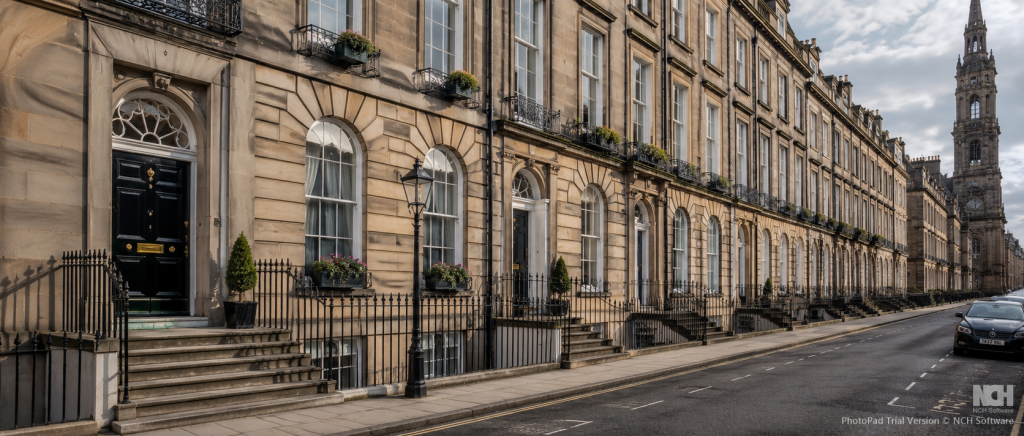

Townhouses are one of the more elegant and distinctive types of housing found in Scotland. They are especially common in larger towns and cities, where space is limited and developers discovered long ago that building upwards is considerably easier than convincing Scottish cities to become larger. A townhouse is essentially a multi-storey home designed to maximise living space while occupying a relatively compact plot of land.
In Scotland, townhouses are most commonly found in urban residential developments, city suburbs and modern housing estates, although older Victorian and Georgian townhouses can also be found in historic areas of cities such as Edinburgh and Glasgow. These older examples often combine impressive architecture with enough staircases to accidentally improve your cardiovascular fitness.
The defining feature of a townhouse is its vertical layout. Unlike bungalows or standard detached homes that spread rooms across one or two broad floors, townhouses typically rise across three or sometimes four levels. Living rooms, kitchens, bedrooms, utility spaces and even home offices are distributed floor by floor. This design allows relatively large homes to fit onto smaller urban plots while still offering generous internal living space.
A common modern townhouse layout places the kitchen and dining area on the ground floor, the main living room on the first floor and bedrooms on the upper levels. While this creates excellent separation between living areas, it also means residents quickly become familiar with carrying laundry baskets, shopping bags and occasionally forgotten mobile phones up and down several flights of stairs every day. Many townhouse owners unknowingly achieve their daily exercise goals before breakfast.
Townhouses in Scotland vary considerably in size and style. Smaller examples may offer two bedrooms and around 70 square metres of living space, while larger luxury townhouses can exceed five bedrooms and provide well over 180 square metres. Modern developments often include garages, private parking spaces, balconies, roof terraces or small rear gardens.
Parking arrangements are generally better than with flats or terraced houses. Most modern townhouses come with private driveways, integrated garages or designated parking areas. In busy Scottish cities, having guaranteed parking can feel less like a convenience and more like a status symbol quietly admired by neighbours still circling the block.
Architecturally, Scottish townhouses range from highly modern designs with clean lines and large windows to traditional stone-built Victorian properties with bay windows, decorative staircases and ceilings high enough to create their own weather systems. Modern townhouses are usually built with practicality and energy efficiency in mind, while older properties often offer far more character – along with charming surprises hidden behind 130-year-old walls.
One of the biggest advantages of townhouse living is space efficiency. Families can enjoy many of the benefits of a detached house while remaining close to city centres, schools, workplaces and public transport. This makes townhouses particularly popular among professionals, larger families and anyone wanting urban convenience without moving into a flat.
Of course, townhouse living does come with one unavoidable reality: stairs. A lot of stairs. At first, the vertical layout feels elegant and sophisticated. After the fifth trip upstairs to retrieve something forgotten, it becomes a daily endurance event. Owners soon learn to carefully plan journeys through the house with military precision.
Despite this, townhouses remain one of the most desirable forms of urban family housing in Scotland. They offer generous living space, modern layouts, strong property value and a balance between city convenience and house-style privacy. In many ways, a townhouse is the perfect compromise for people who want to live in the city while still being able to confidently say, “I have multiple floors”.
Mansions – Grand Living with Grand Responsibilities
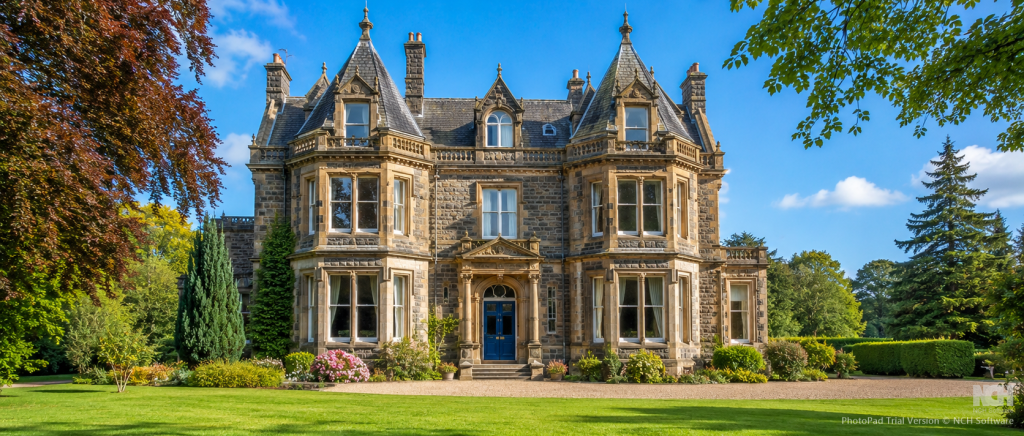

Mansions are widely considered the most expensive type of residential property, both to purchase and to maintain. While they offer impressive architecture, large living spaces and extensive grounds, they also come with a level of upkeep that can surprise even experienced homeowners.
Older mansions, particularly those dating from the 19th century or earlier, are often beautiful examples of historic architecture. However, owning one can sometimes feel less like buying a house and more like adopting a very large, elegant, slightly demanding pet. Many historic mansions are poorly insulated, fitted with outdated heating systems and may still have original single-glazed windows or uninsulated roofing. Heating bills can therefore reach eye-watering levels during colder months, especially in larger properties with high ceilings and numerous rooms.
In the UK, many older mansions are also protected buildings, often carrying A or B listed status. While this helps preserve their historical character, it can make renovations and modernisation projects significantly more expensive and heavily regulated. Replacing a window may no longer be a quick trip to the local DIY store – it can become a discussion involving conservation officers, specialist craftsmen and invoices capable of causing emotional distress.
One feature that nearly all mansions share is space. Large gardens, private grounds, tree-lined driveways and extensive lawns are common. This creates a beautiful setting, but also means that gardening quickly changes from “a relaxing weekend hobby” into “a part-time land management operation”. Prospective owners should either enjoy gardening very much or be prepared to hire professional gardeners. Riding lawn mowers often become less of a luxury and more of a survival tool.
Traditional mansions also differ from modern luxury homes in their layout and design. They can range from four to fifteen bedrooms or more and may include multiple living rooms, reception rooms, libraries, dining halls, studies and large kitchens. Reception rooms historically served as formal spaces to receive short visits from guests and visitors – essentially the Victorian version of “please wait here while we decide if we know you”.
Bathrooms in older mansions are often en-suite in later renovations, although this is not always the case in original layouts. Some mansions may also include former servant quarters, stables, carriage houses or outbuildings. Since many historic mansions were built before cars existed, garages are not always included, although old stable buildings are sometimes converted into modern garages or workshops.
Modern mansions, by comparison, are generally more practical and energy efficient. They are often similar to very large detached or luxury homes, combining spacious living with modern insulation, integrated garages and lower maintenance demands. In other words, they still cost a fortune – just with slightly fewer surprises hidden behind 200-year-old wooden doors.
Luxury Houses in Scotland – Where Comfort, Space and Heating Bills Reach Impressive Levels
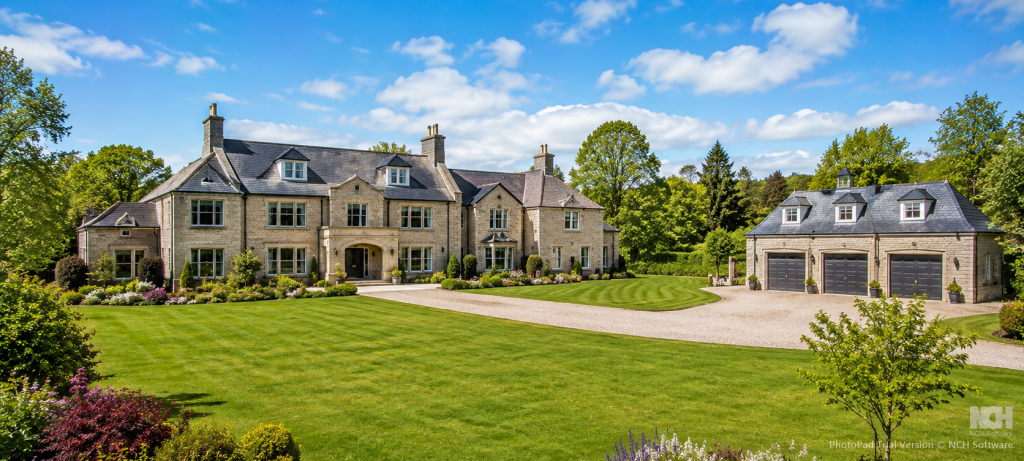

Luxury houses represent the upper end of the Scottish housing market. These properties are designed to offer maximum comfort, space, privacy and prestige – often combined with large gardens, premium locations and enough bathrooms to lose track of how many towels you actually own.
In Scotland, luxury homes can be found in a wide range of settings. Some are located in exclusive residential suburbs of cities such as Edinburgh, Glasgow or Aberdeen, while others sit in breathtaking rural locations surrounded by forests, lochs, hills or enough private land to require a small map for navigation.
Unlike traditional mansions, luxury houses are usually more modern and practical in their design. They focus heavily on energy efficiency, open-plan living, large windows, smart-home technology and modern comforts. In other words, they provide the luxury lifestyle without requiring owners to constantly negotiate with 200-year-old plumbing systems or drafty Victorian windows.
Most luxury houses in Scotland are detached properties and commonly feature between four and seven bedrooms. Floor sizes vary considerably, but many exceed 200 square metres and can become substantially larger. These homes often include multiple living rooms, home offices, utility rooms, dressing rooms, cinema rooms, gyms and kitchens large enough to host cooking shows nobody asked for.
The kitchen is usually the centrepiece of the modern luxury house. Large kitchen islands, integrated appliances, walk-in pantries, wine coolers and open-plan dining areas are extremely common. Modern luxury kitchens are designed not only for cooking but also for entertaining guests, socialising and quietly reminding visitors that the refrigerator probably cost more than their first car.
Bathrooms in luxury homes are similarly extravagant. En-suite bathrooms, freestanding bathtubs, rainfall showers, underfloor heating and enough polished stone surfaces to blind somebody in direct sunlight are all common features. Some properties even include spa-style wellness areas, saunas or indoor swimming pools – because apparently walking outside into Scottish weather is considered avoidable at this price level.
Outside space is another major attraction. Luxury houses usually come with large private gardens, gated driveways, patios, terraces and garages for multiple vehicles. Some rural properties include private woodland, fishing rights, stables or even small lochs. Lawn maintenance at this level often stops being “gardening” and starts becoming “grounds management”.
Modern luxury homes are generally built with excellent insulation and energy-efficient systems, which is fortunate considering the size of many properties. Heating a large luxury house is still expensive, but at least owners are usually warming insulated rooms rather than accidentally contributing to outdoor climate control like some historic mansions.
Location has an enormous influence on pricing. A luxury house in a quiet rural area may offer significantly more land and space for the same budget compared to a similar property in central Edinburgh. In Scottish property markets, square metres are expensive – but square metres near artisan coffee shops become positively legendary.
Of course, luxury living also comes with hidden realities. Large homes require constant maintenance, cleaning, insurance, landscaping and occasional repair work. Owners often begin with dreams of elegant living and eventually realise they have accidentally become part-time managers of a very expensive private hotel.
Despite this, luxury houses remain one of the most desirable forms of housing in Scotland. They combine privacy, comfort, prestige and modern living in a way few other properties can match. They are the type of homes people imagine while watching property programmes and confidently saying, “If I won the lottery, I’d buy something modest like this”, while standing in front of a house with six bedrooms, a cinema room and a driveway longer than some village roads.
Thank you for taking the time to read all this. Congratulations for your patience to make it till this last few words.