

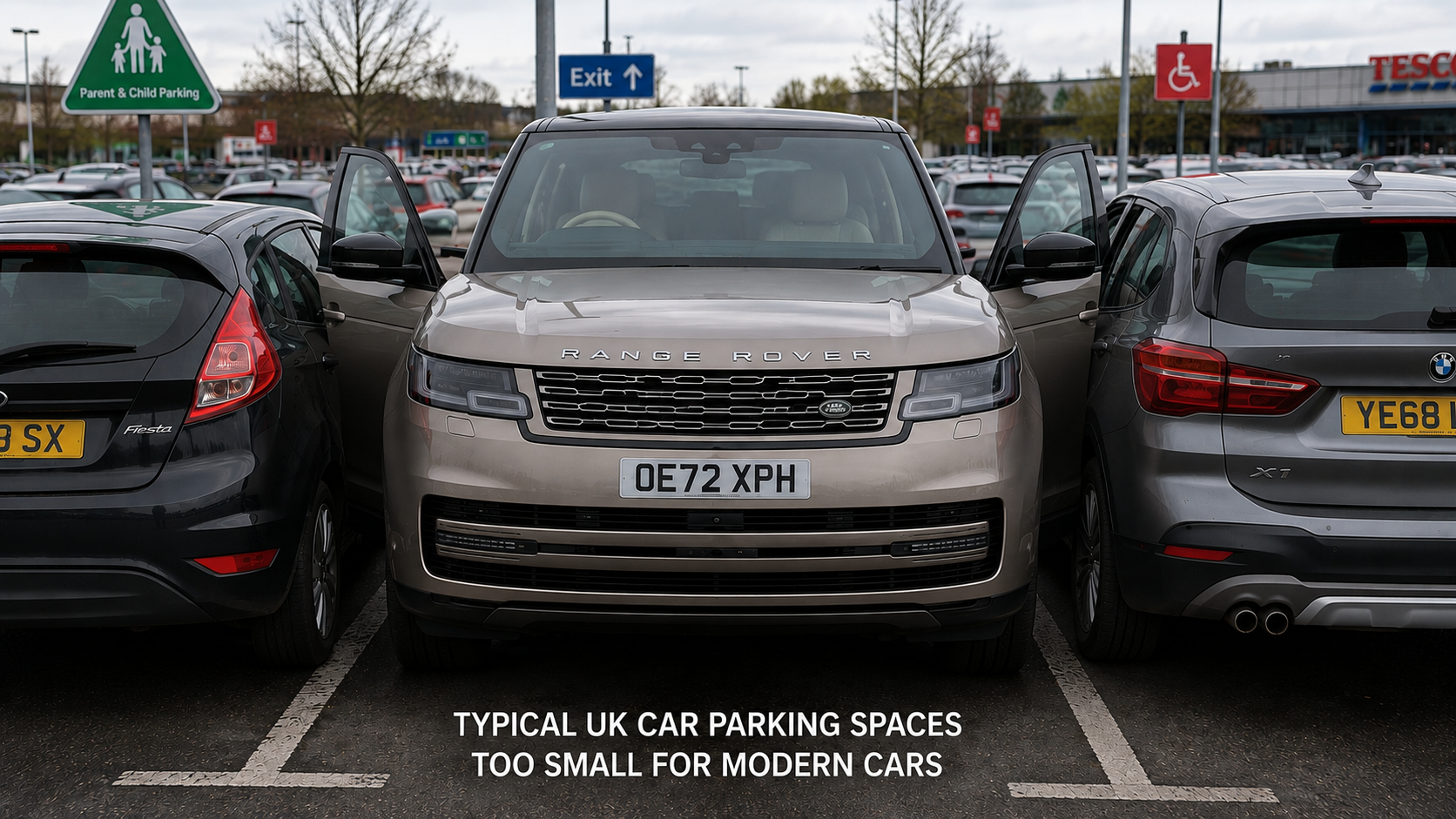
Why UK Garages and Parking Spaces Feel Too Small
If you’ve ever squeezed yourself through a barely-open car door, folded in your wing mirrors before entering a multi-storey car park, or discovered your garage is better suited to storing bicycles than your actual car, you’re certainly not alone.
Parking in the UK has become an increasingly frustrating experience. While today’s cars continue to grow in size, much of Britain’s parking infrastructure remains almost unchanged from the 1970s. The result? Drivers of everything from family hatchbacks to modern SUVs regularly struggle to fit into spaces that were designed for a very different era.
Let’s explore why.
.
Britain’s Roads Were Built for Smaller Cars
Many of Britain’s towns and cities were never designed with today’s vehicles in mind.
Victorian streets, narrow terraces, compact housing developments and historic town centres all present unique challenges. While road layouts have remained largely unchanged, the average size of new cars has steadily increased over the past few decades. Safety regulations, stronger body structures, wider doors, larger wheels and the popularity of SUVs have all contributed to bigger vehicles. Recent reports note that new cars in the UK and Europe continue to become wider over time.
The result is obvious:
- Parking bays feel narrower.
- Multi-storey car parks become harder to navigate.
- Garages barely accommodate modern vehicles.
- Opening your doors without touching the neighbouring car becomes almost impossible.
.
Why Are Parking Spaces So Small?
A standard UK parking bay is typically around:
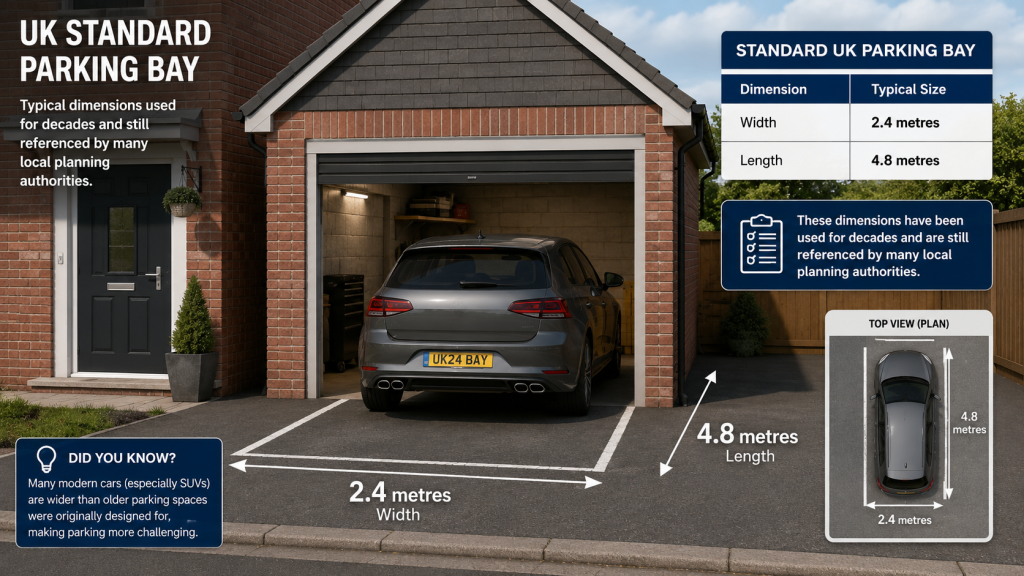
These dimensions have been used for decades and are still referenced by many local planning authorities.
When these measurements were introduced:
- Ford Escort Mk2
- Austin Allegro
- Mini
- Vauxhall Chevette
were common family cars.
Compared to modern vehicles, they were dramatically narrower.
Today’s family hatchbacks often exceed 1.8 metres in width before mirrors are unfolded, leaving very little room for passengers to get in or out comfortably.
.
Modern SUVs Make Things Even Harder
SUVs have become Britain’s favourite type of new car.
Models like the:
- Nissan Qashqai
- Volvo XC60
- Kia Sportage
- Hyundai Tucson
- BMW X3
occupy considerably more road space than family cars from thirty years ago. And we are not even started talking about Fullsize SUV’s like
- Range Rover
- Toyota LandCruiser (J100 / J200 / J300)
- Volvo XC90 / EX90
- Mercedes Benz GLS
- BMW X7 (X5)
Even drivers who don’t own SUVs are affected because parking next to one can leave almost no room to open the doors.
Research suggests that millions of modern vehicles sold in the UK now exceed the dimensions that many older parking spaces were originally intended to accommodate.
.
The Mystery of the British Garage
Many homeowners eventually discover a surprising fact:
Their garage isn’t actually practical for parking a car.
Instead, it becomes home to:
- Garden tools
- Christmas decorations
- Bicycles
- Lawn mowers
- Freezers
- DIY equipment
In fact, numerous studies have shown that garages are frequently used for storage rather than parking because many are simply too small for modern vehicles.
.
Why Are Garages So Narrow?
Older garages were often built when cars measured well under 1.7 metres wide.
Modern guidance for new developments recommends significantly larger internal garage dimensions. For example, Homes England recommends a minimum internal size of 3.6 metres wide by 6 metres deep for a single garage to allow occupants to open doors comfortably, with even more width if bikes or bins are stored inside.
Many existing garages, however, fall well below these recommendations.
.
Supermarket Car Parks
Almost everyone has experienced this.
You finally find a parking space.
You park perfectly.
Then another large SUV parks beside you.
Suddenly there’s only a few centimetres between the doors.
Passengers climb out sideways.
Children have to squeeze through.
You carefully hold your door to avoid scratching the neighbouring vehicle.
It’s one of the most common frustrations of everyday driving in Britain.
.
Multi-Storey Car Park
Older city-centre car parks can be even more challenging.
Drivers often encounter:
- Tight corners
- Low ceilings
- Narrow ramps
- Sharp turns
- Tiny parking bays
Large estates, SUVs and electric vehicles often require multiple attempts just to position correctly.
.
Historic Town Centres
Places like:
- York
- Edinburgh
- Bath
- Chester
were built centuries before the invention of the motor car.
Parking areas are often constrained by listed buildings, ancient street layouts and limited available land.
In many cases there simply isn’t room to enlarge existing parking spaces without reducing the overall number of bays.
.
Are Parking Spaces Getting Bigger?
Some local authorities and new housing developments have begun increasing parking dimensions.
Several planning authorities now recommend bays measuring 2.5 metres by 5 metres for new developments, reflecting the larger size of modern vehicles.
However, millions of existing parking spaces across the UK remain unchanged.
Repainting older car parks would often mean removing parking spaces entirely, making it an expensive and unpopular solution.
.
Tips for Easier Parking
Although you can’t make parking spaces bigger, a few habits can reduce the stress:
- Reverse into parking bays where possible.
- Fold mirrors before entering tight garages.
- Park centrally within the bay.
- Use end spaces whenever available.
- Avoid parking next to oversized vehicles if you have a choice.
- Consider vehicle dimensions when buying your next car.
.
The Future of Parking
As electric vehicles and SUVs continue to grow in popularity, pressure is mounting for parking standards to evolve.
Future housing developments are already beginning to include wider garages and larger parking bays, but Britain’s existing streets, garages and car parks are unlikely to change quickly.
For now, squeezing through a half-open door remains a familiar part of everyday motoring for millions of UK drivers.
.
Our Verdict
Britain’s parking problem isn’t simply about “cars getting too big” or “parking spaces being too small.” It’s the result of decades of change. Vehicles have become safer, wider and more comfortable, while much of the UK’s parking infrastructure still reflects the needs of motorists from the 1970s. Until more modern standards become widespread, careful parking and a little patience will remain essential skills for every British driver.