

A Guide for Tourists and New Residents
Scotland is famous for its breathtaking landscapes, from the purple heather of the Highlands to the forests of the Cairngorms and the rolling hills of the Borders. Every year, millions of visitors come to enjoy walking, camping, cycling and exploring the country’s spectacular countryside.
However, Scotland’s natural beauty comes with an important responsibility. During dry and warm weather, wildfires can spread rapidly, destroying wildlife habitats, damaging forests and moorland, and putting people and emergency services at risk.
Whether you’re visiting Scotland for a holiday or have recently made it your new home, understanding how wildfires start and how to prevent them is essential.
.
Are Wildfires Common in Scotland?
Many people associate wildfires with countries such as Australia, Canada or California. Surprisingly, Scotland experiences hundreds of wildfires every year.
Most occur during:
- Spring (March to May)
- Extended dry periods in summer
- Warm, windy weather
Spring is particularly dangerous because dead grass, heather and bracken left over from winter can dry out quickly and ignite easily.
Strong winds can cause even a small fire to spread across large areas in a matter of minutes.
.
What Causes Wildfires?
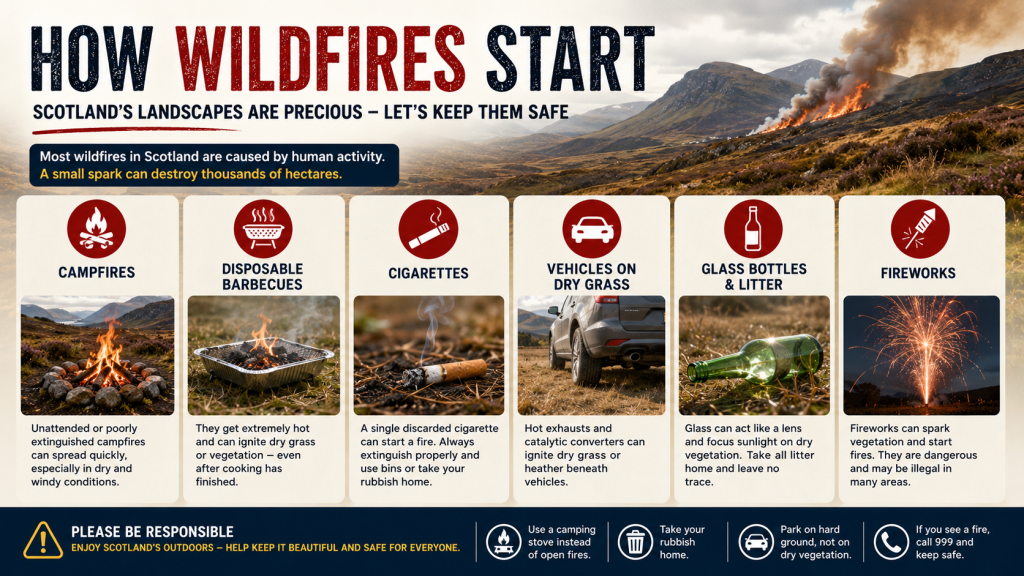
The vast majority of wildfires in Scotland are caused by human activity.
Common causes include:
🔥 Disposable barbecues
🔥 Campfires
🔥 Cigarette ends
🔥 Fire pits
🔥 Glass bottles left in grass
🔥 Fireworks
🔥 Burning rubbish
🔥 Vehicles parked on dry grass
🔥 Sparks from machinery
Natural causes such as lightning are extremely rare in Scotland.
.
Why Are Scottish Wildfires So Dangerous?
Large parts of Scotland are covered by:
- Heather moorland
- Peatland
- Pine forests
- Grassland
- Gorse bushes
These habitats can become extremely dry during prolonged periods without rain.
Peat is particularly dangerous because it can continue smouldering underground for days or even weeks after the visible flames have disappeared.
Wildfires can:
- destroy thousands of hectares of countryside
- kill birds, reptiles and small mammals
- damage ancient peatlands
- threaten homes and farms
- close roads and walking routes
- produce large amounts of smoke
.
The Scottish Outdoor Access Code
Scotland is famous for its “Right to Roam”, giving people responsible access to much of the countryside.
This freedom comes with responsibilities.
If there is a high or very high wildfire risk, visitors should avoid lighting any fire.
Always follow local advice and temporary restrictions.
.
Campfires: Think Twice
A campfire might seem like part of the outdoor experience, but it is one of the leading causes of wildfires.
Even after appearing extinguished, hot embers can remain hidden beneath ash for many hours.
If the wind picks up, they can easily reignite nearby vegetation.
Whenever possible:
✔️ Use a camping stove instead.
✔️ Never light fires on peat.
✔️ Never leave a fire unattended.
✔️ Make absolutely certain it is completely cold before leaving.
.
Disposable Barbecues
Disposable barbecues can reach temperatures of over 400°C.
Even after cooking has finished, they remain dangerously hot for a long time.
Never place one on:
- dry grass
- heather
- wooden picnic tables
- forest floors
Use only designated barbecue areas where permitted.
.
Smoking Outdoors
A single discarded cigarette can start a fire in dry vegetation.
Always:
- extinguish cigarettes completely
- use an ashtray
- never throw cigarette ends from a vehicle
.
Parking Your Car
Many people don’t realise that a vehicle can start a wildfire.
Catalytic converters and exhaust systems become extremely hot after driving.
Parking on:
- dry grass
- heather
- bracken
can ignite vegetation underneath the vehicle.
Always park on hard surfaces where possible.
.
Glass Bottles
Glass bottles can act like magnifying glasses in bright sunshine.
Although uncommon, they can contribute to fires under the right conditions.
Take all litter home.
Leave no trace.
.
What Should You Do If You Discover a Wildfire?
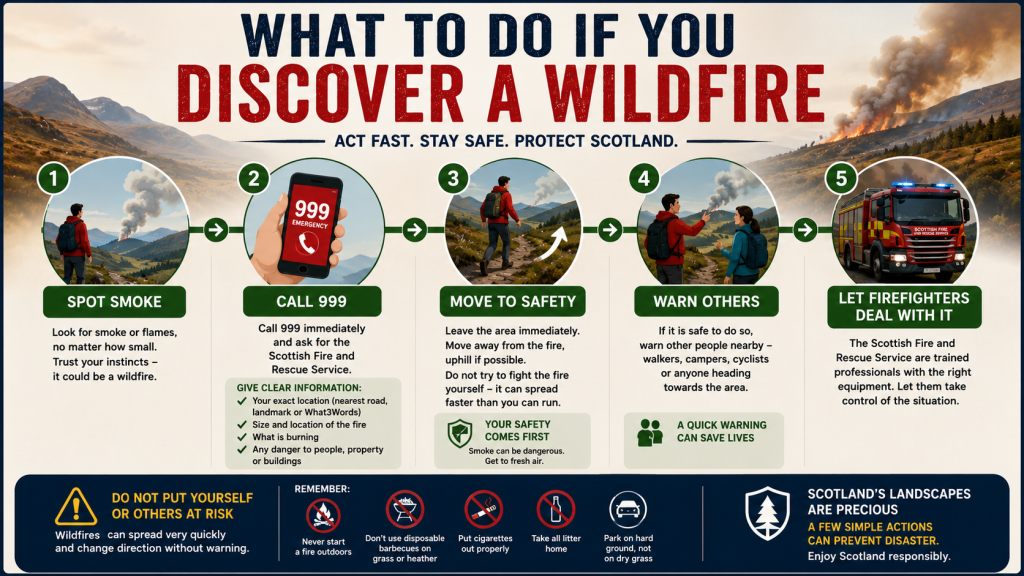
If you see smoke or flames:
1️⃣. Call 9️⃣9️⃣9️⃣ immediately.
Ask for:
Scottish Fire and Rescue Service (SFRS)
Provide:
- nearest road
- walking trail
- landmark
- What3Words location if available
- approximate size of the fire
2️⃣. Stay Safe
Do not attempt to fight a large wildfire yourself.
Fire spreads much faster than most people expect.
Leave the area immediately.
Move uphill or onto open ground if safe to do so.
3️⃣. Warn Others
If safe, warn nearby walkers or campers.
Do not put yourself in danger.
.
Before Heading Outdoors
Check:
✔️ Weather forecast
✔️ Wildfire risk warnings
✔️ Local ranger advice
✔️ Park information
If authorities advise against lighting fires, follow their guidance.
.
Responsible Camping
Good camping habits include:
✔️ Use camping stoves.
✔️ Keep cooking areas tidy.
✔️ Remove all rubbish.
✔️ Leave no food waste.
✔️ Never burn litter.
✔️ Take everything home.
.
Protecting Wildlife
Wildfires don’t just burn vegetation.
They destroy habitats for:
- Red squirrels
- Pine martens
- Ground-nesting birds
- Mountain hares
- Adders
- Insects
- Rare plants
Some habitats can take decades to recover.
Peatlands may require centuries to fully regenerate.
.
Climate Change and Wildfires
Scotland is experiencing:
- warmer summers
- longer dry periods
- more frequent heatwaves
These conditions increase the likelihood of wildfires.
Scientists expect wildfire risk to continue rising over the coming decades.
Preventing accidental fires is becoming increasingly important.
.
Wildfire Prevention Checklist
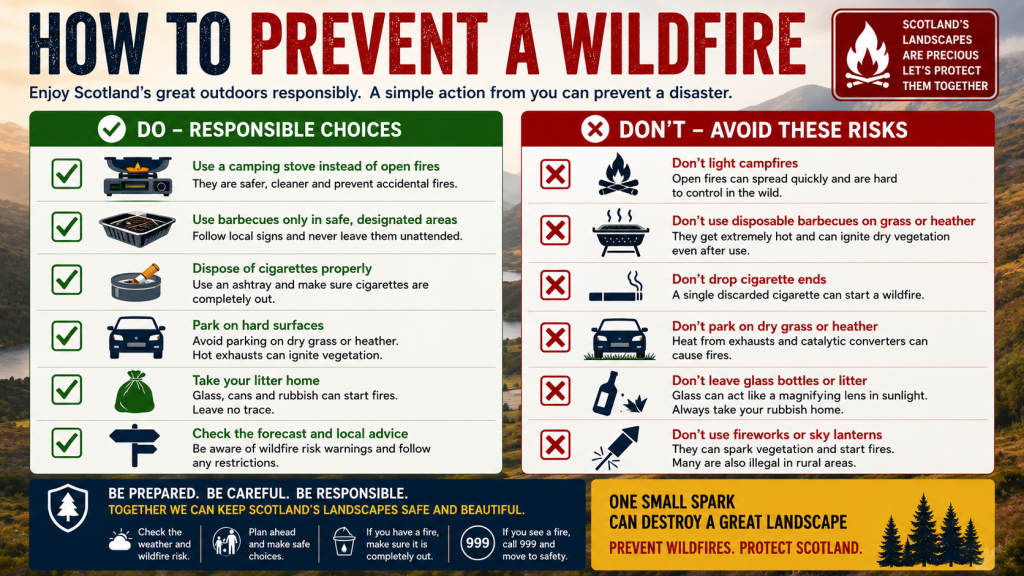
Before leaving home:
✔️ Check the wildfire risk.
During your visit:
✔️ Use a camping stove instead of an open fire.
✔️ Never leave disposable barbecues unattended.
✔️ Park on hard ground.
✔️ Take all litter home.
✔️ Extinguish cigarettes properly.
✔️ Follow signs and local restrictions.
If you see a fire:
✔️ Call 999 immediately.
✔️ Move to safety.
✔️ Warn others if safe to do so.
.
Common Myths
“It’s been raining recently, so there’s no risk.”
Not necessarily. Strong sunshine and wind can dry vegetation surprisingly quickly.
“A small campfire can’t do much harm.”
Many major wildfires have started from small unattended fires.
“I’ll bury the embers.”
Hot embers can continue smouldering underground for hours or even days.
“I’ll pour a little water on it.”
The fire must be completely extinguished and cold to the touch. Smouldering material can easily reignite.
.
Facts
- Scotland experiences hundreds of wildfire incidents each year.
- Spring is often the highest-risk season because of dry winter vegetation.
- Peat fires can burn beneath the surface for days or even weeks.
- A wildfire can spread faster than a person can run when driven by strong winds.
- Scotland’s forests and peatlands store millions of tonnes of carbon, making wildfire prevention important for tackling climate change.
.
Final Thoughts
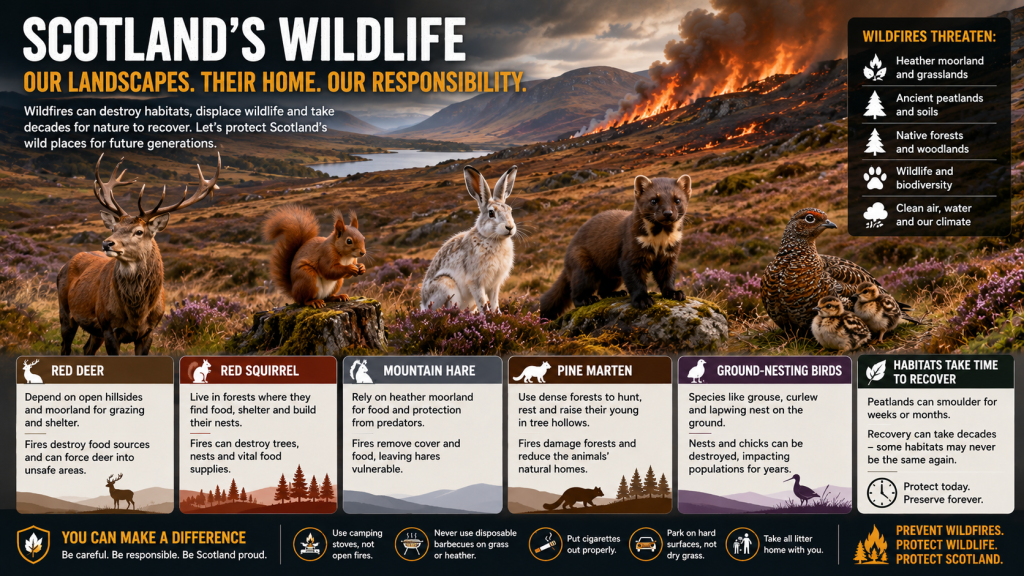
Scotland’s mountains, forests, lochs and open moorlands are among the country’s greatest treasures. By taking a few simple precautions, visitors and new residents can help protect these landscapes for future generations.
Choose a camping stove instead of an open fire, dispose of litter responsibly, park only on suitable surfaces, and always follow local wildfire advice. A few thoughtful decisions can prevent a small mistake from becoming a devastating wildfire.
Enjoy Scotland’s great outdoors responsibly, and help keep its landscapes safe, beautiful and thriving for everyone.