

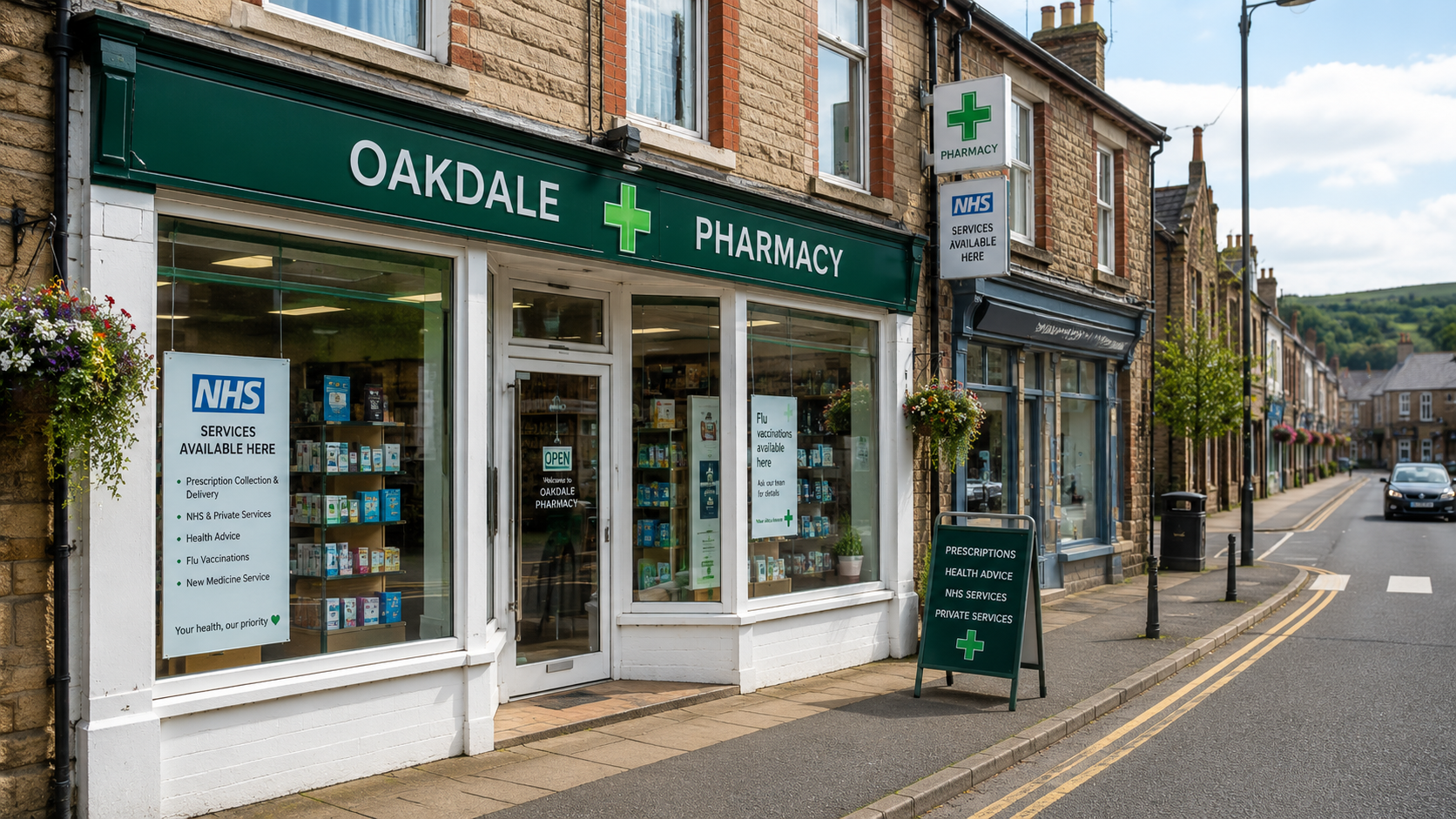
A pharmacy plays a much bigger role in the UK healthcare system than many newcomers from Germany, Austria or Switzerland initially realise. In recent years, pharmacies have become an important “front door” into the NHS and can often save you a trip to the GP.
Where Does the Pharmacy Fit In?
A typical patient journey in the UK might look like this:
Minor illness → Pharmacy
More serious illness → GP
Specialist treatment → Hospital
Emergency → A&E / 999
Many conditions that would previously have required a GP appointment can now be dealt with directly by a pharmacist.
.
Community Pharmacies
Most people use local community pharmacies such as:
- Boots
- Well Pharmacy
- Superdrug Pharmacy
- Independent pharmacies
Pharmacists are highly trained healthcare professionals and can advise on many common medical issues.
.
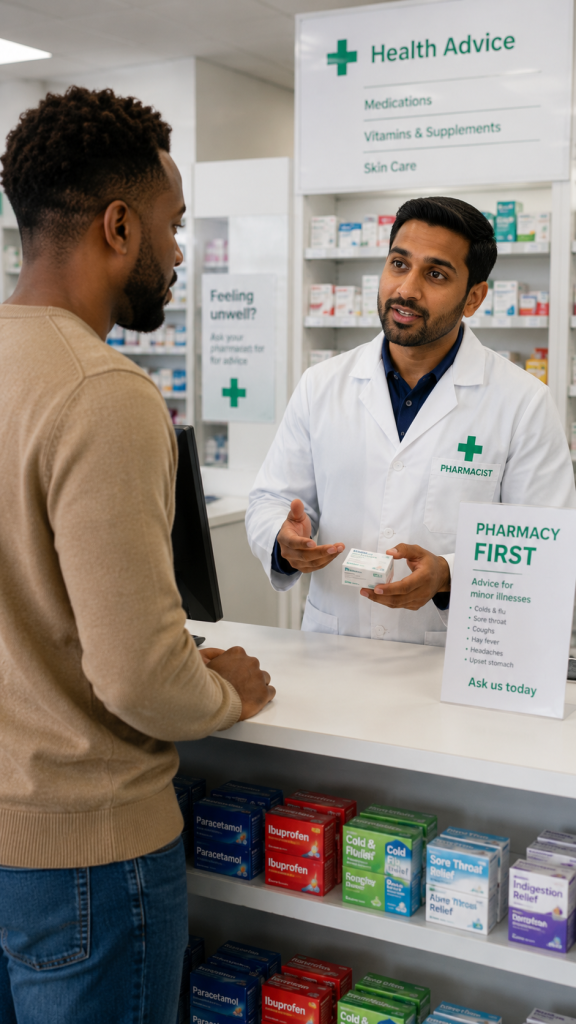
What Can a Pharmacist Help With?
Examples include:
Minor Illnesses
- Colds and flu
- Sore throats
- Earache
- Hay fever
- Coughs
- Diarrhoea
- Mild skin conditions
Medication Advice
- Side effects
- Drug interactions
- Dosage questions
Repeat Prescriptions
Many pharmacies manage repeat prescriptions electronically with GP practices.
Vaccinations
Many pharmacies provide:
- Flu vaccinations
- Travel vaccinations
- FLU / COVID vaccinations (when programmes are running)
.
The NHS Pharmacy First Service
One of the biggest recent changes is the NHS “Pharmacy First” scheme.
Patients can now receive treatment directly from a pharmacist for certain conditions without seeing a GP.
Examples include:
- Sinusitis
- Sore throat
- Ear infections
- Infected insect bites
- Impetigo
- Uncomplicated urinary tract infections in women
The pharmacist can sometimes provide prescription-only medicines under NHS arrangements.
This has reduced pressure on GP practices and often results in much faster treatment.
.
How Prescriptions Work
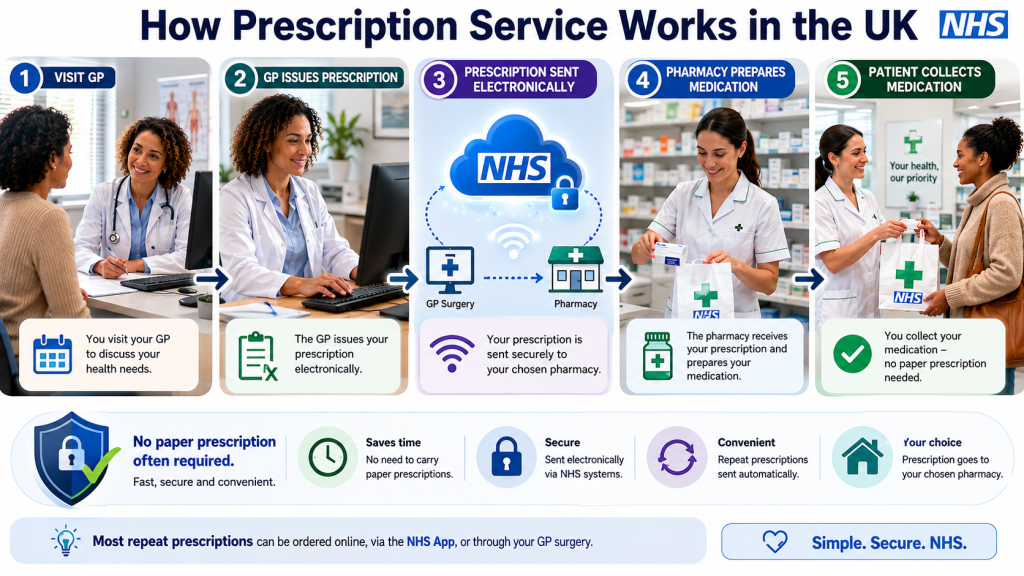
For repeat prescription, medication you have to take regularly, you don’t must see your GP, you can order them directly via the pharmacy (phone call) or via an app that connects to your GP, order the medication you require and the GP sends the approval to the pharmacy. This takes between one and three days. Then you can either collect the prescription or get it delivered (depending on the pharmacy).
.
Prescription Charges
England
Most adults pay a fixed prescription charge per item.
Certain groups are exempt, including:
- Children
- People over State Pension age
- Pregnant women
- Some low-income households
Scotland
Prescription medicines are free.
Wales
Prescription medicines are free.
Northern Ireland
Prescription medicines are free.
This surprises many people from Germany, Austria and Switzerland.
.
Comparison with Germany
Germany’s pharmacies (Apotheken) are generally more medication-focused.
German pharmacists provide excellent advice but usually do not have the same NHS clinical role as UK pharmacists.
In Germany:
- The Hausarzt remains the main contact
- Pharmacists rarely replace doctor consultations
- Prescriptions often involve patient co-payments
.
Comparison with Austria
Austria operates similarly to Germany.
Pharmacies are highly respected and provide medication advice, but they generally do not act as an alternative to seeing a doctor.
Patients usually consult:
Hausarzt → Specialist → Pharmacy
.
Comparison with Switzerland
Swiss pharmacies are probably closest to the modern UK model.
Many Swiss pharmacists can:
- Conduct consultations
- Assess minor illnesses
- Provide certain prescription medicines under defined circumstances
Swiss pharmacies often have a broader clinical role than those in Germany or Austria.
.
Advantages of the UK Pharmacy System
✅ Often no appointment needed
✅ Open evenings and weekends
✅ Highly accessible
✅ Can reduce GP waiting times
✅ Increasing ability to treat minor illnesses directly
.
Disadvantages
🚫 Limited scope compared with doctors
🚫 Cannot diagnose complex conditions
🚫 Cannot provide referrals to most specialists
🚫 Services vary between pharmacies
.
A Typical Example
Imagine you develop a sore throat on Monday morning.
In the UK
You might:
- Walk into a pharmacy
- Be assessed by a pharmacist
- Receive treatment immediately
- Avoid a GP appointment entirely
In Germany
You would more commonly:
- Visit your Hausarzt
- Receive a prescription if needed
- Visit the pharmacy afterwards
This illustrates one of the major differences between the NHS and German-speaking healthcare systems: the UK increasingly uses pharmacies as a first-line healthcare provider rather than simply a place to collect medicines.
For many minor conditions, the modern NHS pathway is often:
Pharmacy First → GP Second → Hospital Third
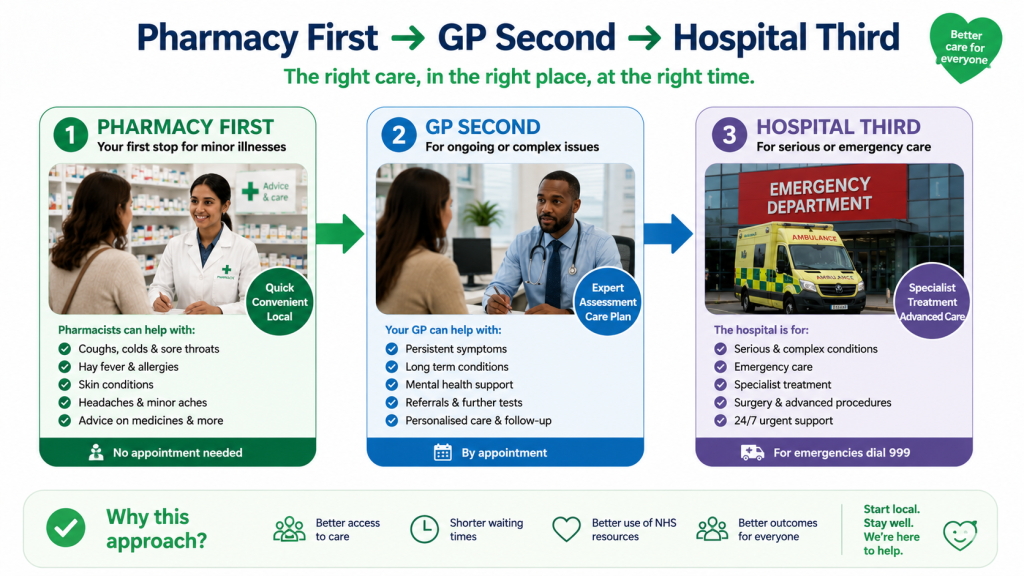
rather than going straight to the doctor.